


13 Oct Top Google Maps Marketing Services for Local Dominance
Top Google Maps Marketing Services for Local Dominance
Which Google Maps Marketing Services Are Worth Paying For?
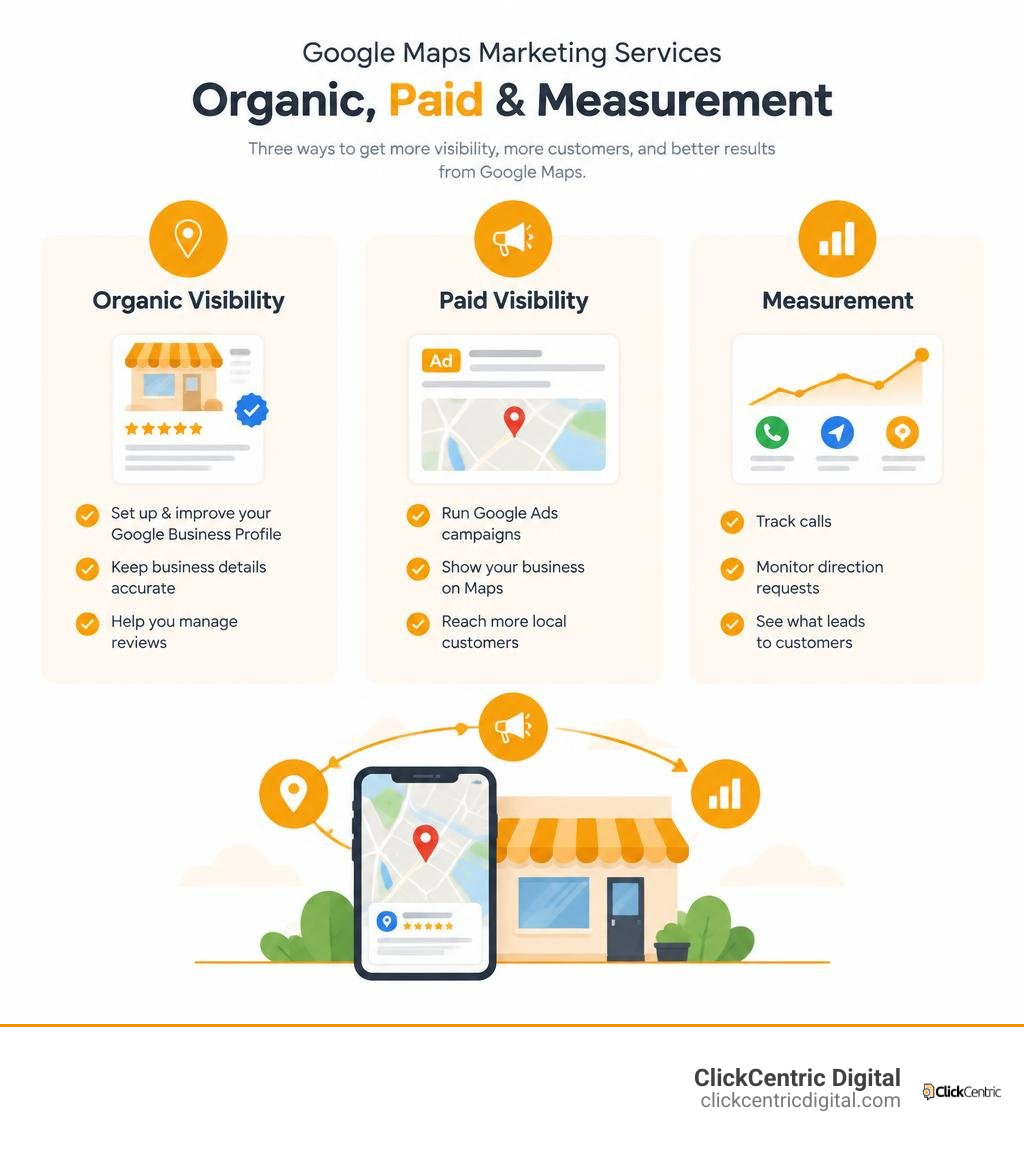
The best Google Maps marketing services cover two jobs: improving your free business listing and running paid ads when you need more reach. Compare providers by what they actually do:
- Organic visibility: Set up and improve your Google Business Profile, keep business details accurate, and help you manage reviews.
- Paid visibility: Run eligible Google Ads campaigns that can show your business on Maps.
- Measurement: Track calls, direction requests, and other actions that could lead to customers.
If you have more than one location, look for a team that can manage each listing without mixing up its details. I’m Fred Dirkse, and I’ll walk you through which services matter most for your business.
Google maps marketing services word list:
Core Categories of Google Maps Marketing Services
Navigating the local search landscape requires balancing long-term organic authority with immediate paid capture. While Google Maps was once viewed merely as a navigation aid that replaced paper road atlases, it has evolved into the world’s most critical digital storefront. Today, over 1 billion people use Google Maps every month, and 46% of all searches on Google carry local intent. Furthermore, 88% of users who conduct a local search on a smartphone visit or call a business within 24 hours.
To win these customers, professional agencies divide their work into organic optimization and paid advertising campaigns.
| Feature / Metric | Organic Local Map Optimization | Paid Google Maps Advertising |
|---|---|---|
| Primary Goal | Rank naturally in the top 3 Map Pack | Secure immediate placement via sponsored pins and search ads |
| Time to Results | 2 to 6 months of ongoing authority building | Immediate upon campaign launch and verification |
| Cost Structure | Ongoing service retainer or profile management | Media spend ($2 to $6 per click average) + management |
| Conversion Rate | High trust, up to 80% local search conversion | High purchase intent, immediate action orientation |
| Scalability | Tied to physical proximity and local prominence | Flexible radius targeting and inventory controls |
| Core Tools | Google Business Profile, citation hubs, reviews | Google Ads, Performance Max, Demand Gen |
Executing a comprehensive local map optimization strategy allows businesses across regions like Grand Rapids MI, Holland, and Kalamazoo MI to maximize their local discovery footprint across multiple neighborhoods simultaneously.
Organic Google Maps Marketing Services for Local Visibility
Organic map marketing centers on claiming, configuring, and expanding your presence on the official Google Business Profile portal. The foundation begins with claiming your free business listing and completing standard verification protocols.
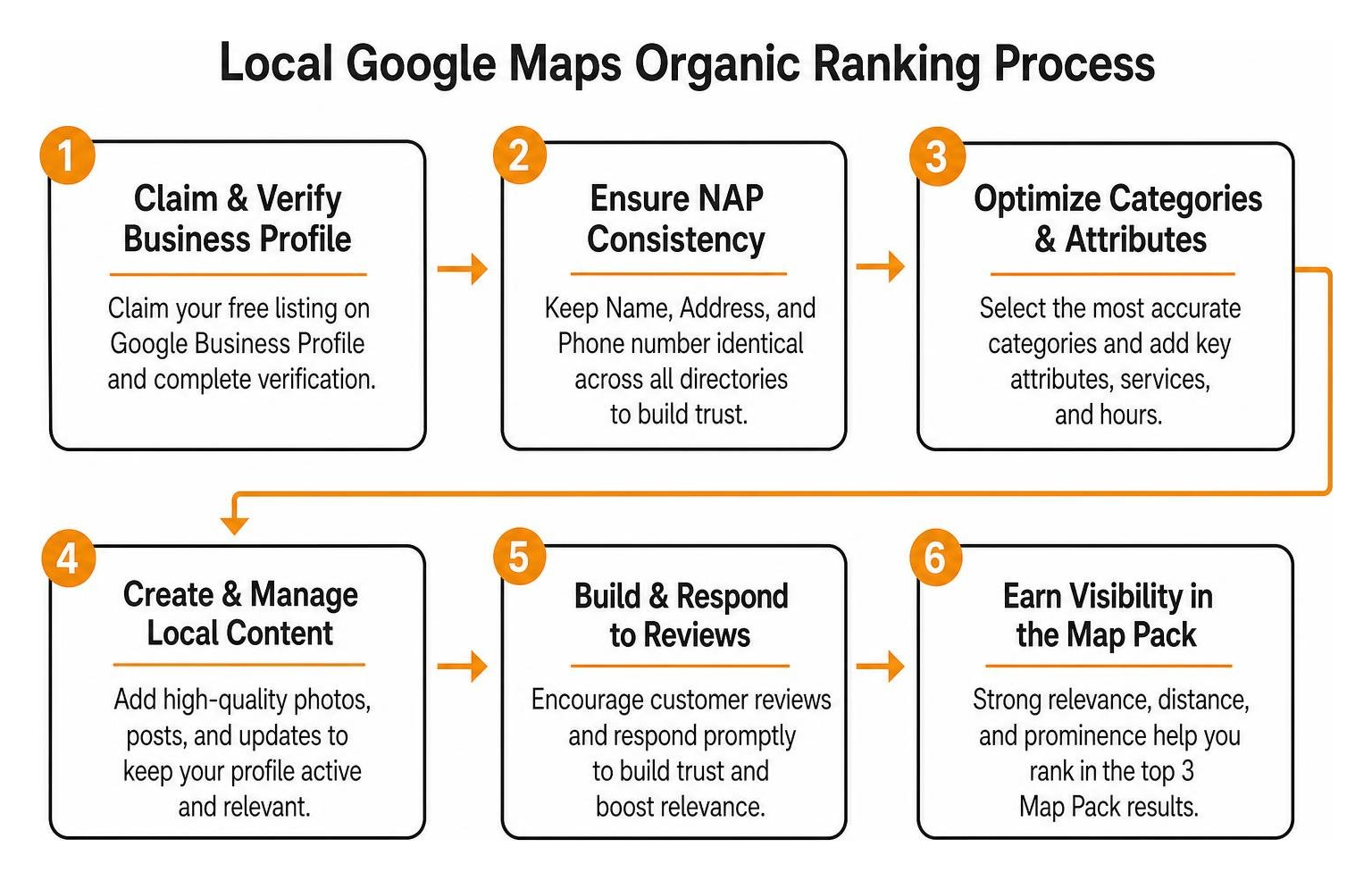
From there, dedicated service providers focus on three pillars:
- NAP Consistency and Data Accuracy: Maintaining identical Name, Address, and Phone number information across every web directory to establish foundational search engine trust.
- Category Selection and Attribute Depth: Choosing the most accurate primary category and secondary classifications, then populating high-value attributes (such as accessibility, service options, and operating hours).
- Active Profile Engagement and Reputation Management: Systematic review generation, rapid review responses, and regular publication of high-resolution photos and updates.
When you focus on optimizing your business profile signals, Google rewards your profile with higher baseline prominence when nearby users search for your core offerings.
Paid Google Maps Marketing Services and Ad Placements
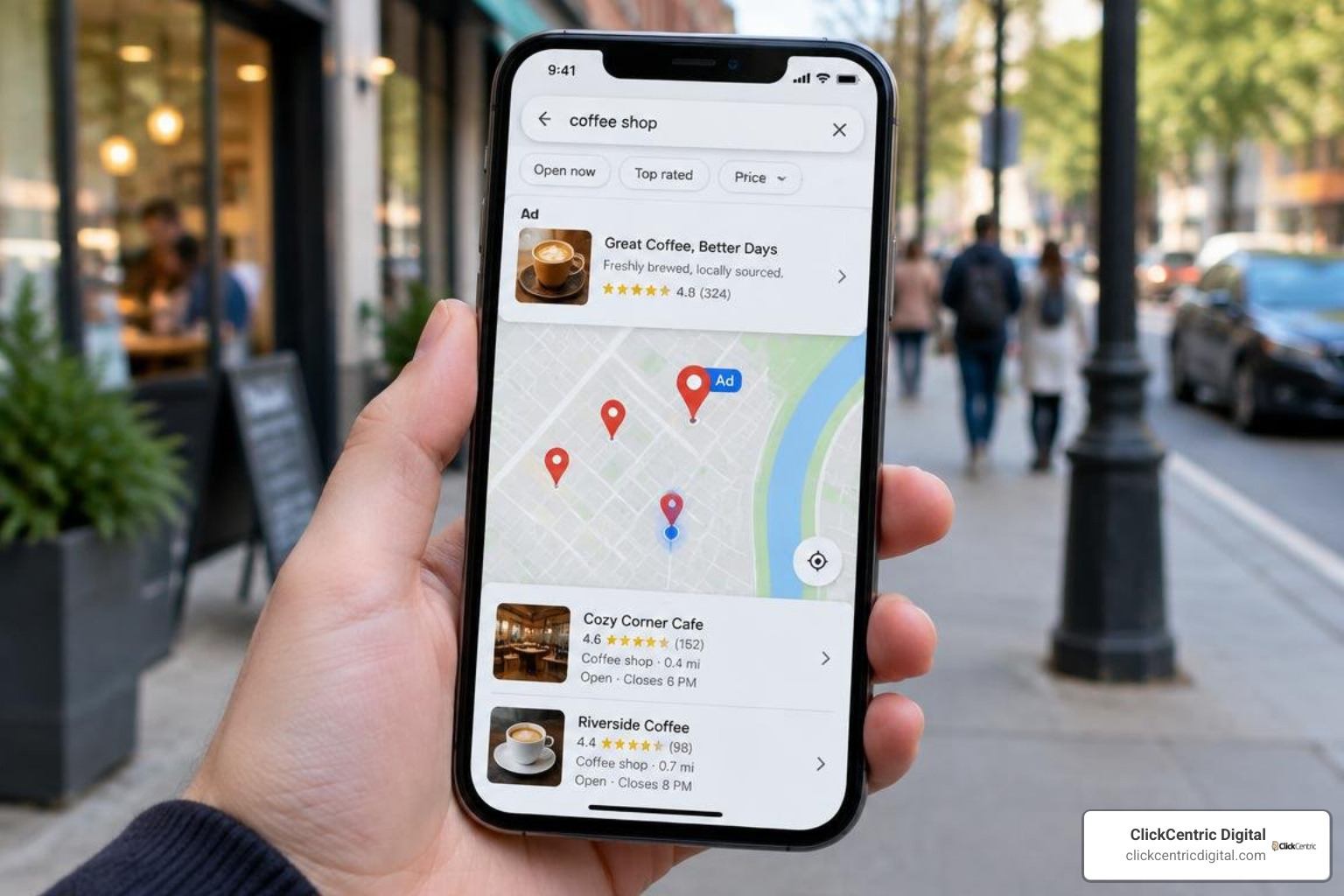
Organic efforts take time to mature, which is why paid map advertising strategies provide an immediate injection of high-intent traffic. Following the official guide to advertising on Google Maps, agencies deploy four primary ad formats:
- Promoted Pins: Distinctive, branded pins that highlight your physical location on the map canvas as users browse an area or navigate active routes.
- Map Search Ads: Featured listings displayed at the very top of Google Maps search results when users query specific categories (e.g., “furnace repair near me”).
- Map Suggest Ads: Dynamic ad suggestions that appear in the autocomplete drop-down menu before a user even finishes typing their search query.
- Placesheet Ads: Sponsored informational modules that appear directly within local business detail panels, allowing users to view promotions, book appointments, or request directions.
Advanced Features: Demand Gen, Performance Max, and Platform APIs
Local marketing entered a new phase with modern updates. Google Maps inventory is now integrated directly into multi-channel campaigns. Most notably, advertisers can leverage Google Maps ad inventory in Demand Gen, unlocking sponsored placements across Browse, Directions, and Place Details modes. This shifts Maps from a purely reactive utility into a visual demand-generation channel.
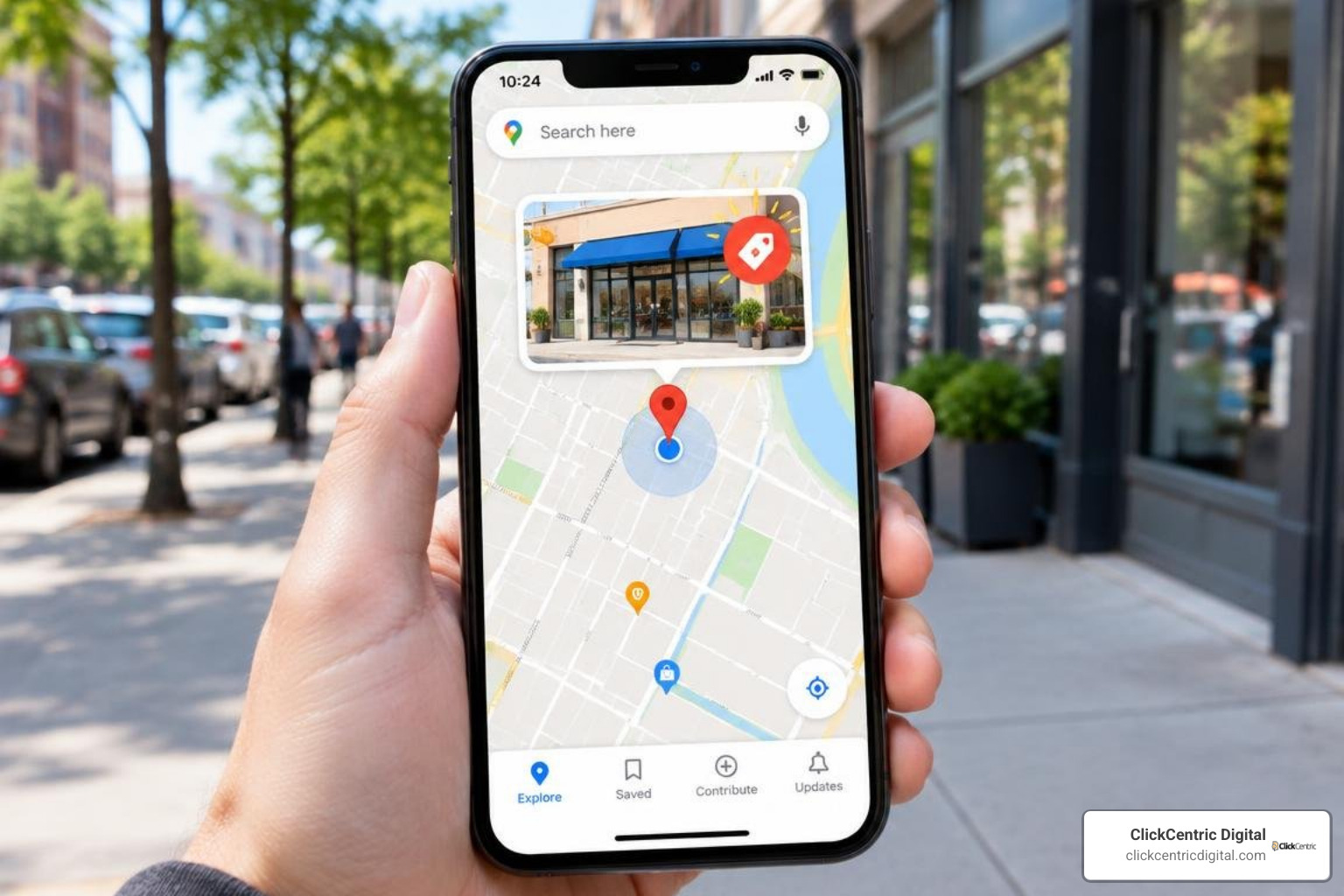
Similarly, Performance Max campaigns configured for local store goals use Google AI to distribute visual creative assets across Maps, YouTube, Search, and Discover.
For multi-location enterprises seeking customized website experiences, developers utilize the Google Maps Platform location and place APIs. By implementing tools like the Place Details API, Autocomplete, and WebGL Overlay Views, businesses can render interactive 3D map tiles, styled boundary polygons, and dynamic store locators directly on their own web properties. Combining these development features with automated route planning and map optimization ensures customers experience seamless navigation from initial web discovery to doorstep arrival.
Key Ranking Factors and Performance Measurement for Local Maps
Google calculates local organic positioning using three core algorithms:
- Relevance: How well your business listing matches the intent behind the user’s search query.
- Distance: How far the searching user (or their specified geo-location) is from your physical location.
- Prominence: How well-known and reputable your business is, measured by review volume, citation depth, local backlinks, and organic web authority.
Understanding the specific ranking factors for map positioning provides the blueprint for winning top 3-pack placements in 2026.
Tracking the return on investment requires monitoring both organic profile metrics and paid conversion events:
- Direct Interactions: Phone calls generated directly from the listing, website visits, and driving direction requests.
- Local Actions & Attribution: In-store visits and local conversion actions tracked inside Google Ads.
- Cost Efficiency: Careful oversight of managing ad spend and map CPC costs, where average clicks range from $2 to $6.
- Organic Visibility Progression: Rank tracking using grid trackers to monitor search engine optimization for map rankings across different physical coordinates in your target service area.
Troubleshooting and Ad Delivery Limitations on Google Maps
Even experienced advertisers encounter situations where their Map ads do not appear during testing.
Common delivery hurdles include:
- Missing Location Assets: Ads cannot show on Google Maps unless your Google Business Profile is properly linked and location assets are active in Google Ads.
- Zoom Level Constraints: Promoted pins only render when a user reaches a specific zoom threshold. If the map view is too wide, Google suppresses pin density to avoid visual clutter.
- Auction Dynamics: Ad placements on Maps are competitive. If your maximum cost-per-click bid or Quality Score falls below competing bids, your listing will default to standard organic rendering.
- Multi-Surface Constraints: Google does not allow advertisers to select Google Maps as an exclusive standalone ad network. Campaigns serving on Maps also deliver impressions across Google Search, Display, or Partner networks.
For a deeper dive into technical account configurations, check out our complete guide to Google Maps marketing.
Frequently Asked Questions about Google Maps Marketing
How much do paid Google Maps ads cost per click?
Paid ads on Google Maps typically cost between $2 and $6 per click. Costs fluctuate depending on your industry vertical, local competition, and geographic market. You are charged when a user interacts with your ad—such as clicking for location details, tapping to call, or requesting driving directions.
Can businesses run ads exclusively on Google Maps without other networks?
No. Google Ads does not offer a standalone campaign setting that isolates Maps to the exclusion of all other networks. Maps inventory is accessed via Search campaigns with location assets enabled, Performance Max for store goals, Smart campaigns, or Demand Gen campaigns, which distribute impressions across multiple Google surfaces.
Why are my business ads not showing up on Google Maps?
If your ads are not showing, verify that your Google Business Profile is linked and verified within your Google Ads location assets. Other common causes include inactive campaign budgets, targeting radiuses set outside the user’s current viewport, ad rank thresholds, or the map being zoomed out too far to render local promoted pins.
Conclusion
Dominating local search results requires a coordinated strategy that unites technical Google Business Profile optimization with precision Google Ads delivery. At ClickCentric Digital, we build tailored, high-converting campaigns designed to help local businesses capture surrounding market share across Grand Rapids MI, Holland, Grand Haven MI, South Haven MI, Kalamazoo MI, and the broader West Michigan area. If you are ready to capture high-intent searchers and turn map queries into paying clients, partner with our team to drive local customer acquisition today.
Sorry, the comment form is closed at this time.