

22 Oct In Depth Guide to Reputation Management for Dentists
In Depth Guide to Reputation Management for Dentists
Reputation Management for Dentists Starts With Patient Trust
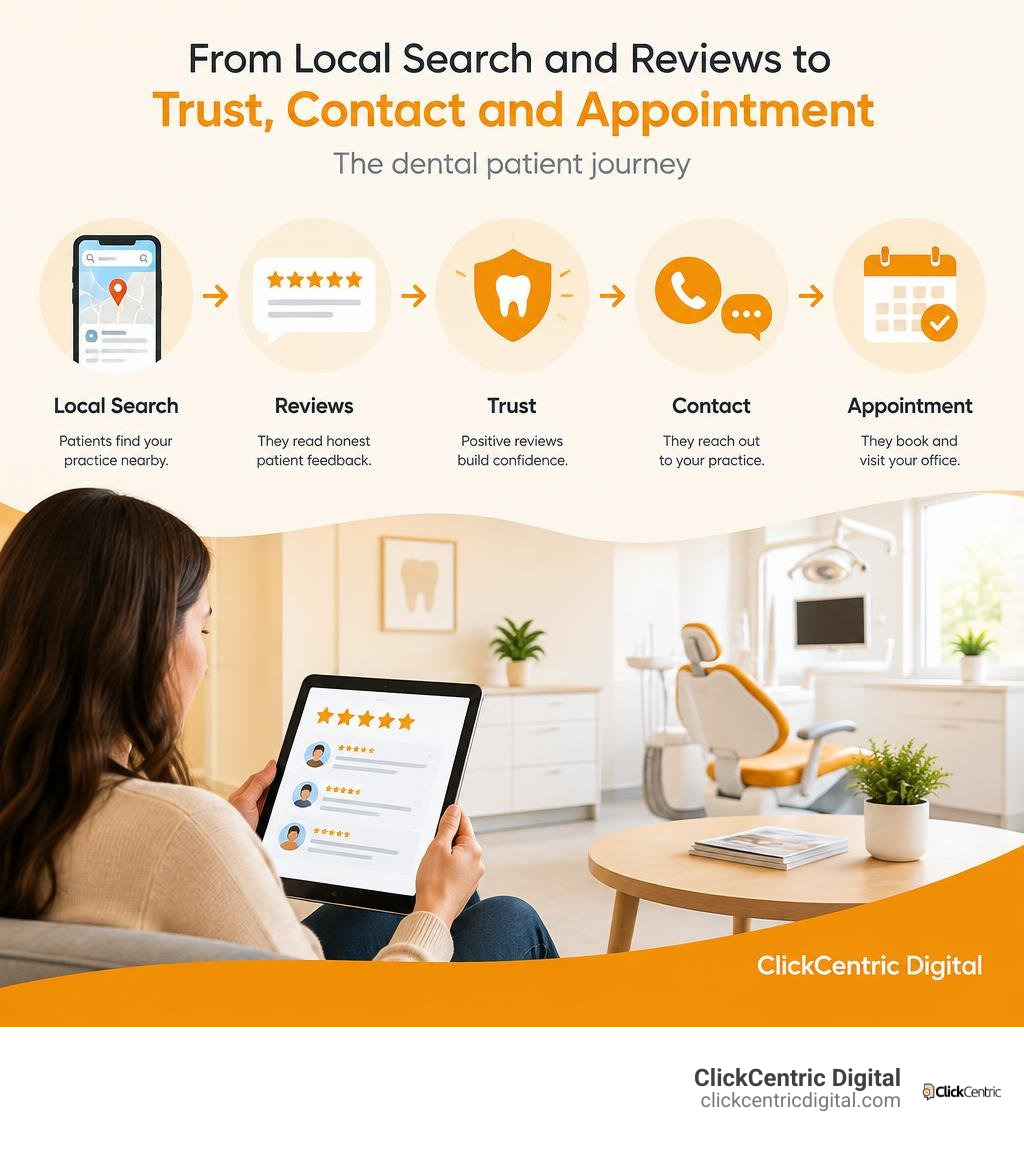
Reputation management for dentists means making it easy for patients to find your practice, read honest reviews, and feel confident booking. Start by keeping your Google Business Profile accurate, asking patients for reviews after visits, and checking new feedback regularly. Reply politely, but never confirm that a reviewer is a patient or discuss their care in public.
A strong reputation helps turn local searches into appointments. It also gives people a clearer picture of your practice before they call. You do not need a perfect rating; you need a steady, trustworthy record of patient feedback and a safe way to handle concerns.
I’m Fred Dirkse, and I’ll show you how to build that system without putting patient privacy at risk.
Why Reputation Management for Dentists Is Essential for Practice Growth
Choosing a healthcare provider is deeply personal. For most prospective patients, booking a dental appointment involves overcoming anxiety, evaluating out-of-pocket expenses, and trusting a clinician with their physical well-being. Today, 71% of patients search online before choosing a dentist, and 98% read local reviews before making a final decision.

When people look for care, online feedback acts as social proof. In fact, 84% of the public trust online reviews as much as personal recommendations from friends or family. If your clinic maintains an outdated profile or a low star rating, prospective patients will simply click on the next listing. Furthermore, 86% of users who search for a dentist contact one directly from the local search results. A strong, active stream of public feedback converts searchers into scheduled chairs.
Beyond immediate bookings, your digital standing directly affects long-term practice valuation. Whether you plan to bring on an associate, expand to additional operatory suites, or eventually sell your clinic, an established digital presence with hundreds of authentic patient reviews represents tangible goodwill. Investing in systematic feedback acquisition delivers reliable returns: the average cost to acquire a new dental patient through digital channels ranges from $150 to $300, while the average lifetime patient value reaches $12,000 to $15,000.
Core Systems of Reputation Management for Dentists
Managing your practice’s image cannot be treated as an occasional chore. It requires an organized, operational framework built on three primary pillars:
- Review Velocity and Consistency: Search engines and patients value fresh feedback. Receiving five reviews every week signals an active, thriving clinic, whereas fifty reviews gathered in one burst followed by months of silence raises red flags.
- Sentiment Analysis and Service Quality: Monitoring recurring themes in your feedback helps identify clinical or administrative bottlenecks, such as front-desk wait times or billing confusion.
- Multichannel Presence: While Google is the primary battleground, patients also evaluate profiles across platforms like Healthgrades, Yelp, and Facebook. Engaging with effective reputation management ensures your clinic maintains brand consistency and rapid response times across every digital touchpoint.
Building Referral Trust with General and Specialist Dentists
Reputation management also shapes peer-to-peer relationships. Periodontists, endodontists, oral surgeons, and orthodontists rely on general practitioners for up to 60% of their patient volume. When a general dentist refers a patient for complex care, their own professional credibility is on the line.
Referring doctors routinely monitor how specialists treat shared patients. If a referred patient leaves a negative review detailing poor bedside manner or administrative disorganization, the referring clinician will take note. Specialists who actively protect their digital presence, deliver prompt referral outcome reports, and provide seamless communication earn priority trust among their professional peers.
How Online Reviews Drive Dental SEO and Google Map Pack Rankings
Google’s primary goal in local search is to deliver the most relevant, reputable results to searchers. With 46% of all Google searches seeking local information, local search engine optimization (SEO) determines whether your practice appears in the coveted Google Local 3-Pack—the top three map listings displayed above standard organic results.
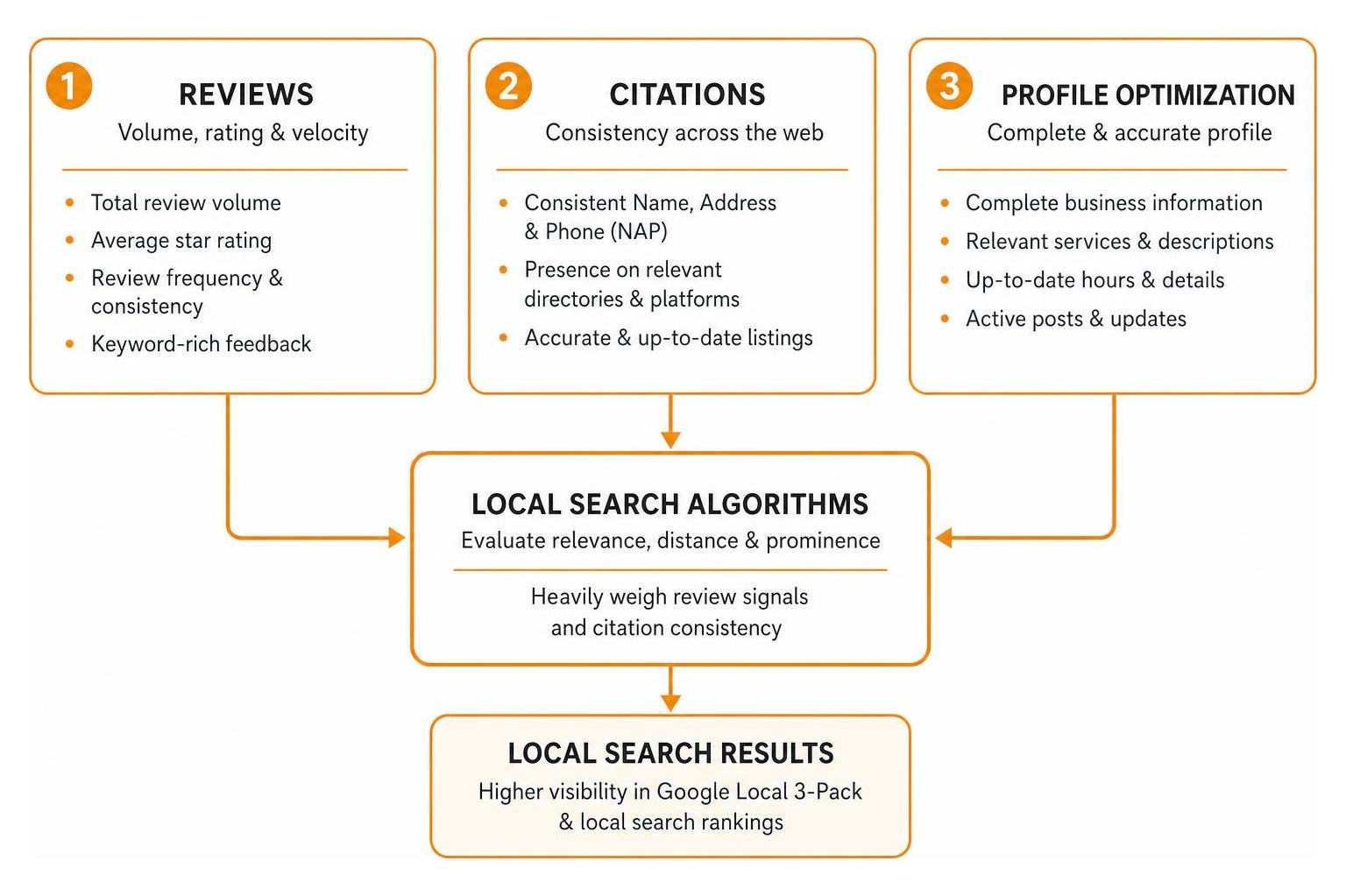
Local search algorithms weigh review signals heavily when determining rankings. Key factors include:
- Total review volume and average star rating
- The frequency and consistency of incoming reviews (review velocity)
- Keyword richness within organic patient feedback (such as mentions of “dental implants,” “root canal therapy,” or “gentle teeth cleaning”)
- The consistency of practice Name, Address, and Phone number (NAP) across medical citations
In modern healthcare marketing, organic search traffic converts at roughly 3.5% for dental practices, whereas paid search ads convert at under 2%. A dominant presence in the local map pack captures high-intent prospective patients at the precise moment they need care, maximizing patient acquisition through organic local visibility.
Optimizing Your Google Business Profile for Dental Search
To maximize your local search visibility, your Google Business Profile (GBP) must be thoroughly built out and maintained. Search engines require complete data to properly index your practice for local queries.
Start by selecting the most accurate primary category (such as “Dentist,” “Cosmetic Dentist,” or “Pediatric Dentist”) and adding secondary categories that reflect your specialized capabilities. Ensure your practice name, physical address, and direct phone number match your website citations perfectly. To take full advantage of your listing, follow proven strategies for optimizing your business profile for search. Upload high-resolution interior, exterior, and team photographs monthly, publish regular updates via Google Posts, and list your complete treatment menu.
Review Signals and Local Search Algorithms
Google measures user engagement to evaluate clinic credibility. When prospective patients click on your profile, read responses, browse service descriptions, and click to call, these interactions validate your clinic’s local relevance.
Focusing on mastering Google reviews effectively provides the dual benefit of improving organic rank while establishing immediate trust with human searchers. Furthermore, 88% of consumers prefer businesses where the owner responds to all reviews, making ongoing review engagement a critical trust-building mechanism.
The Complete Playbook for Generating and Responding to Reviews Under HIPAA
The Health Insurance Portability and Accountability Act (HIPAA) creates unique legal constraints for healthcare marketing. While 88% of dental practices receive online patient reviews, survey data reveals that 39% of dentists feel unable to respond because they fear violating privacy laws.
Under federal privacy rules, a dental practice cannot disclose or confirm Protected Health Information (PHI) in a public forum. PHI extends far beyond clinical diagnoses—it includes:
- Confirming that an individual is or was ever a patient at your office
- Mentioning appointment dates, times, or frequency of visits
- Referencing treatments, procedures, payment terms, or insurance providers
Even if a patient writes an extensive public review detailing their exact surgical procedure, the practice still cannot legally acknowledge that the individual received treatment. Violating these standards can lead to costly regulatory penalties. Reviewing resources on HIPAA compliance and online reviews is essential for any dental team.
Ethical Tactics to Request and Collect More 5-Star Reviews
The most reliable way to maintain a stellar rating is to implement an ethical, systematic collection process. Never incentivize reviews with gifts, discounts, or raffles, as this violates search engine policies and federal advertising guidelines. Instead, focus on removing friction for satisfied patients.
- Automated Post-Appointment SMS: Text messages achieve significantly higher open and completion rates than standard emails. Sending an automated, friendly SMS within 30 to 60 minutes of appointment completion yields optimal results.
- Chairside Verbal Reminders: Train hygienists and assistants to mention feedback naturally when a patient expresses satisfaction: “We’re so glad your cleaning went smoothly today! You’ll receive a short text message shortly—we’d truly appreciate your feedback.”
- Front-Desk QR Codes: Make leaving feedback effortless by generating 5-star ratings with a review QR code displayed on reception counters, post-care instruction sheets, or business cards.
Crafting HIPAA-Compliant Review Responses
Responding to reviews demonstrates professionalism to prospective patients browsing your profile. Every public reply must remain generalized, courteous, and strictly neutral regarding patient status.
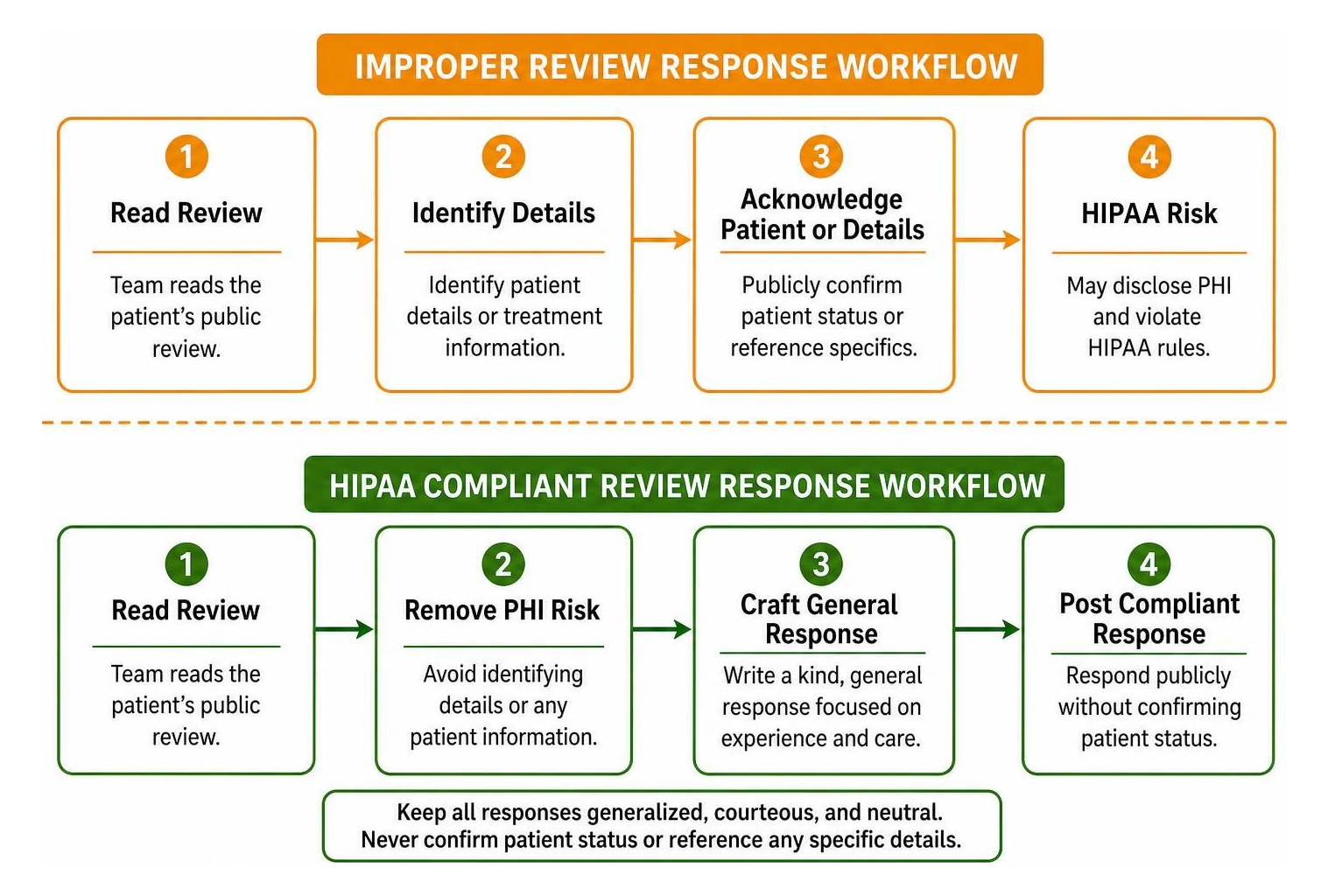
When establishing your internal protocols for managing Google review responses, rely on simple, tested frameworks:
Compliant Response to Positive Feedback:
“Thank you for sharing your feedback with our team. We are committed to providing a welcoming, comfortable environment and high-quality care for everyone who visits our practice. We appreciate your kind words!”
Compliant Response to Critical Feedback:
“Thank you for bringing your perspective to our attention. Our practice takes pride in delivering exceptional patient care and clear communication. Because we strictly respect individual privacy and federal privacy regulations, we do not discuss patient experiences in public forums. Please contact our office manager directly through our main office line so we can discuss and address your concerns privately.”
Resolving Negative Feedback, Fake Reviews, and Clinical Disputes
Every dental clinic eventually encounters dissatisfied feedback. Whether caused by billing confusion, unexpected scheduling delays, or post-operative discomfort, negative comments require a calm, strategic response.
Publicly arguing with a reviewer never benefits your practice. Potential patients evaluate how gracefully your clinic handles criticism. A defensive or hostile response alienates readers, whereas an empathetic, professional invitation to resolve matters offline reinforces confidence. Research shows that clinics with a 4.5 to 4.8-star average often convert better than those with an improbable 5.0-star rating, as consumers view a mix of genuine feedback as more authentic.
Step-by-Step Resolution Protocol for Critical Reviews
When critical reviews appear, follow an established de-escalation workflow for dealing with critical online feedback:
- Pause and Investigate Internally: Review internal patient charts, appointment logs, and staff notes to understand the clinical or operational background before formulating any response.
- Draft a Privacy-Safe Reply: Formulate a response that acknowledges the feedback without confirming that the reviewer is a patient or referencing clinical care.
- Initiate Direct Offline Contact: Reach out directly via telephone or secure patient portal to listen to the individual’s concerns and work toward a mutually acceptable resolution.
- Request an Update Post-Resolution: If you resolve the issue satisfactorily offline, the patient will often update or remove their negative rating on their own accord.
Disputing and Flagging Illegitimate or Defamatory Reviews
Not all negative feedback originates from real patient interactions. Clinics occasionally face spam, mistaken identity, or malicious postings from competitors.
While platforms will not remove a review simply because a practice disagrees with an opinion, reviews that violate terms of service can be contested. Valid grounds for removal include hate speech, explicit language, clear conflicts of interest (such as former employees), or verifiable spam.
You can protect your profile by disputing and flagging illegitimate reviews through your business dashboard. Document the violation, gather relevant records, and submit a formal policy appeal. While waiting for platform moderation, always publish a polite, compliant holding reply so prospective patients see that your office is responsive.
Software Automation, Referral Networking, and Practice Growth
Managing review generation, cross-platform monitoring, and compliance manually across a busy dental schedule quickly exhausts administrative resources. Modern dental practices rely on automated software integrated directly into their Practice Management Systems (PMS) or Electronic Health Records (EHR).
| Operational Feature | Manual Review Workflow | Automated Dental Reputation Platform |
|---|---|---|
| Request Timing | Inconsistent; dependent on front desk memory | Triggered automatically post-appointment |
| Delivery Channel | Verbal requests or manual emails | Automated SMS and personalized email sequences |
| HIPAA Safeguards | High risk of accidental disclosure | Built-in privacy-safe response templates |
| Monitoring Speed | Periodic manual checks; delayed replies | Real-time notifications and centralized dashboard |
| Review Velocity | Low, sporadic review spikes | Steady, continuous monthly review flow |
Choosing the Right Dental Review and Monitoring Tools
When selecting software, dental practices must prioritize HIPAA compliance, seamless PMS integration, and multi-channel aggregation over generic small-business tools.
Evaluate platforms that offer specialized healthcare safeguards, automated messaging triggers, and centralized monitoring. Utilizing specialized review monitoring services prevents negative comments from lingering unaddressed while saving staff hours each week. Adopting specialized dental review management systems allows clinics to streamline feedback collection across all clinical locations.
Measuring the ROI of Reputation Management for Dentists
To verify that your investment drives practice growth, track clear return-on-investment metrics across your marketing stack:
- Customer Acquisition Cost (CAC): Track your blended digital marketing spend relative to monthly new patient volume. A robust review profile lowers CAC across organic search and paid campaigns.
- Conversion Rate Lift: Monitor click-to-call and online appointment request rates as your overall review volume and rating improve.
- Call Tracking and Lead Attribution: Implement dedicated dynamic tracking numbers and intake questions (“How did you first hear about our office?”) to measure direct patient origin.
- Lifetime Value Realization: Measure how steady review generation impacts treatment acceptance rates and long-term patient retention across your operatory schedules.
For dental practices across West Michigan, a structured approach to reputation management bridges the gap between automated platforms and the personal trust that drives sustainable practice growth.
Frequently Asked Questions About Dental Reputation Management
How can a dentist ask for online reviews without violating HIPAA?
You can ethically and legally ask patients for feedback by keeping your requests generalized. Automated text messages or emails should invite the patient to share their experience on public platforms without referencing specific clinical procedures, diagnoses, provider notes, or insurance details. Never require patients to sign in using health account credentials, and ensure staff are trained never to post clinical details online. Maintaining clear internal protocols ensures consistent, ethical review acquisition across every operatory.
How many Google reviews does a dental practice need to dominate local search?
The ideal review count depends on your specific local competitive landscape. In mid-sized markets, leading dental clinics typically maintain between 150 and 300+ authentic reviews with an average rating of 4.6 stars or higher. In highly competitive metropolitan areas, top-ranking practices frequently exceed 500 reviews. More important than total count is review velocity—consistently receiving 5 to 15 fresh reviews each month signals relevance and operational excellence to search algorithms.
Can a dentist remove a fake or defamatory 1-star Google review?
Google does not provide a button to instantly delete unwanted reviews simply because a practice disagrees with the rating. However, if a review violates Google’s Prohibited and Restricted Content policies—such as spam, harassment, hate speech, promotional content, or reviews posted by direct competitors—you can flag the review for removal via your Google Business Profile dashboard. If platform support declines the initial request, you can submit an appeal with supporting documentation.
Conclusion
A successful dental practice requires more than clinical precision—it requires a dependable, proactive digital reputation that reflects your standard of care. By maintaining an accurate Google Business Profile, deploying automated review generation, responding to feedback within strict HIPAA privacy standards, and resolving patient concerns professionally, you build a sustainable engine for practice growth.
At ClickCentric Digital, we specialize in helping dental practices maximize their digital visibility, dominate local search rankings, and attract high-value patients. Take control of your practice’s digital presence today by partnering with experts for comprehensive reputation management.
Sorry, the comment form is closed at this time.