

16 Jul Is Your Grand Rapids Basement Finishing Quote Insane? Here is What to Expect
Is Your Grand Rapids Basement Finishing Quote Insane? Here is What to Expect
Is Your Grand Rapids Basement Finishing Quote Actually Fair?
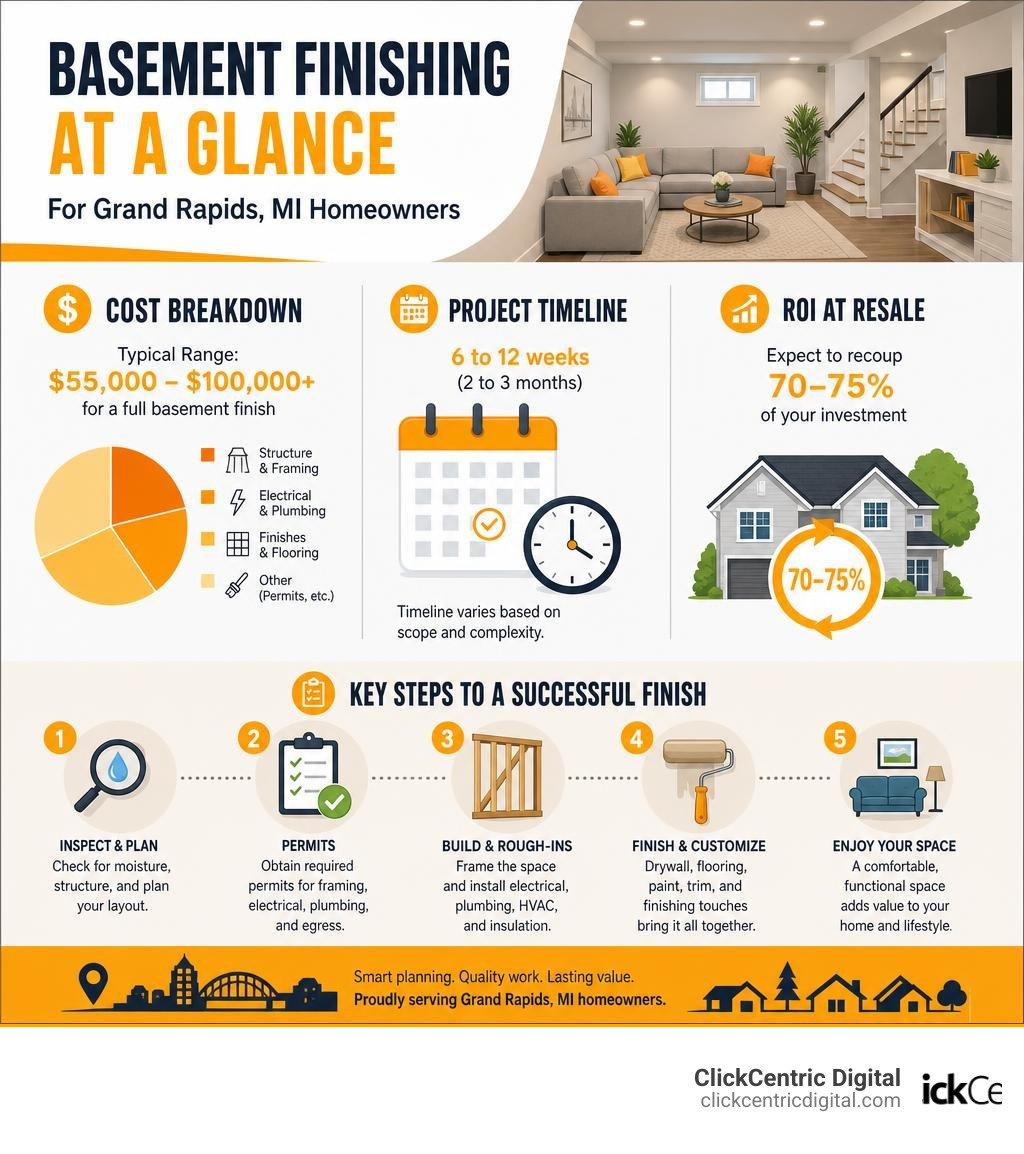
If you’re exploring basement finishing in Grand Rapids, MI, here’s what you need to know upfront:
- Typical cost range: $55,000 to $100,000 or more for a full basement finish
- Project timeline: 6 to 12 weeks (some complex projects run 2 to 3 months)
- ROI: Expect to recoup roughly 70-75% of your investment at resale
- Permits: Yes, required — for framing, electrical, plumbing, and egress work
- Moisture check: Must happen before any finishing work begins
You got a quote. Maybe it was $60,000. Maybe it was $95,000. And now you’re staring at the number wondering if you’re being taken for a ride.
You’re not alone. Basement finishing costs in Grand Rapids vary wildly depending on what’s going into the space — and most homeowners have no baseline for what’s reasonable.
The truth is, a quote that looks high might be completely fair once you understand what drives the price. And a quote that looks suspiciously low might be leaving out things that will cost you later — like waterproofing, permits, or egress windows.
This guide breaks it all down in plain language so you can walk into any contractor conversation with confidence.
Quick look at basement finishing grand rapids mi:
Your Guide to Basement Finishing Grand Rapids MI
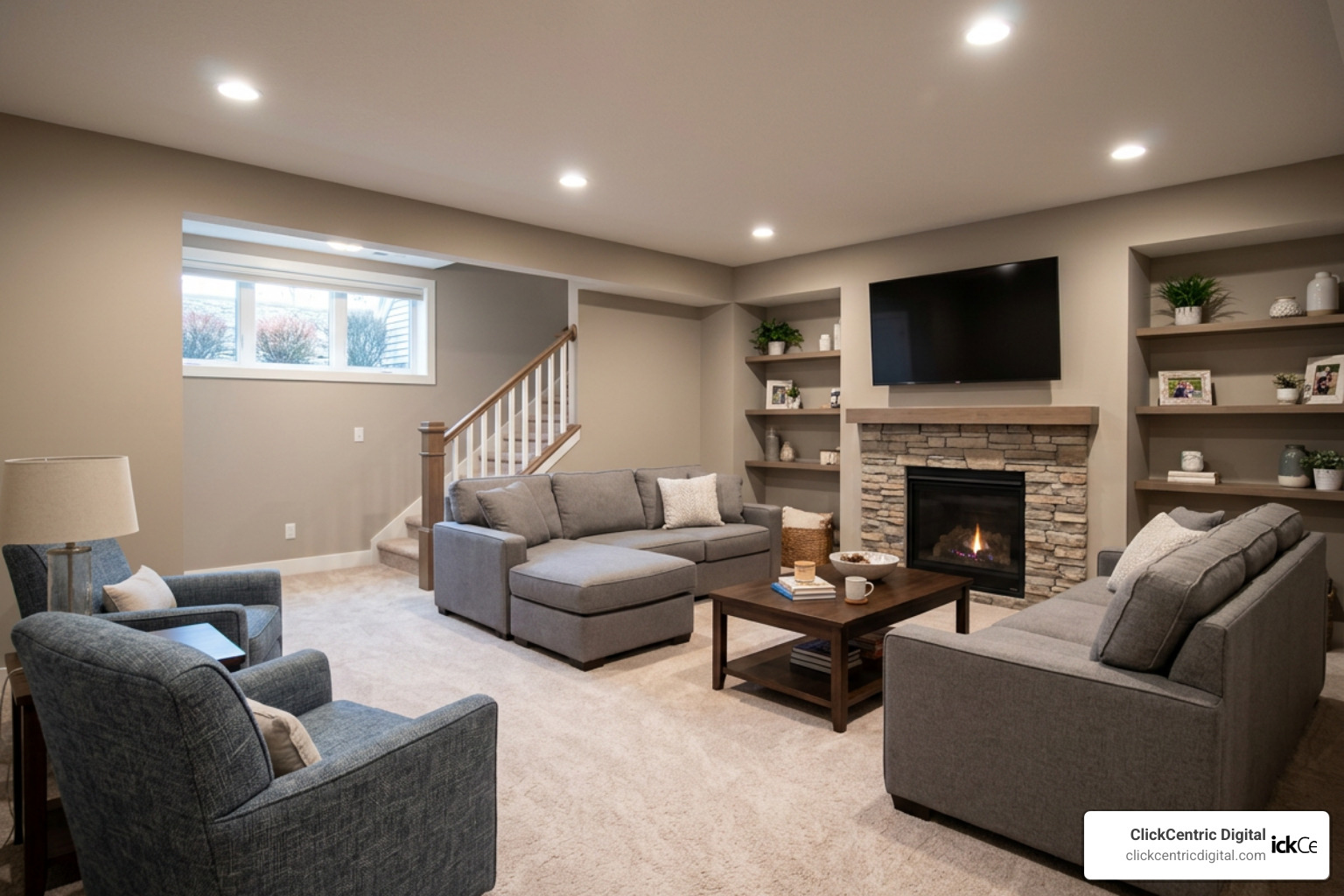
When we talk about basement finishing in Grand Rapids, MI, we are talking about transforming a cold, concrete storage zone into an extension of your main living space. In July 2026, the local market shows that the typical cost to finish a basement ranges from $55,000 to $100,000 or more.
For a smaller, partial remodel or simple updates, costs can range from $7,414 to $22,655, but a complete floor-to-ceiling transformation of an unfinished space requires a more substantial investment. On a per-square-foot basis, homeowners can expect to pay about $25 to $50 per square foot for basic flooring and wall finishes, with total costs—including framing, technical installations (HVAC, plumbing, and electrical), and insulation—averaging around $75 to $125 per square foot.
To help you understand where your money goes, we can look at the Thornapple Construction cost guide, which emphasizes how mechanical integration and layout changes influence your bottom line.
Basement Finishing Cost Comparison Table
| Finish Level | Description | Est. Cost Range (1,000 Sq. Ft.) | Key Features Included |
|---|---|---|---|
| Basic Finish | Open-concept family room, basic carpeting, painted drywall, and standard recessed lighting. | $35,000 – $55,000 | Basic framing, electrical codes met, open floor plan, no plumbing. |
| Mid-Range | Multi-room layout, full bathroom, luxury vinyl plank (LVP) flooring, and a dedicated home office. | $55,000 – $85,000 | Bathroom plumbing, standard egress window, bedroom closet, upgraded trim. |
| High-End / Custom | Luxury entertainment suite, custom wet bar, home theater with soundproofing, gym, and guest suite. | $85,000 – $120,000+ | Full custom wet bar, tiled walk-in shower, structural alterations, premium HVAC. |
Cost Drivers: What Makes a Quote Skyrocket?
If you received a quote that sits on the higher side of these averages, several hidden factors are likely at play:
- Plumbing Additions: Adding a bathroom where no rough-in plumbing exists requires jackhammering the concrete floor to lay drain lines. This plumbing labor can easily add $2,500 to $5,000 to your bill.
- Foundation Repair and Waterproofing: Finishing over a wet foundation is a recipe for disaster. If your contractor discovers foundation cracks or bowing walls, professional repair can add $5,000 to $7,000. Comprehensive waterproofing systems range from $300 for minor crack sealing to $5,000+ for interior French drains and sump pumps.
- HVAC Integration: Simply cutting a hole in your existing ductwork rarely cuts it. Properly heating and cooling a basement in West Michigan’s freezing winters often requires dedicated zone dampers, baseboard heaters, or a ductless mini-split system, which can run between $4,000 and $6,400.
- Electrical Upgrades: Modern building codes require dedicated circuits for basement appliances, bathrooms, and entertainment systems. Upgrading an outdated electrical panel to handle this load can add $1,000 to $1,500.
- Structural Changes: Want to remove a support post to create a wide-open home theater? You will need a structural engineer and a heavy steel beam, which instantly inflates labor and material costs.
Financing and Payment Options for Your Project
Because a basement remodel is a major investment, most reputable Grand Rapids Basement Finishing Companies offer flexible payment options to make the project manageable. Common financing paths in West Michigan include:
- Promotional Financing: Some major specialty contractors run aggressive promotions, such as “no payments and no interest until 2028.” This allows you to finish your project now and defer payments while you build equity.
- Home Equity Loans and HELOCs: Since finishing a basement increases your home’s value by up to 20%, leveraging your existing home equity is one of the most popular ways to secure a low-interest rate.
- Cash-Out Refinancing: Depending on local interest rates in 2026, some homeowners choose to refinance their primary mortgage to pull out cash for home renovations.
- Standard Contractor Payment Schedules: A typical professional contract will never ask for 100% upfront. Instead, you will pay a deposit to secure your spot on the calendar, followed by milestone payments (e.g., after framing, after drywall, and a final walkthrough payment).
Timeline and Process: How Long Does It Actually Take?
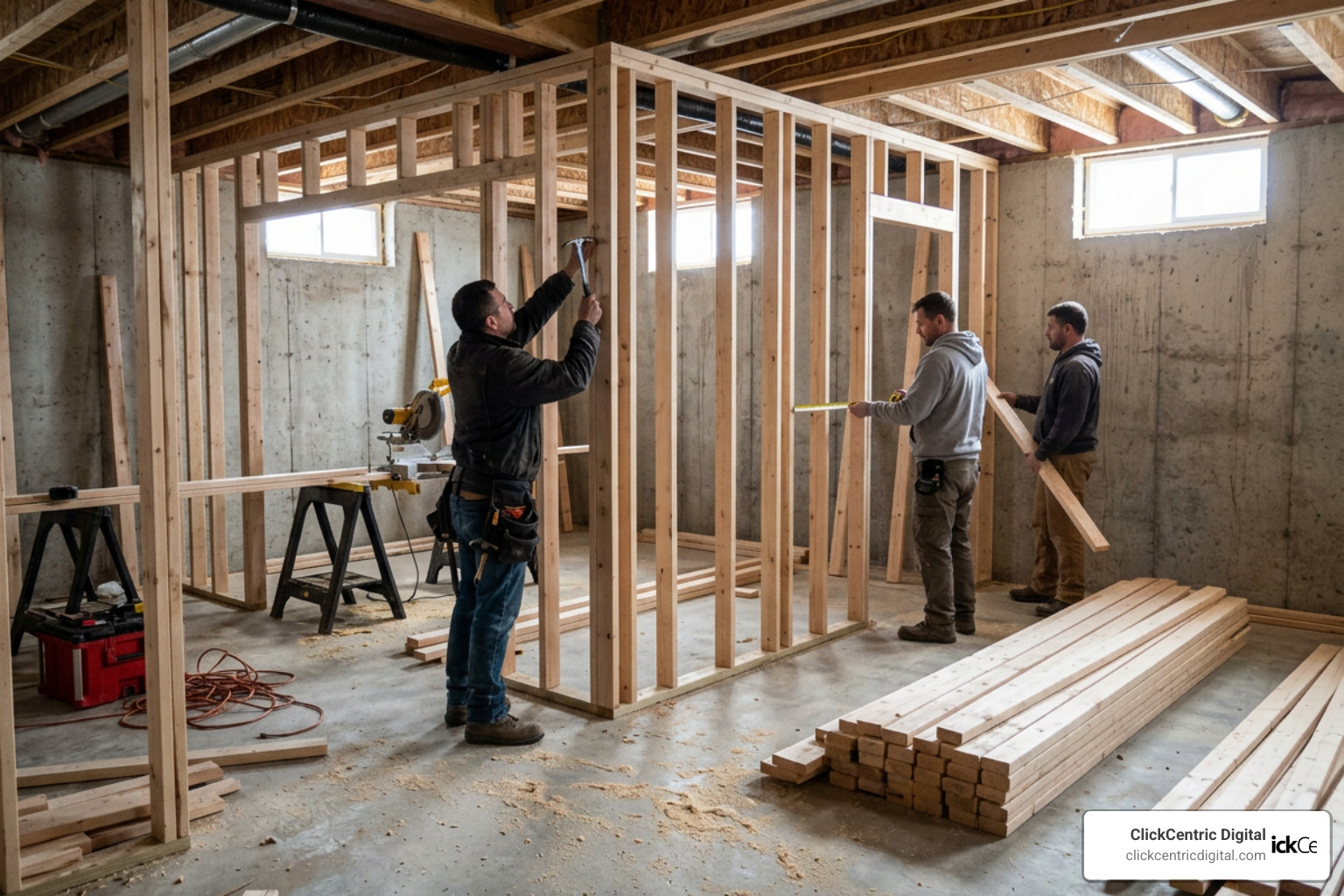
A professional basement finishing project typically takes 6 to 12 weeks from demolition to the final walkthrough. While some highly specialized teams can complete a straightforward open-concept layout in 4 to 8 weeks, adding bathrooms, custom bars, and bedrooms usually extends the project to the 2 to 3-month mark.
If you attempt a DIY approach, keep in mind that balancing work, family, and tool rentals often stretches this timeline to 6 months or even a year.
The Step-by-Step Construction Schedule
To help you visualize the journey, here is how a typical professional contractor schedules the work:

- Pre-Construction & Moisture Evaluation: Before any lumber arrives, the contractor assesses the space for moisture, seals any foundation cracks, and secures the building permits.
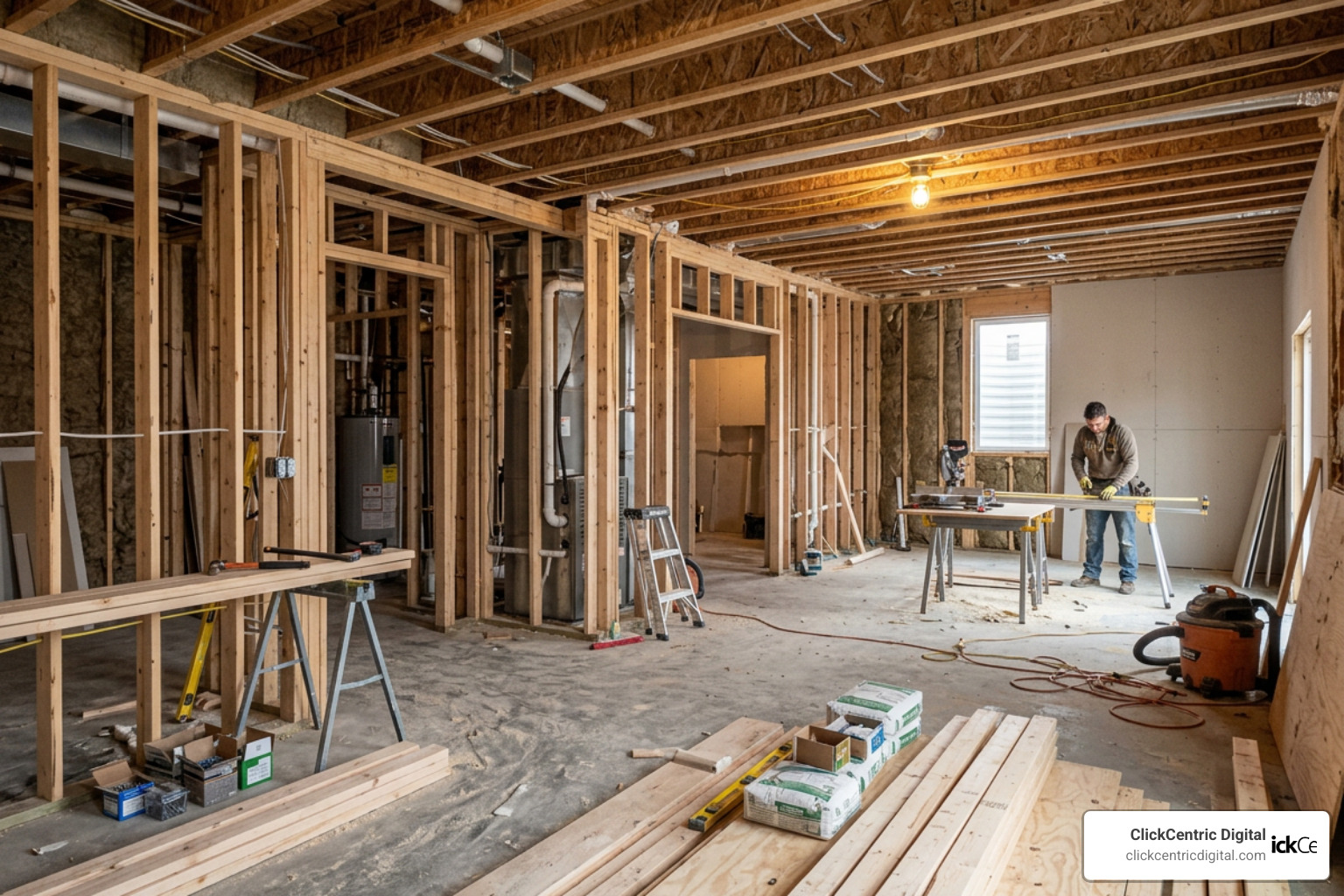
- Framing Stage: The skeletal structure of your new rooms, closets, and utility spaces is built using wood or metal studs.
- Plumbing & Electrical Rough-In: Subcontractors run water lines, drain pipes, electrical wiring, outlet boxes, and media cables behind the scenes.
- Insulation & Vapor Barriers: To keep the space warm and dry, insulation is installed along the exterior walls, often accompanied by a vapor barrier.
- Inspections (Rough-In): Local building inspectors visit to approve the framing, electrical, and plumbing before they are covered up.
- Drywall Installation & Painting: Drywall is hung, taped, mudded, sanded, and painted. This is the stage where the basement finally starts to look like a real home.
- Flooring & Trim: LVP, tile, or carpet is laid down, and doors, baseboards, and casings are installed.
- Fixtures & Finishes: Electricians and plumbers return to install light fixtures, outlets, sinks, toilets, and custom cabinetry.
- Final Inspection & Walkthrough: The city signs off on the completed project, and you do a final walkthrough with your builder to address any minor touch-ups.
Crucial Prep Work: Moisture, Permits, and Egress Windows
No matter how beautiful your finished basement looks, it is only as good as the preparation work underneath. West Michigan’s seasonal freeze-thaw cycles place immense hydrostatic pressure on your foundation. Before you hang a single sheet of drywall, you must address moisture, permits, and safety codes.
For detailed guidelines on preparing your home’s envelope, check out the Ridgewood Home Construction guidelines, which emphasize a “moisture-first” design philosophy.
Do You Need a Permit for Basement Finishing Grand Rapids MI?
Yes! You absolutely need a permit to finish a basement in Grand Rapids and surrounding municipalities like Rockford, Kentwood, or Grand Haven. Any project that involves framing walls, installing electrical outlets, adding plumbing, or putting in heating vents requires a building permit.
The average cost of a building permit ranges from $1,200 to $2,000. A reputable contractor will always handle the permitting process for you, including scheduling and attending all necessary inspections. If a contractor suggests bypassing the permit process to “save you money,” run the other way. Unpermitted basement finishes can lead to:
- Denied insurance claims if your basement ever floods or experiences an electrical fire.
- Major headaches when you try to sell your home, as buyers and appraisers will flag unpermitted square footage.
- City fines and the potential requirement to tear down drywall so inspectors can view the rough-in work.
Egress Window Requirements and Safety Compliance
According to Michigan building codes, you cannot legally or safely build a bedroom in a finished basement without an egress window. An egress window is a large, specially designed window that opens easily to allow a person (including a firefighter wearing full gear) to escape in an emergency.
Even if you do not plan to build a bedroom, installing an egress window is highly recommended. It floods the space with natural light, improves air circulation, and prevents the basement from feeling like a dark cave. If you are adding a guest suite, the bedroom must have its own dedicated egress window leading directly outside.
Popular Upgrades and Maximizing Your Return on Investment
Finishing your basement is one of the smartest home improvement decisions you can make. While a kitchen remodel or home addition can be incredibly disruptive, basement construction happens entirely below your main living area, keeping your daily life relatively peaceful.
On average, a finished basement in West Michigan yields a 70-75% return on investment (ROI) and can increase your home’s overall resale value by up to 20%.
Designing the Ultimate Basement Space
Homeowners in the Grand Rapids area are moving away from simple “playrooms” and investing in high-end, functional spaces:
- Custom Wet Bars & Kitchenettes: Perfect for hosting game-day parties. These spaces often feature custom cabinetry, quartz countertops, beverage fridges, and built-in kegerators.
- Home Theaters & Media Rooms: Complete with soundproofing insulation, acoustic wall panels, stepped seating, and projector setups.
- Guest Suites: A private bedroom paired with a beautiful tiled bathroom allows out-of-town guests to enjoy their own space.
- Home Gyms & Fitness Studios: Designed with heavy-duty rubber flooring, mirrored walls, and reinforced ceilings for suspension trainers.
- Dedicated Home Offices: As remote work remains popular, a quiet, insulated basement office is highly sought after by local buyers.
For those looking to explore specialized design options, you can check out Basement Remodeling in Grand Rapids | Finish & Upgrade for ideas on layout optimization and high-quality material selections.
How to Choose a Reputable Grand Rapids Contractor
Choosing the right partner for your project can mean the difference between a dream space and a multi-month construction nightmare. Here is how to vet local professionals:
- Look for Specialization: Choose a contractor who specializes in basements. Basement environments have unique challenges (moisture, low clearances, concrete walls) that standard home remodelers might not handle daily.
- Demand a Fixed-Price Contract: Avoid “time and materials” estimates. A reputable builder should provide a detailed, itemized quote with a fixed-price guarantee to protect you from surprise change orders.
- Verify Licensing and Insurance: Ensure they hold an active Michigan Residential Builder’s License and carry comprehensive general liability and workers’ compensation insurance.
- Ask About the Warranty: A quality contractor should stand behind their work with a strong warranty—ideally a 2-year workmanship warranty or a limited lifetime warranty on proprietary moisture-resistant wall systems.
- Read Local Reviews: Check online reviews and ask for local references. For more tips on vetting local service providers, read The Local SEO Company Michigan Guide for Business Owners.
Frequently Asked Questions About Grand Rapids Basement Remodeling
Can I finish my basement myself to save money?
While taking a DIY approach can save you on labor costs, it is rarely as simple as it looks. Framing straight walls against uneven concrete, running safe electrical circuits, and plumbing a new bathroom require highly specialized skills.
If you make a mistake with waterproofing or electrical code compliance, fixing it later can cost double what you originally “saved.” We highly recommend leaving the structural, plumbing, and electrical work to licensed professionals, even if you choose to handle minor cosmetic tasks like painting or trim yourself.
What is the best flooring for a West Michigan basement?
Because basements are naturally prone to higher humidity and potential moisture seeping through the concrete slab, traditional solid hardwood is a poor choice—it will warp and buckle over time. The best flooring options for a Grand Rapids basement include:
- Luxury Vinyl Plank (LVP): 100% waterproof, highly durable, and available in beautiful wood-look finishes.
- Engineered Tile or Porcelain Tile: Virtually impervious to water, though it can feel cold on bare feet without subfloor insulation or radiant heating.
- Moisture-Resistant Carpeting: Ideal for home theaters and playrooms where comfort and warmth are priorities, provided a high-quality vapor barrier pad is installed underneath.
For professional assistance in choosing materials, you can consult with a local specialist like Basement Finishing Contractor | Grand Rapids, MI to find options that suit your budget and moisture levels.
How do local contractors handle heating and cooling in the basement?
Because cold air naturally sinks, basements in West Michigan can get incredibly chilly, even when your upstairs thermostat reads 72 degrees. Local contractors handle this by:
- Extending Existing HVAC Ductwork: Adding supply vents near the floor and return vents to pull cold air out of the space.
- Installing Dedicated Zone Dampers: Allowing you to control the basement temperature independently from the rest of the house.
- Using Ductless Mini-Split Systems: An energy-efficient solution that provides both heating and cooling directly to the basement without taxing your main furnace.
- Proper Insulation: Wrapping the foundation walls in high-R-value foam board or fiberglass batts to seal out the cold Michigan earth.
Conclusion
Finishing your basement is one of the most flexible, high-impact upgrades you can make to your home. While a quote of $55,000 to $100,000 might seem steep at first glance, the long-term benefits—including a 70-75% return on investment, up to 20% increased resale value, and hundreds of square feet of comfortable new living space—make it a highly rewarding venture.
If you are a local home improvement contractor or business owner in West Michigan looking to connect with homeowners searching for your services, we can help. At ClickCentric Digital, we specialize in helping local businesses dominate search results and acquire high-value customers.
To learn more about how to grow your local presence, check out our guide on West Michigan Digital Marketing Agencies That Actually Deliver Results or explore how we design high-converting local PPC campaigns to keep your phone ringing year-round.
Sorry, the comment form is closed at this time.