
01 Sep Detailed Guide to Compare Review Management Services
Detailed Guide to Compare Review Management Services
Review Management Services Help Local Businesses Earn Trust

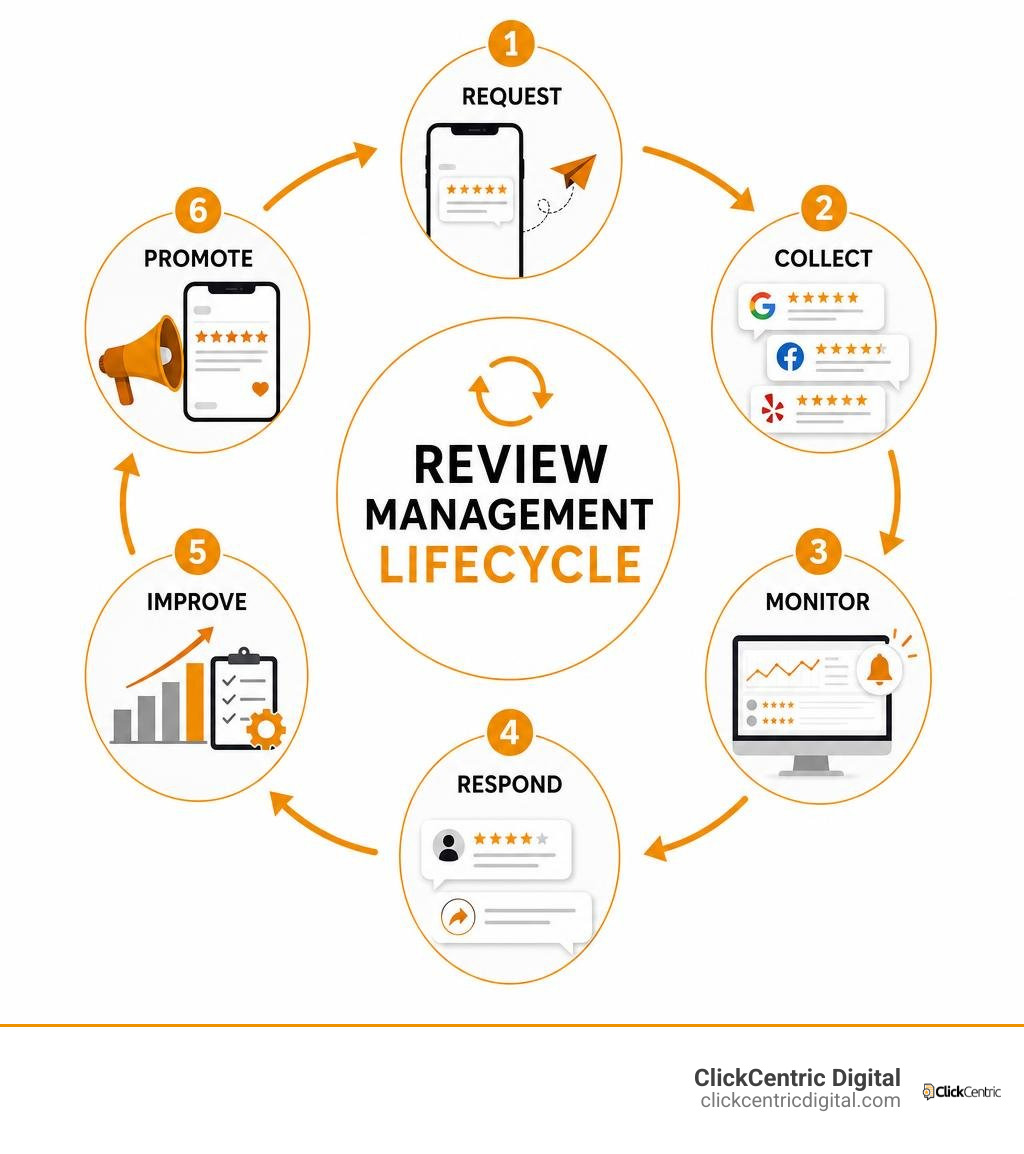
Review management services help you collect, monitor, respond to, and use customer reviews across platforms such as Google, Facebook, and Yelp. For a local business, the practical goal is simple: ask for feedback soon after a completed service, respond quickly to every review, and showcase genuine positive comments where new customers will see them.
A strong service should help you:
- Send timely review requests by text or email.
- Bring reviews from key platforms into one inbox.
- Alert your team to new feedback, especially negative reviews.
- Track recurring service issues and employee mentions.
- Turn authentic positive reviews into website and social proof.
Reviews are not the whole of your reputation, but they are one of the clearest public signals of how customers experience your business. Consistent review collection and thoughtful responses can help you stand out when prospects compare nearby options.
I am Fred Dirkse, and this guide will help you compare review management services based on the features and workflows that matter most to local growth.
Understanding Review Management vs Reputation Management
When business owners look to scale their local presence, they often treat review management and reputation management as the exact same task. While they work hand in hand, they address different layers of your brand perception and digital presence.
Review management is an operational feedback loop. It focuses directly on generating, tracking, and answering customer evaluations on third-party sites. In contrast, comprehensive reputation management encompasses your broader public relations, media sentiment, brand equity, press mentions, and overall public standing across the entire web.
Core Differences in Scope and Strategy
The scope of review management is tactical and direct. It ensures your Google Business Profile, Facebook page, and vertical-specific directories continuously receive fresh, verified customer feedback. It directly impacts your listing optimization and helps you spot friction points in daily operations before they become larger public relations headaches.
Broader Reputation Management encompasses traditional public relations, crisis management, executive branding, and organic search engine results page (SERP) cleanup. While reputation strategy manages the macro-narrative of your brand name across search engines, review management handles the day-to-day interactions that build public trust and drive repeat customer retention.
Why Modern Businesses Need Specialized Review Management Services
Consumers in 2026 rarely make a purchasing decision without consulting recent social proof. Whether someone needs an emergency plumber or a boutique retail service, their buyer decision journey starts and ends with real-time customer validation.
Local search algorithms heavily reward review volume, recency, diversity, and owner responsiveness. Businesses that maintain high review velocity and actively reply to customer feedback outrank competitors who let their listings sit dormant. We have seen time and again that Mastering Local Reviews to Win More Customers directly elevates conversion rates, transforming casual searchers into paying clients.
Core Benefits of Automated Review Collection and Multi-Platform Monitoring

Attempting to collect reviews manually often leads to inconsistent results. Staff members forget to ask, customers get busy once they leave your facility, and business owners lose valuable hours chasing feedback across half a dozen portals.
Automating these workflows eliminates administrative friction, saving an average of 8+ hours per week while establishing a dependable engine for steady review volume. When businesses adopt dedicated automation tools, they routinely experience an average 35% revenue growth by building strong local credibility that continuously attracts new buyers.
Automated Review Collection Workflows and Request Timing
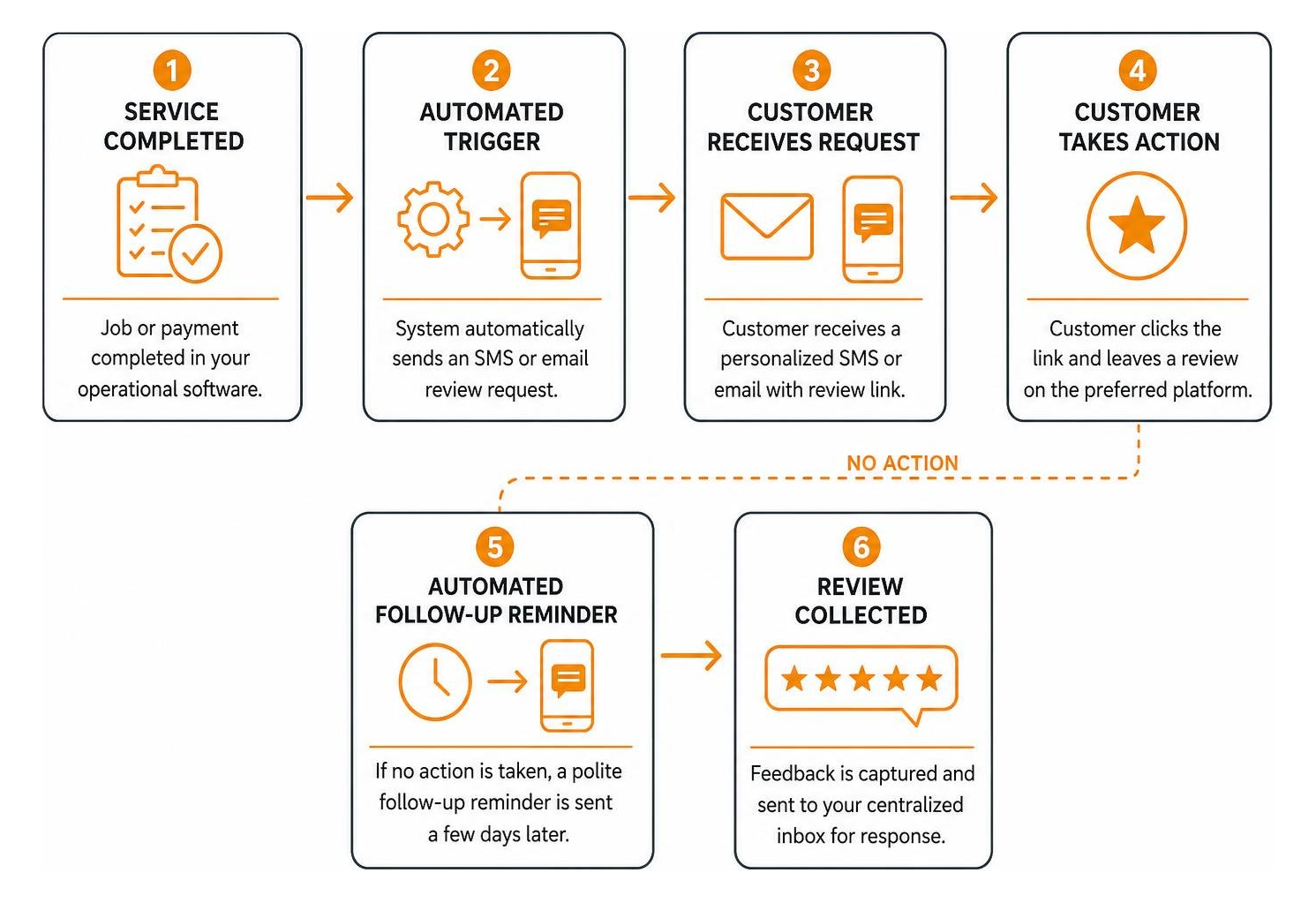
Timing is everything when asking for customer feedback. The optimal window to request a review is immediately upon job completion or payment processing, while the positive experience is fresh in the customer’s mind.
Using automated workflows, your operational software triggers an SMS or personalized email right as a technician completes an invoice. If the customer does not click the link right away, the platform gently sends a polite follow-up reminder a few days later. You can Stop Begging for Feedback with This Review Request Software and let automated delivery do the heavy lifting. In fact, many local contractors report that adopting automated workflows was the turning point where I Automated My Google Reviews and Got Ranked became a reality.
Centralized Multi-Platform Inbox for Google, Yelp, and Social Channels
Managing feedback across Google, Facebook, industry platforms, and local directories can quickly become chaotic without a single source of truth. Logging into five distinct apps every morning leads to missed feedback, delayed replies, and unnecessary stress.
A centralized multi-platform inbox pulls every incoming customer evaluation into a unified feed. This allows your team to maintain rapid response times and maintain brand consistency across all touchpoints. Finding The Best Review Monitoring Services to Save Your Brand’s Reputation ensures you never leave a frustrated customer hanging, whether they leave a note on Google or review your profile on directories such as THE BEST 10 PROPERTY MANAGEMENT NEAR GRAND … or local service hubs across West Michigan.
Key Features to Evaluate When Comparing Review Management Services
When evaluating providers, it is important to look past basic marketing claims and analyze the specific technical capabilities that drive daily business value.
| Feature Category | Critical Capabilities to Look For | Business Impact |
|---|---|---|
| Request Automation | CRM/POS triggers, automated SMS cadences, email sequences | Consistent review inflow without manual staff effort |
| Unified Inbox | Multi-channel integration (Google, Facebook, Yelp, directories) | Eliminates missed messages; cuts response times |
| AI Response Tools | Context-aware response generation, brand voice customization | Speeds up daily administration while sounding authentic |
| Compliance & Safety | TCPA compliance, 10DLC registration, anti-gating safeguards | Protects against regulatory fines and search penalties |
| Analytics & Insights | Sentiment trends, keyword extraction, technician attribution | Uncovers operational flaws and highlights top staff |
| Review Marketing | Dynamic website widgets, automated social media image sharing | Converts website visitors using verified social proof |
Employee Performance Tracking and Operational Insights
A major advantage of modern review platforms is the ability to connect customer sentiment directly to individual team members. When a customer leaves praise mentioning a specific service technician or front-desk coordinator, the platform logs that data onto internal scorecards.
This feature allows management to:
- Identify and reward top-performing staff based on authentic customer praise.
- Uncover specific operational bottlenecks and service quality issues before they escalate.
- Target coaching and training opportunities for team members who receive recurring constructive feedback.
- Build healthy internal motivation tied directly to real-world customer satisfaction.
Review Marketing and Social Proof Amplification
Collecting great feedback is only half the battle; the next step is making sure prospective clients actually see it. Review marketing tools allow you to automatically syndicate 5-star ratings across your most critical marketing channels.
Dynamic website widgets present verified, recent testimonials directly on your highest-converting landing pages, decreasing bounce rates and boosting quote requests. You can also turn top-rated feedback into social media graphics or integrate quotes into paid advertising campaigns. Why settle for mediocrity when you can Stop Settling for Four Stars and Generate More 5-Star Reviews Today and turn customer delight into your most effective sales asset?
How to Choose the Best Review Management Services for Your Business
Selecting the right partner depends on your specific industry, customer volume, and operational setup. A high-volume home service contractor has very different workflow requirements than a specialized property management firm like Professional West Michigan Rental Property Management .
Consider the following criteria during your evaluation:
- Software Scalability: Can the system support your business as you open new locations or add staff members?
- Direct Integration: Does the software integrate cleanly with your existing customer relationship management (CRM) tools, billing software, and field service systems?
- SMS and Regulatory Compliance: Does the provider manage compliance with strict telecom standards (such as 10DLC) and adhere strictly to search engine policies against review-gating?
- Onboarding and Support: Will you receive personalized onboarding and ongoing technical support, or are you left to navigate a self-service dashboard on your own?
Understanding How to Pick a Review Generation Platform for Local Businesses helps you choose a system that pays for itself through saved labor and new customer acquisition.
Best Practices for Requesting, Managing, and Responding to Customer Feedback
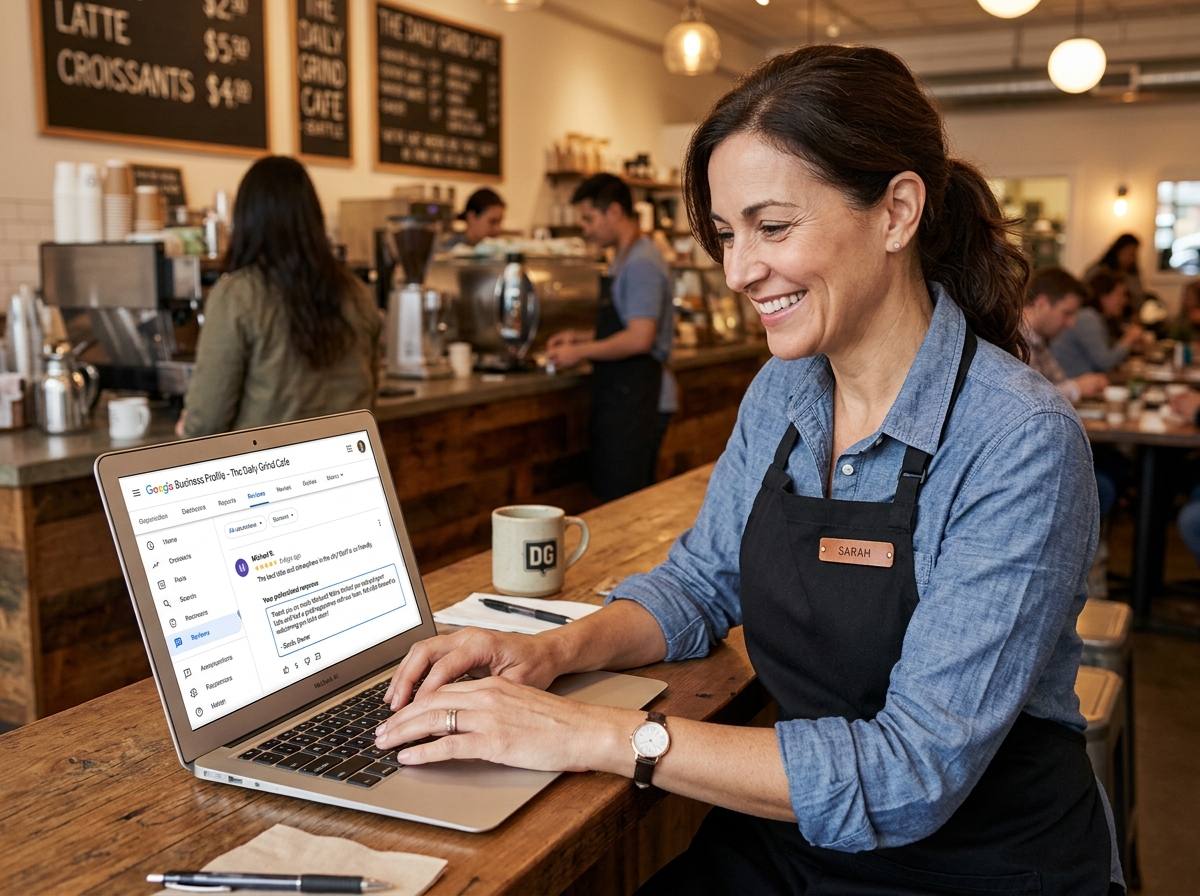
Having advanced software is only as effective as the processes behind it. Establishing sound operational habits ensures your business collects genuine feedback consistently while preserving brand integrity across public channels.
How to Ask Customers for Reviews Without Friction
Customers generally want to support businesses that provide excellent service, but complicated review processes create friction. The secret to high conversion rates is simplicity and clarity.
- Make the link direct: Send customers straight to your review submission window with a single click rather than asking them to navigate search engines manually.
- Personalize the message: Mention the customer’s name and the specific service provided so the message feels personal. You can start with pre-tested Copy and Paste Google Review Request Templates for Small Businesses to find wording that resonates.
- Utilize on-site touchpoints: For in-person interactions, allow customers to scan a physical card or counter display. Learning to Get More 5-Star Ratings with a Google Review QR Code bridges the gap between on-site service delivery and digital engagement.
- Follow up gently: If a customer opens your message but doesn’t leave feedback, send one polite automated reminder 48 to 72 hours later. Avoid overwhelming them with excessive messages.
Managing Negative Feedback and Spotting Fake Reviews
Negative feedback is an inevitable part of doing business. When handled with professionalism and poise, a thoughtful response to a critical review can actually increase consumer trust more than a profile with exclusively flawless ratings.
When dealing with suspicious or outright malicious reviews, follow structured verification protocols. Fabricated reviews often originate from competitors, disgruntled ex-employees, or bots with empty profiles.
If you detect policy violations—such as hate speech, conflicts of interest, or completely fabricated claims—you can take definitive action. Review guides on Spot It, Flag It, Bin It: How to Delete Fake Google Reviews and master How to Dispute Google Review Like a Pro to ensure unfair, illegitimate attacks do not compromise your public rating.
Frequently Asked Questions About Online Reviews
How do review management platforms automate feedback collection?
Review platforms connect directly with your existing POS, CRM, or invoicing software. When an invoice is marked as paid or a technician completes a job, an API trigger automatically queues a personalized SMS or email review request. The platform tracks whether the link was opened and can send scheduled follow-ups without any manual intervention from your staff.
What are the risks of fake reviews and how can businesses handle them?
Fake reviews can distort your overall star rating, reduce local search visibility, and mislead prospective customers. When dealing with illegitimate feedback, document your customer service records to prove the reviewer was never a client. Submit a formal removal request through the platform’s business support portal, citing the specific policy violations. While waiting for a resolution, post a calm, professional public response stating that you have no record of their service.
Can customer reviews be used to evaluate team members?
Yes. Modern review platforms extract employee names and assign sentiment scores directly to individual technicians, stylists, or service advisors. This data provides objective metrics on customer satisfaction, helping management reward top performers and identify specific training needs across the team.
Conclusion
Systematic review generation and proactive feedback monitoring are essential pillars of local business growth. By replacing scattered manual outreach with automated request workflows, centralized monitoring, and systematic social proof marketing, your business can build lasting credibility and maintain high local search visibility.
At ClickCentric Digital, we help local businesses dominate search results, streamline customer communication, and turn genuine customer satisfaction into measurable revenue growth. If you are ready to take control of your digital reputation and build an automated review engine that works around the clock, explore our custom reputation management strategies today.
Sorry, the comment form is closed at this time.