

30 Jul Local Google Rankings: How to Put Your Business on the Map
Local Google Rankings: How to Put Your Business on the Map
Why It’s Harder Than Ever to Improve Local Google Rankings (And What Actually Works)
If you want to improve local Google rankings, here are the most important steps to take right now:
- Verify your Google Business Profile — unverified profiles rank poorly or not at all.
- Complete every field in your profile — hours, category, attributes, photos, and description.
- Get and respond to reviews — more positive reviews boost your visibility and credibility.
- Keep your business name, address, and phone number (NAP) consistent across every directory.
- Build local citations and backlinks from trusted local sources.
- Optimize your website with local keywords, fast load times, and Local Business Schema.
- Create location pages if you serve multiple areas.
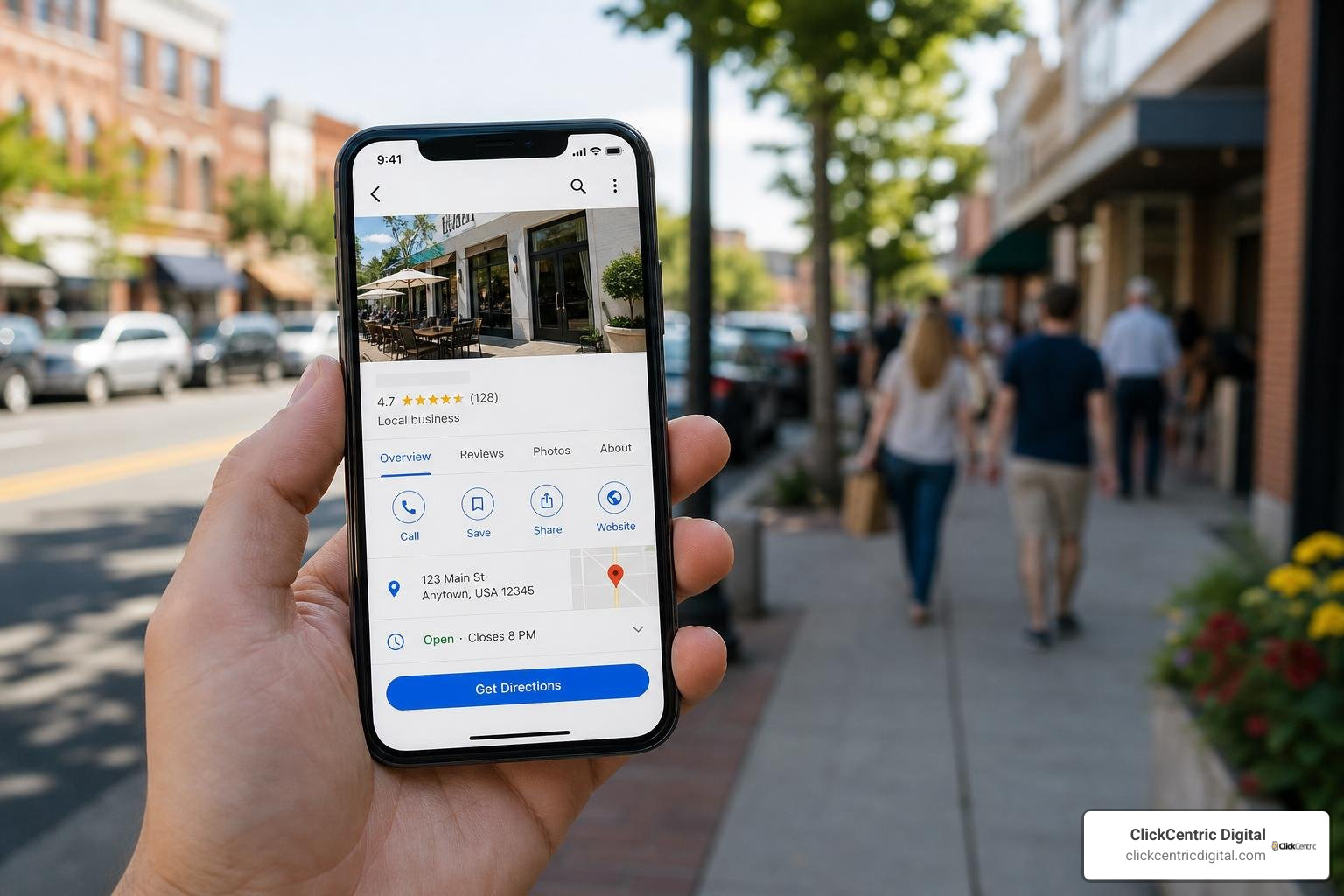
Picture this: someone is out on a Friday night and pulls out their phone to search “Italian restaurant near me.” Within seconds, Google serves up three results — a local pack — right at the top of the page. Those three businesses get the clicks, the calls, and the customers. Everyone else is essentially invisible.
That’s the reality of local search in 2026.
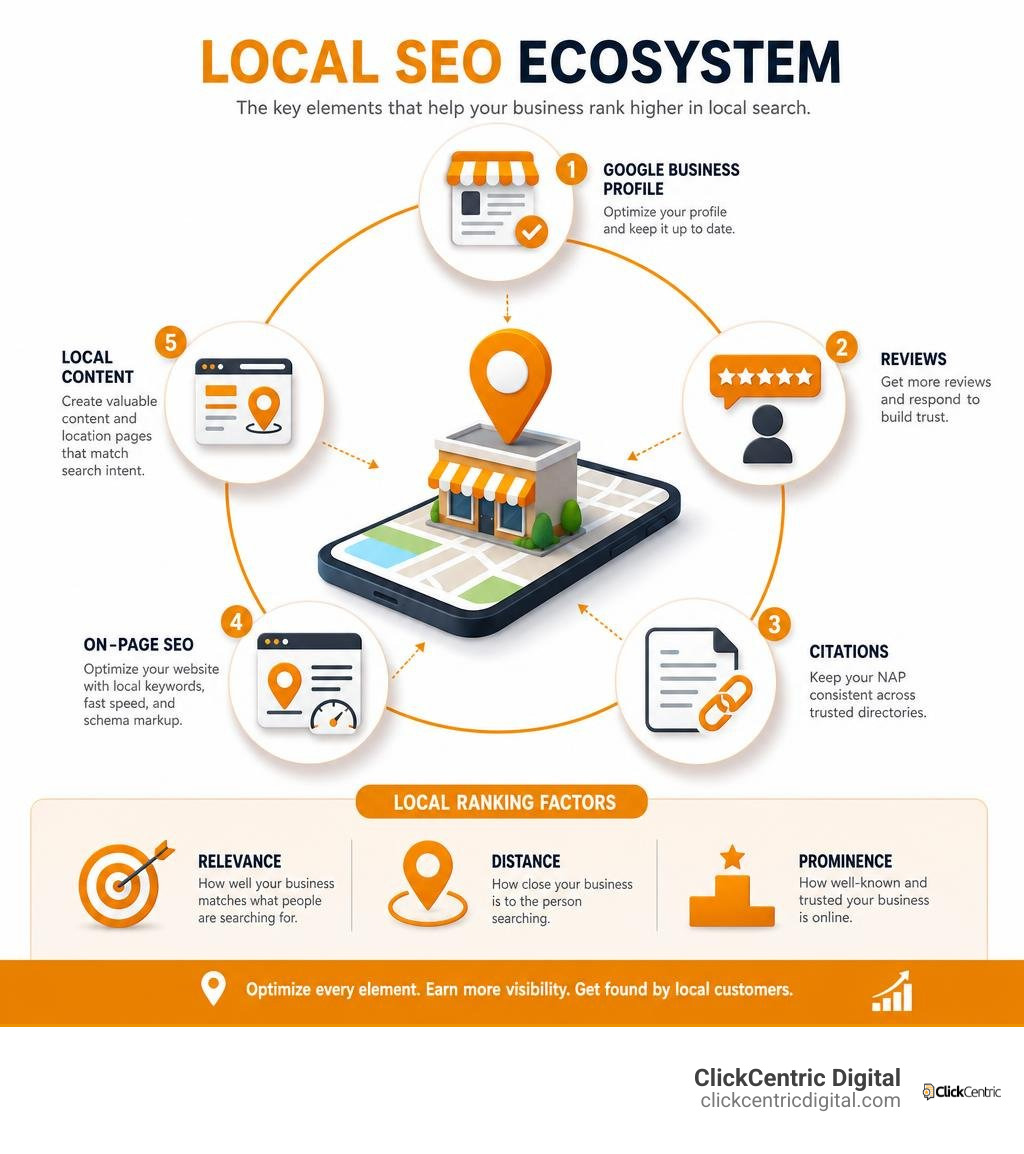
Local results on Google Maps and Search are driven by three core factors: relevance, distance, and prominence. Google won’t let you buy your way to the top — there is no way to pay for a better local ranking. It’s purely earned. And 77% of consumers read reviews before making a purchase decision, which means your online presence isn’t just a nice-to-have — it’s make-or-break.
The good news? Every factor is within your control.
I’m Fred Dirkse, and in this guide I’ll walk you through every proven tactic to put your business on the map — from your Google Business Profile to your website’s technical health.
Key terms for improve local google rankings:
The Core Pillars of Local Search Algorithms
Before we dive into the nuts and bolts of optimization, we need to understand how Google decides who gets that coveted top spot. Google’s local search algorithm relies on three fundamental pillars: relevance, distance, and prominence.
According to the official Tips to improve your local ranking on Google – Google Business Profile Help, these three factors work together to deliver the best possible match for a user’s search query.
- Relevance: How well does your local business profile match what someone is searching for? If a user searches for “organic coffee Grand Rapids MI,” Google is going to look for profiles that explicitly mention organic coffee, have it selected as a category, or feature it in their reviews and posts.
- Distance: How far is your business from the searcher’s physical location or the location specified in their search? While you cannot control where a searcher is standing when they look for you, you can make sure Google knows exactly where your front door is.
- Prominence: This refers to how well-known or popular your business is. Google calculates this using information gathered from across the web, including links, articles, directories, and your Google reviews and ratings. Prominence is also partially based on offline fame. If you run a historic, well-known landmark or brand in West Michigan, Google’s algorithm naturally favors that established prominence.
To understand how these factors shift over time, check out our analysis of the Google Maps Ranking Factors for 2025 to see how algorithmic weight has evolved. One crucial thing to keep in mind: Google explicitly states that there is no way to request or pay for a better local ranking. It is a level playing field where smart optimization wins.
Step-by-Step Guide to Improve Local Google Rankings
To systematically climb the local search results, we need a clear, actionable game plan. It is not about doing one big thing; it is about doing a dozen small things exceptionally well.

Here is a quick checklist to guide your local search engine optimization journey:
- Claim and Verify Your Profile: You cannot optimize what you do not own.
- Establish Precise Business Hours: Keep these up-to-date, including holiday hours.
- Select Accurate Business Categories: Choose your primary category with extreme care.
- Utilize Business Attributes: Let customers know if you offer free Wi-Fi, outdoor seating, or wheelchair accessibility.
- Showcase In-Store Products: If you run a retail shop in Holland MI or Grand Haven MI, you can display real-time in-store product inventory directly on your profile.
To kick off this process, you first need to establish your presence. Learn how to Claim Your Spot on the Map With a Free Google Business Page to get your business verified and ready for optimization.
Optimize Your Google Business Profile to Improve Local Google Rankings
Your Google Business Profile (GBP) is the absolute cornerstone of your local SEO strategy. Think of it as your digital storefront. If it looks dusty, incomplete, or abandoned, neither Google nor your customers will want to spend time there.
To make sure you are squeezing every ounce of value out of your profile, focus on these key areas:
- Profile Completeness: Businesses with complete and accurate info are far more likely to show up in local search results. Fill out every single field Google offers.
- Primary and Secondary Categories: Your primary category carries massive weight. If you are a landscaping company in Kalamazoo MI, make sure “Landscaper” is your primary category, and use secondary categories like “Lawn Care Service” or “Tree Service” to round it out.
- Craft a Compelling Business Description: Write a natural, engaging description of what you do. Do not just stuff keywords like “improve local google rankings” into the text. Speak directly to your audience, highlight your unique selling points, and mention the West Michigan communities you serve.
- Upload High-Quality Photos and Videos: Profiles with active, high-resolution photos get significantly more requests for directions and website clicks. Post photos of your team, your office, your work, and even the view from your street.
For a deeper dive into making your profile irresistible to search crawlers, read our guide on How to Make Google Fall in Love With Your Business Profile.
Manage Customer Reviews to Improve Local Google Rankings
Reviews are the lifeblood of local search. Not only do 77% of consumers typically read reviews before making a purchasing decision, but Google has also made it clear that positive reviews and helpful replies directly help your business stand out in local search results.
More reviews and positive ratings will directly improve local google rankings by boosting your prominence score. Here is how to manage your reviews like a pro:
- Ask for Reviews Consistently: Do not be shy. Ask your customers at the point of sale, via follow-up emails, or with QR codes on your receipts.
- Respond to Every Single Review: Yes, even the bad ones. Replying to positive reviews builds loyalty. Replying to negative reviews with professionalism and a desire to resolve the issue shows prospective customers that you care about their experience.
- Incorporate Keywords Naturally: When customers mention specific services in their reviews (e.g., “best furnace repair in South Haven MI”), it helps Google connect your business to those search terms.
For more advanced strategies on dominating the local landscape through social proof, explore our insights on How to Win the Local Pack in 2026 and Beyond.
Building Authority with Citations and Local Backlinks
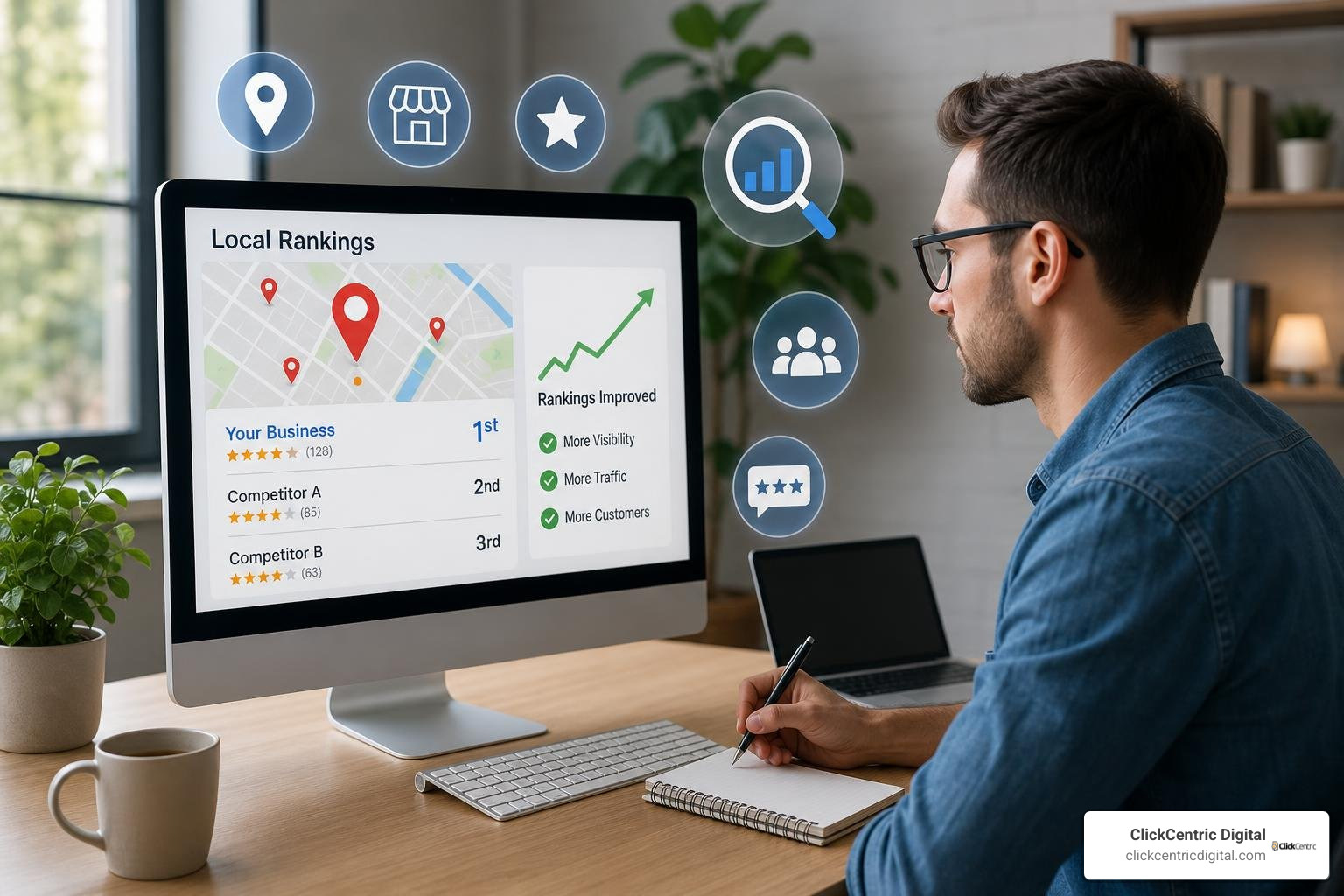
Once your Google Business Profile is in tip-top shape, it is time to build authority across the broader web. This is accomplished through two primary methods: local citations and local link building.
The Power of NAP Consistency
NAP stands for Name, Address, and Phone Number. To verify your physical location, Google crawls hundreds of business directories across the web (like Yelp, YellowPages, Bing Places, and local chamber of commerce sites). If Google finds conflicting information — like an old phone number on one site and a different suite number on another — it loses trust in your data.
Keeping your NAP perfectly consistent across all platforms builds a rock-solid foundation for your online presence.
Local Link Building
Traditional SEO focuses on getting links from high-authority national websites. Local SEO, however, cares deeply about community relevance. A link from a local high school sports team, a West Michigan neighborhood blog, or a Grand Rapids chamber of commerce is incredibly valuable because it signals to Google that you are a trusted, active member of the local community.
To learn how to lock down your listings and build local authority, read our comprehensive guide to Get Your Business on the Map and Stay There.
On-Page SEO and Technical Optimization for Local Search
Your website is the digital anchor for your local search presence. Google crawls your site to gather context about what your business does and where you do it.
To understand how local on-page SEO differs from traditional SEO, let’s look at this comparison:
| Element | Traditional SEO Focus | Local SEO Focus |
|---|---|---|
| Target Keywords | Broad, informational, global terms | Localized, high-intent terms (e.g., “dentist Holland MI”) |
| Content Strategy | High-volume blog posts, ultimate guides | Location pages, local community guides, local service pages |
| Schema Markup | Article, Product, or Organization Schema | Local Business Schema (including coordinates and NAP) |
| Backlink Profile | High-authority industry publications | Local sponsorships, local directories, regional blogs |
Local Keyword Research
To improve local google rankings, you must target the terms your neighbors are actually typing into the search bar. Use tools to find search volume for service-plus-location keywords (e.g., “roofing contractor Grand Rapids MI”). Don’t forget to optimize for “near me” searches by ensuring your physical address is clearly displayed in your website’s footer.
On-Page Elements and Site Speed
Your page titles, headers (H1, H2, H3), and body copy should naturally incorporate your target local keywords. Furthermore, technical performance matters. Site speed is a confirmed Google ranking factor. If your pages take too long to load, visitors will bounce, sending negative signals to Google. Keep your Core Web Vitals healthy by optimizing images, leveraging browser caching, and using clean code.
Implementing Local Business Schema
Local Business Schema is structured data code that you add to your website. It acts as a direct translator for search engines, telling Google exactly what your business name is, where you are located, what your phone number is, and what your operating hours are.
To discover more about aligning your on-page elements with local intent, check out our guide to Optimize for Local Search and Dominate Your Neighborhood.
Localizing Content and Managing Multi-Location Businesses
If you run a business with multiple physical locations — say, offices in Grand Rapids MI, Holland, and Kalamazoo MI — you cannot rely on a single homepage to rank for all of them. You need a dedicated multi-location SEO strategy.
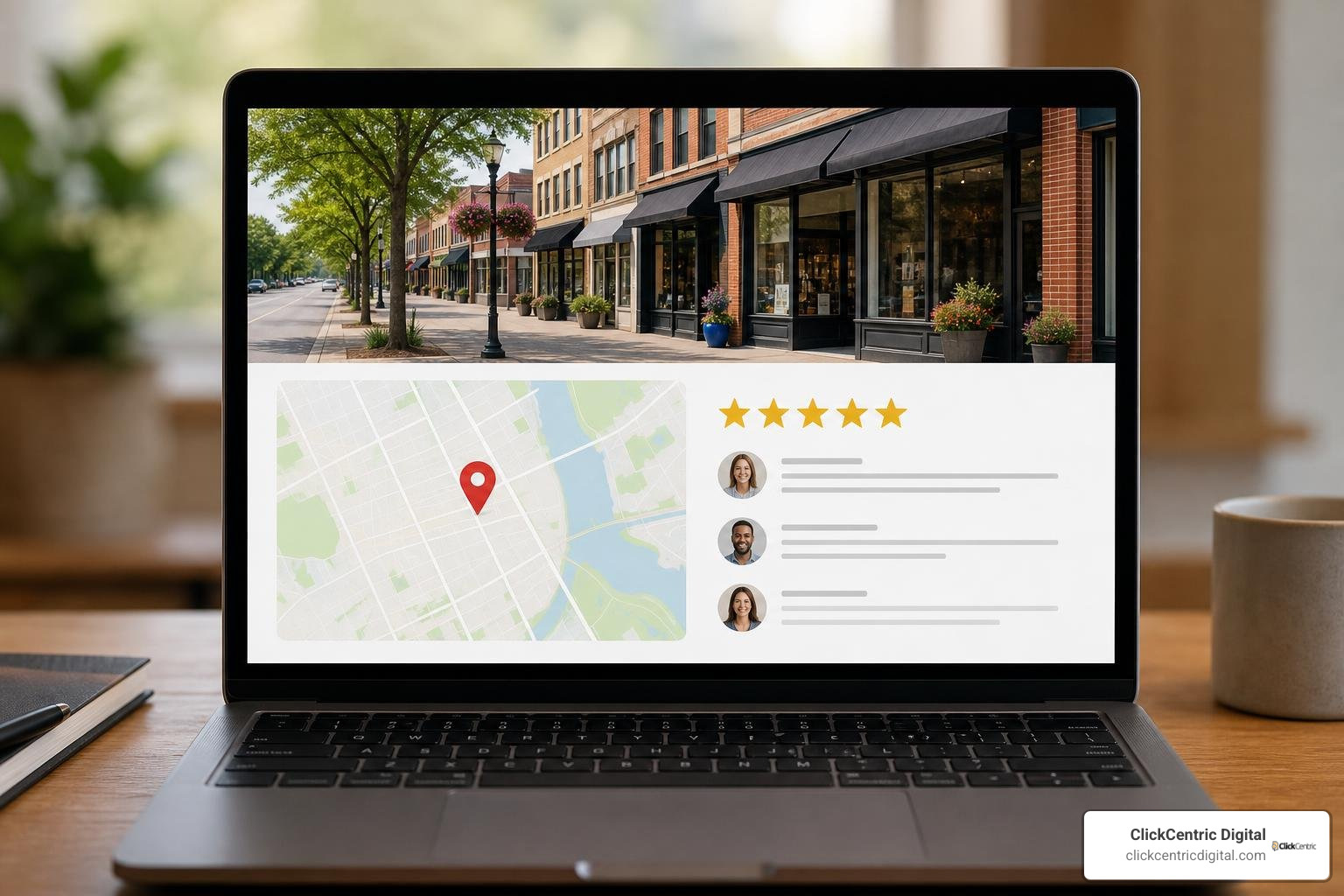
- Create Unique Location Pages: Each physical branch or primary service area needs its own dedicated page on your website. Avoid duplicate content; do not just swap out the city name. Write unique copy that highlights local staff, local community involvement, and specific reviews from customers in that town.
- Embed Google Maps: Embed an interactive Google Map on each location page to help Google (and your customers) find you easily.
- Develop Service Area Pages: If you are a mobile service business (like a plumber or electrician) serving Grand Haven MI or South Haven MI without a physical storefront there, create high-quality service area pages that detail the specific neighborhoods you travel to.
For a complete blueprint on scaling your local footprint across multiple regions, read The Ultimate Guide to Google Maps Marketing.
Frequently Asked Questions about Local SEO
Can you pay Google for a better local search ranking?
No. Google explicitly states that there is no way to request or pay for a better local ranking. The organic local search algorithm is kept highly confidential to ensure a fair, unbiased ranking system for all businesses. While you can run paid Google Local Services Ads, organic local pack rankings must be earned through relevance, distance, and prominence.
How does Google calculate distance for local searches?
Google calculates distance using several data points, including the searcher’s real-time GPS location (on mobile devices), their IP address, or the specific geographic terms used in the search query (e.g., “coffee shop Holland MI”). If a user does not specify a location, Google will estimate their location based on available data to serve the most geographically relevant results.
How long does it take to see improvements in local rankings?
Local SEO is a marathon, not a sprint. While some basic optimizations (like verifying your profile or correcting inaccurate business hours) can yield quick improvements within a few weeks, building true local prominence takes time. Generally, businesses see noticeable, sustained improvements in their local rankings within 3 to 6 months of executing a consistent local SEO strategy.
To stop guessing where your business currently stands, read our guide on how to Stop Guessing Your Local Map Ranking and start measuring your progress accurately.
Conclusion
Climbing the local search results and maintaining a dominant online presence requires continuous effort. From optimizing your Google Business Profile to building local backlinks and maintaining technical on-page SEO, every step is a building block toward greater visibility, more phone calls, and more foot traffic.
At ClickCentric Digital, we specialize in helping businesses across West Michigan — including Grand Rapids MI, Holland, Grand Haven MI, South Haven MI, and Kalamazoo MI — dominate their local markets. Whether you need to optimize your Google Business Profile, fix your local citations, or run hyper-targeted local campaigns, we have the expertise to make it happen.
Ready to take your local visibility to the next level? Explore our Paid Traffic Management Services and let us help you turn local searchers into loyal customers.
Sorry, the comment form is closed at this time.