


04 Jul 8 Pro Tips to Maximize Your Facebook Campaign Results
8 Pro Tips to Maximize Your Facebook Campaign Results
Why Facebook Ads Optimization Tips Can Make or Break Your Ad Spend
If you’re looking for the most effective facebook ads optimization tips in 2026, here’s a quick-reference summary before we dive deep:
Top Facebook Ads Optimization Tips at a Glance:
- Install the Conversions API alongside the Meta Pixel for accurate tracking
- Match your campaign objective to your actual business goal (sales, leads, awareness)
- Use Advantage+ targeting and consolidate ad sets to hit the 50-event learning threshold
- Refresh creatives every 7-14 days to prevent ad fatigue
- Use Advantage Campaign Budget (CBO) for scaling, ABO for testing
- Match your landing page to your ad’s message and offer
- A/B test one variable at a time and use automated rules to scale winners
- Wait 7-14 days before making optimization decisions — let the algorithm learn
Facebook advertising is still one of the most powerful tools available to local business owners. But running ads and optimizing ads are two very different things.
Most businesses set up a campaign, watch the budget drain, and wonder why results are underwhelming. The platform has changed dramatically. Meta’s algorithm now makes many decisions advertisers used to make manually — but only if you give it the right signals, structure, and creative to work with.
The good news? Small, systematic improvements compound fast. Accounts have unlocked 30% more conversions simply by switching bid strategies. Others have seen 251% more conversions by fixing their tracking setup. These aren’t outlier results — they’re what happens when the fundamentals are done right.
This guide walks you through 8 proven optimization tips that actually move the needle, whether you’re spending $500 or $50,000 a month.
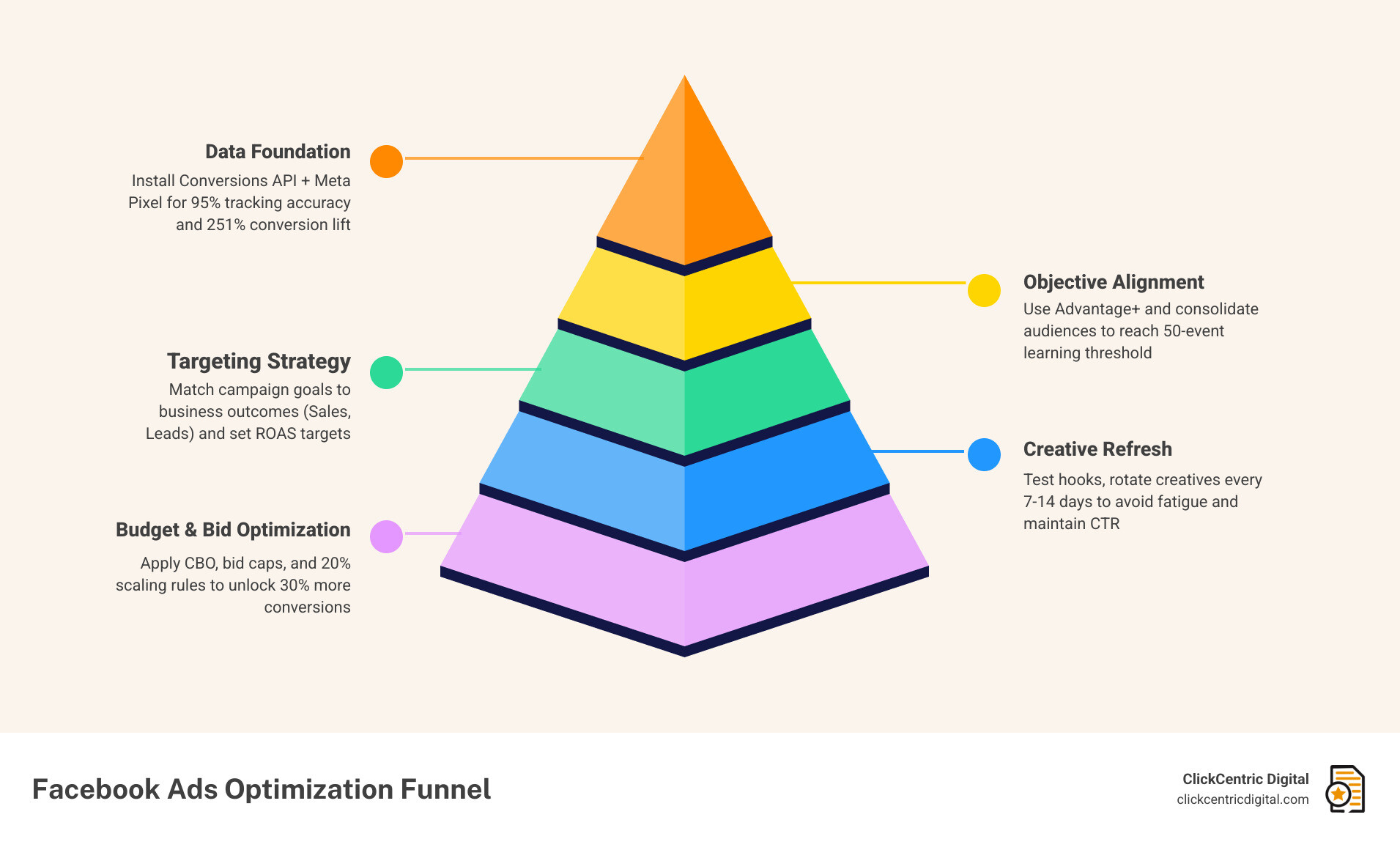
1. Strengthen Your Data Foundation with Conversions API
In 2026, the browser-based Meta Pixel is no longer enough on its own. Due to privacy changes and the decline of third-party cookies, relying solely on the Pixel is like trying to drive with a foggy windshield. To truly master facebook ads optimization tips, you must implement the Conversions API (CAPI).
CAPI creates a direct connection between our server and Meta. Instead of relying on a browser to “tell” Facebook a sale happened, your website tells Facebook directly. This is critical for data privacy compliance and tracking accuracy. Research shows that using CAPI can lead to a 251% increase in conversions and a 2.27x lower cost per result compared to Pixel-only setups.
Technical Setup for Facebook Ads Optimization Tips
When we talk about “signal loss,” we’re talking about the data gaps created by ad blockers and browser restrictions. By using server-side tracking, we can achieve up to 95% tracking accuracy, even after fixing a typical 30% data gap.
One of the most important metrics to watch here is your Event Match Quality (EMQ). This is a score from 1 to 10 in your Events Manager. We always aim for a score of 7.0 or higher. If your EMQ is below 6, your CPA (Cost Per Acquisition) could be 15-30% higher than it needs to be because the algorithm can’t “find” your customers effectively. Proper deduplication—ensuring the Pixel and CAPI don’t count the same sale twice—is the final piece of this technical foundation. For more on this, check out these 10 Best Tips to Optimize Facebook Ads in 2026 – Stape.

2. Align Campaign Objectives with Business Goals
One of the most common mistakes we see at ClickCentric Digital is a mismatch between what a business wants and what they tell Facebook to do. If you want sales, you must choose the Sales objective. If you choose “Traffic,” Facebook will find people who love to click on links but rarely buy anything. These “clicky users” drive up your costs without helping your bottom line.
Whether you’re running a local service business or an e-commerce shop, your objective should be outcome-driven. For example, Why Your Auto Shop Needs Facebook Ads Today highlights how choosing the right lead generation objective can transform a local business’s schedule.
- Sales Objective: Best for e-commerce and direct revenue.
- Leads Objective: Best for service-based businesses in West Michigan looking for consultations.
- Awareness: Best for massive reach, but rarely delivers a direct ROI.
We recommend focusing on “campaign liquidity”—reducing the number of campaigns and ad sets you run so that each one has enough data to perform.
3. Leverage Advantage+ and Broad Targeting
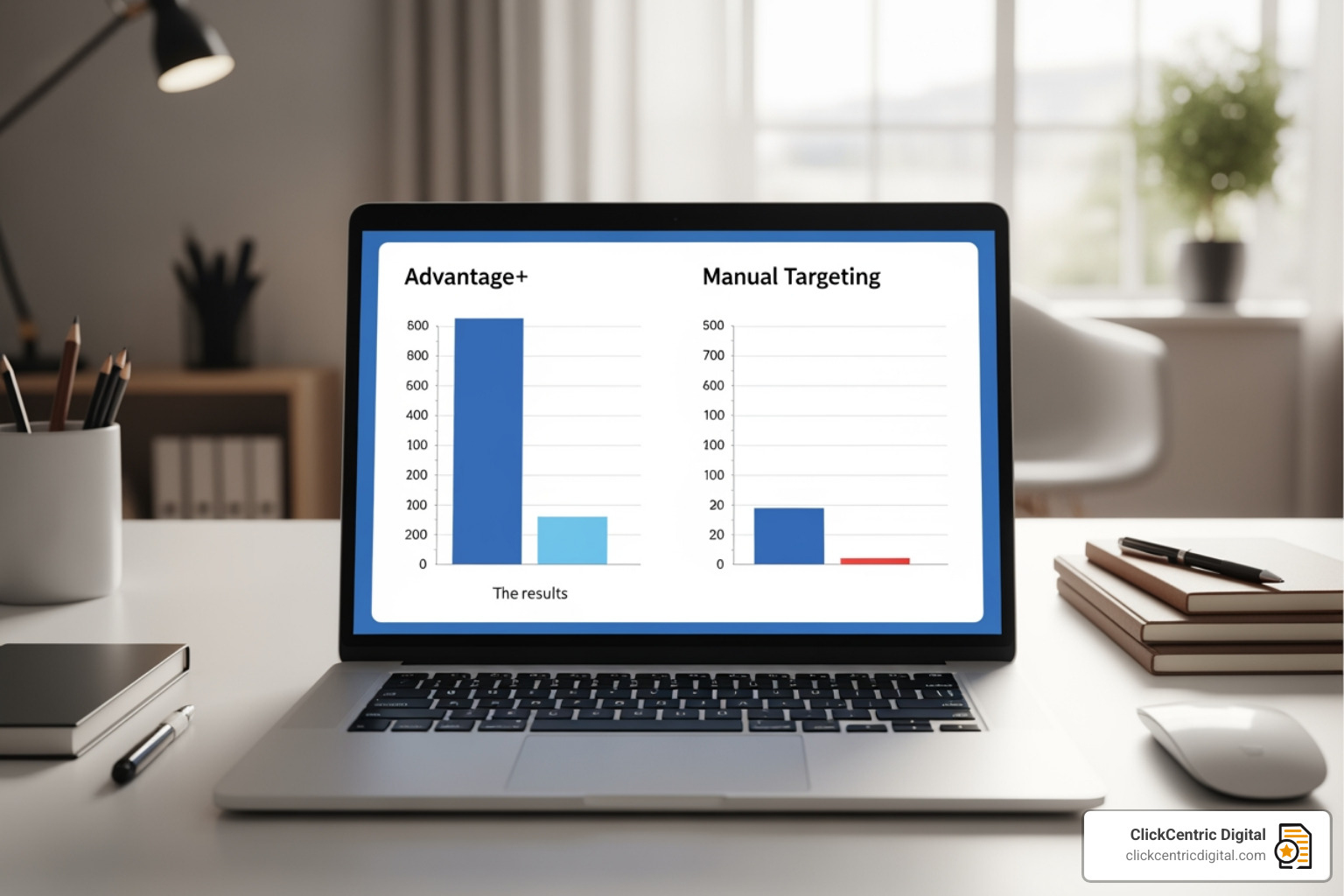
The “old way” of Facebook advertising involved micromanaging hundreds of tiny interest groups (like “people who like blue hammers and live in Holland, MI”). In 2026, the algorithm is smarter than we are. Broad targeting and Meta Advantage+ features are now the gold standard for facebook ads optimization tips.
Advantage+ Audience uses Meta’s AI to find your customers beyond the “boxes” of interest targeting. It works best when you give it a “seed”—like a list of your past customers—and then let it expand.
To exit the “Learning Phase,” an ad set needs roughly 50 conversion events per week. If you spread your budget too thin across ten different audiences, you’ll never hit that threshold. Consolidating your audiences helps the algorithm learn faster and lowers your costs. For local businesses, we often suggest a mix of broad geographic targeting within West Michigan and Lookalike audiences based on your best customers. Learn more about this in our guide on How to Run Facebook Ads for Local Business Without Losing Your Shirt.
4. Implement Advanced Facebook Ads Optimization Tips for Creative
In 2026, your creative (the images and videos) is actually your most important “targeting” tool. The algorithm looks at who interacts with your ad and then finds more people like them. This makes creative velocity—the speed at which you test new visuals—vital.
The biggest threat to your ROI is ad fatigue. Statistics show that around 19% of ad impressions are seen by the same person 5+ times in a 30-day period. When people see the same ad too often, they stop clicking, and your costs skyrocket.
Combatting Ad Fatigue with Facebook Ads Optimization Tips
We recommend a 7-14 day refresh cycle for your best-performing ads. You don’t always need a brand-new video; sometimes just changing the “hook” (the first 3 seconds) or the headline is enough to reset the fatigue.
According to 8 tips to optimise your Facebook Ads campaigns – Adsmurai, keeping your primary text under 125 characters and maintaining a frequency below 2.5 for cold audiences is key. We suggest running 3-6 ads per ad set to give the algorithm enough variety to optimize without spreading the budget too thin.
5. Optimize Bidding Strategies and Budgets
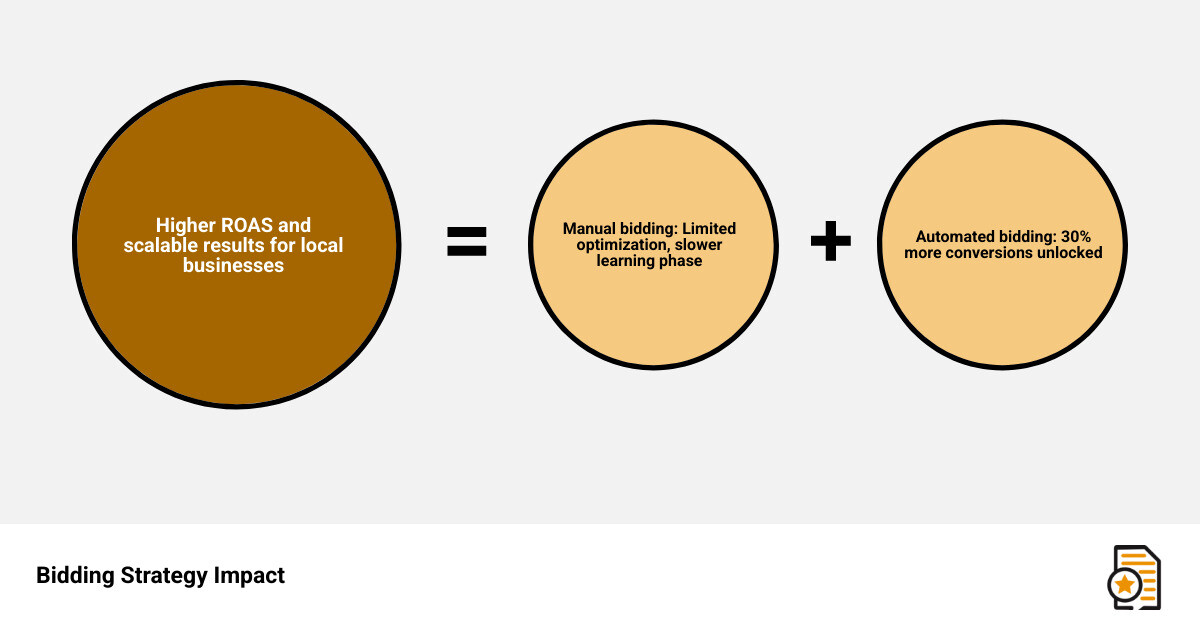
How you pay for your ads matters just as much as what the ads look like. Meta offers several bidding strategies, and choosing the right one can unlock 30% more conversions.
| Strategy | When to Use It | Goal |
|---|---|---|
| Highest Volume | New campaigns | Get as many results as possible for your budget. |
| Cost Cap | Scaling | Keep your average cost per result at a specific level. |
| Bid Cap | Advanced users | Control the maximum amount you’ll pay in any single auction. |
| ROAS Goal | E-commerce | Tell Facebook to find customers who will spend a certain amount. |
For most businesses in Grand Rapids or Kalamazoo, we recommend Advantage Campaign Budget (CBO). This allows Meta to automatically move your money to the ad sets that are performing best in real-time. If you’re trying to scale, follow the 20% rule: never increase your budget by more than 20% every 3-4 days. Larger jumps can reset the learning phase and hurt your performance. As noted by How To Optimize Facebook Ads To Boost Online Sales (2026) – Shopify, focusing on outcome-driven metrics like ROAS rather than clicks is the fastest way to grow.
6. Ensure Landing Page and Message Consistency
You can have the best Facebook ad in the world, but if your landing page is slow, confusing, or doesn’t match the ad, you’re throwing money away. This is called “message match.” If your ad promises a “10% discount for Grand Haven residents,” that exact offer should be the first thing they see on your website.
Consistency reduces your bounce rate and improves your Conversion Rate Ranking. Important factors include:
- Mobile Optimization: Over 90% of Facebook users are on mobile. If your site doesn’t work on a phone, your ads won’t work either.
- CTA Placement: Put your “Buy Now” or “Get a Quote” button “above the fold” (visible without scrolling).
- Page Load Speed: Every second of delay can drop conversions by 7%.
Don’t let your business stay hidden. Check out our tips on how to Stop Being a Secret and Start Running Local Facebook Ads.
7. Use A/B Testing and Automated Rules
Optimization is a science, not a guessing game. We use the Meta Experiments tool to run A/B tests. The secret is to isolate one variable at a time. If you change the image, the headline, and the audience all at once, you won’t know which change actually helped.
To manage campaigns without being glued to your computer 24/7, we use automated rules. You can set rules to:
- Auto-pause losers: If an ad spends $50 without a lead, turn it off.
- Auto-scale winners: If an ad has a ROAS above 4.0, increase the budget by 10%.
- Fatigue alerts: Notify us if the frequency goes above 3.0.
Scaling Success Using Facebook Ads Optimization Tips
When scaling, wait until you have a statistically significant sample size. We generally look for at least 500 clicks or 10,000 impressions before making a final judgment on a test. This ensures that a “lucky” day doesn’t trick you into spending more on a mediocre ad. For more on avoiding common pitfalls, see The Local Service Guide to Not Getting Ghosted by Facebook Ads.
8. Measure Success and Timing Your Optimizations
How often should you tweak your ads? Not as often as you think. One of the biggest facebook ads optimization tips is to stay patient. Every time you make a major change, the ad set goes back into the Learning Phase, which can take 3-7 days to stabilize.
We recommend an optimization window of 7-14 days. Looking at daily data is often misleading because Meta’s attribution can be delayed. Instead, look at Blended ROAS—your total revenue divided by your total ad spend.
According to the Facebook Ad Optimization in 2026: The Sequenced Playbook, you should monitor your CPM (Cost Per 1,000 Impressions) and CTR (Click-Through Rate) as early warning signs. If your CTR is dropping and your CPM is rising, it’s time to refresh your creative.
Frequently Asked Questions about Facebook Ads Optimization
How often should I optimize my Facebook ads?
You should review your data daily, but only make significant changes every 7-14 days. Making changes too frequently prevents the algorithm from ever exiting the learning phase. You need roughly 50 conversions per ad set per week to get the best results.
What is the most important metric for Facebook ad success?
While CTR and CPC are interesting, ROAS (Return on Ad Spend) and CPA (Cost Per Acquisition) are the only metrics that truly matter. We use “CPA Decomposition” to see if a high cost is caused by a bad ad (low CTR), an expensive audience (high CPM), or a bad landing page (low CVR).
Why is my Facebook ad frequency so high?
High frequency usually means your budget is too large for your audience size, or you’ve been running the same ad for too long. If your frequency for a cold prospecting audience in West Michigan hits 2.5 or higher, it’s time to either expand your audience or launch new creative assets.
Conclusion
Maximizing your ROI on Facebook in 2026 isn’t about “hacking” the system; it’s about building a solid foundation of data, creative, and strategy. At ClickCentric Digital, we pride ourselves on helping local businesses in Grand Rapids, Holland, and across West Michigan navigate these complexities. We hit 88% of client goals in Q1 2026 by focusing on these exact principles.
If you’re ready to stop guessing and start growing, we can help you implement these facebook ads optimization tips to dominate your local market.
Sorry, the comment form is closed at this time.