

20 May Stop Being a Secret and Start Running Local Facebook Ads
Stop Being a Secret and Start Running Local Facebook Ads
Why Facebook Local Business Ads Are Your Neighborhood’s Best-Kept Secret
Facebook local business ads are one of the most powerful ways to get nearby customers through your door — and most small businesses are barely scratching the surface.
Here’s a quick overview of how they work and why they matter:
- What they are: Paid ads on Facebook (and Instagram) that target people within a specific radius of your business
- Best objectives: Store Traffic, Leads, or Sales — depending on whether you want foot traffic, phone calls, or online bookings
- Starting budget: As little as $10–$20 per day is enough for Meta’s algorithm to start optimizing
- Targeting: Set a 3–5 mile radius for retail or restaurants; 10–15 miles for service businesses
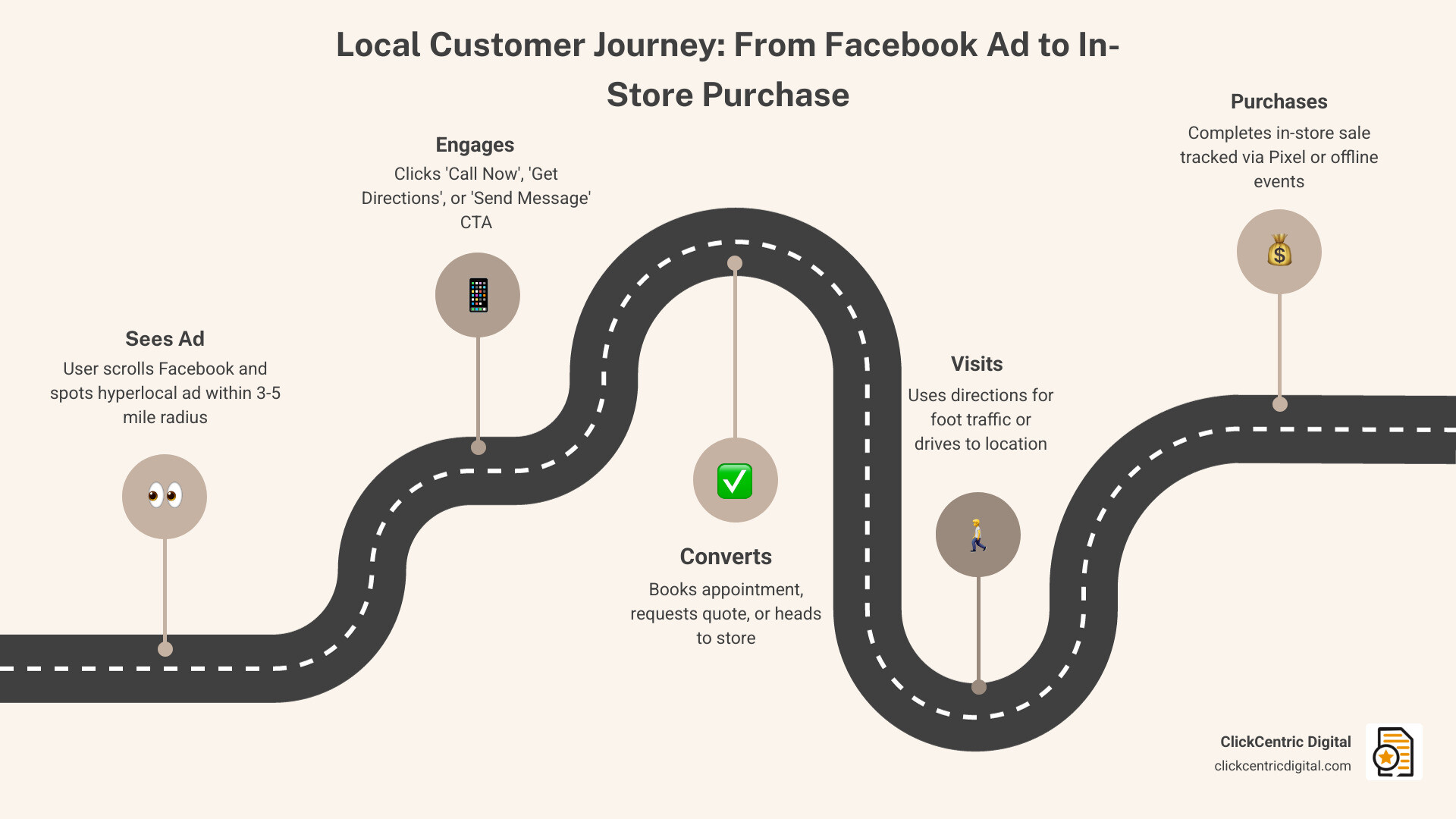
- Key CTAs: “Call Now,” “Get Directions,” or “Send Message” drive real-world actions
- Success benchmark: Aim for a 3:1 return on ad spend or better
Think about this for a second.
At 7:15 a.m., someone is scrolling Facebook in a school drop-off line. By noon, that same person might need a dentist, a lunch spot, or a last-minute birthday cake. Your business could be the one they see — or it could be your competitor’s.
The problem isn’t that Facebook ads don’t work for local businesses. The problem is that most local businesses run them wrong. They boost a post, pick the wrong objective, or try to out-target the algorithm with layers of interests that actually hurt delivery.
According to research from Neil Patel, local businesses can waste up to 62% of their ad spend on poor targeting. That’s money gone with nothing to show for it.
The good news? Getting it right isn’t complicated. It just requires understanding a few key principles — the right campaign objective, a tight geographic focus, authentic creative, and proper tracking.
This guide walks you through all of it.
Choosing the Right Campaign Objective for Local Success
When we open Ads Manager for a local business in West Michigan, the pattern is usually the same: the owner wants more calls, more walk-ins, or more booked appointments. However, many start by picking the “Awareness” or “Traffic” objective because it sounds right. In reality, these often optimize for people who like to click or look, not necessarily people who like to buy.
For Facebook local business ads in 2026, we focus on three heavy hitters:
- Store Traffic: This is the gold standard for physical locations. It is designed specifically to drive foot traffic to your storefront by showing ads to people within a set distance of your business.
- Leads: If you are a service provider (like a plumber in Holland or a dentist in Grand Rapids), the Leads objective allows you to use “Instant Forms.” These auto-fill with a user’s Facebook data, making it incredibly easy for them to request a quote or an appointment.
- Sales: Best for businesses with online booking systems or e-commerce components where a direct transaction is the goal.
Meta has evolved significantly from the old “Local Awareness” days. Today, the algorithm uses AI to find people most likely to visit your location based on real-time signals. To ensure you don’t fall into common traps, check out The Local Service Guide to Not Getting Ghosted by Facebook Ads.
Setting Up Your First Facebook Local Business Ads Campaign
Setting up your campaign in Ads Manager requires a shift in mindset. Instead of trying to control every micro-detail, we leverage Meta’s Advantage+ tools. These AI-enabled tools generate ads tailored to customer preferences in fewer steps and consistently show lower acquisition costs compared to manual interest stacking.
If you’re looking for a partner to handle the technical heavy lifting, Facebook Ads Holland MI – Social Media Marketing Holland MI offers specialized support for businesses in the West Michigan area. During setup, focus on:
- Choosing the right destination: Are you sending them to a landing page, a Lead Form, or a Messenger chat?
- The CTA Button: Small wording changes here can create 15-25% swings in conversion rates.
- Placements: Use Advantage+ placements to let Facebook decide whether your ad looks best on the Instagram Feed, Facebook Stories, or Reels.
Why Store Traffic and Leads Outperform Awareness
Awareness campaigns are great for big brands like Coca-Cola, but for a local shop in Grand Haven, you need outcome-based bidding. Store Traffic ads allow for unique Call-to-Action (CTA) buttons like “Get Directions” or “Call Now” that aren’t available in standard awareness sets.
Lead forms reduce friction by keeping the user on the Facebook platform. This is vital because every extra second a page takes to load on a mobile device is a second where a potential customer might drop off. For a deeper dive into making your budget work harder, read How to Run Facebook Ads for Local Business Without Losing Your Shirt.
Mastering Hyperlocal Targeting for Facebook Local Business Ads
The “hyperlocal” in Facebook local business ads refers to your ability to target a very specific geographic area. You aren’t just targeting “Michigan”; you are targeting a 5-mile radius around your shop on 28th Street in Grand Rapids.
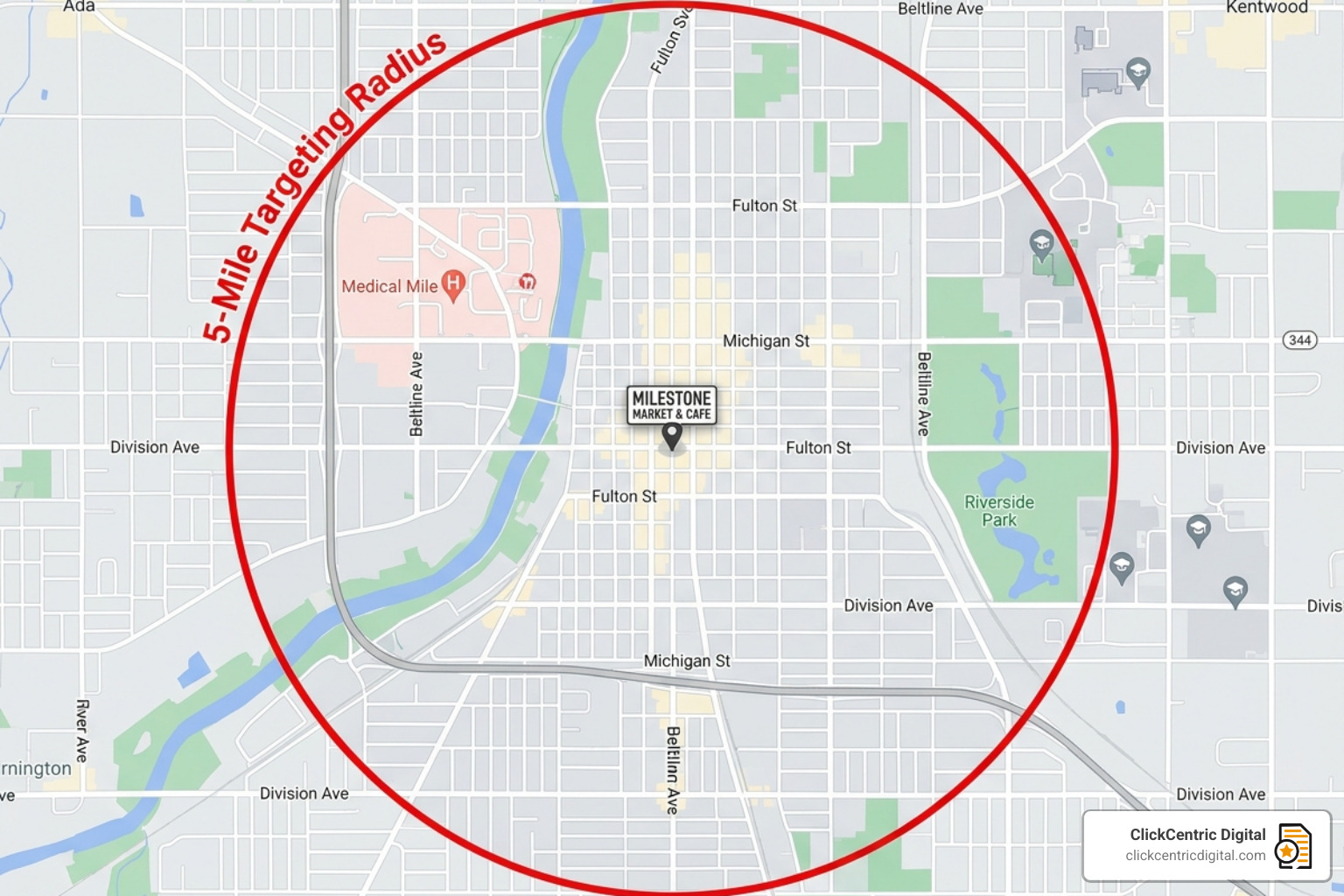
For local businesses, we generally recommend:
- Retail/Restaurants: A 3–5 mile radius. People rarely drive 20 miles for a sandwich unless it’s world-famous.
- Service Businesses (Plumbers, Roofers): A 10–15 mile radius or specific ZIP clusters where you know your target demographic lives.
Connecting with local communities through groups like the Grand Rapids Business Network – Facebook can also provide insights into which neighborhoods are currently seeing the most growth or demand for your services.
Broad Targeting vs. Interest Stacking
One of the biggest mistakes we see is “overstacking” interests. A business might try to target “People who live in Kalamazoo AND like dogs AND are aged 30-45 AND have a college degree.” This makes the audience so small that the algorithm can’t learn.
Research shows that hyper-specific behavioral layering can work, but in a small geographic radius, broad targeting often wins. When you keep your audience broad within a 5-mile radius, you let Meta’s AI find the customers for you.
| Strategy | Pros | Cons |
|---|---|---|
| Broad Radius | Lower CPMs, faster AI learning, reaches “hidden” customers. | May show to people with low immediate intent. |
| Interest Layering | Very specific reach. | High costs, delivery instability, easy to “exhaust” the audience. |
To avoid audience fatigue, we recommend excluding your existing customers or employees from seeing the ads, ensuring your budget is always spent on fresh leads.
Managing Multiple Store Locations
If you have locations in Holland, Grand Haven, and South Haven, you don’t need to create three separate campaigns manually. By using “Facebook Locations,” you can manage multiple store pages under one umbrella.
This tool allows for dynamic ad copy. A user in South Haven might see “Visit our South Haven shop for a summer discount,” while someone in Holland sees the same ad but with the Holland address automatically inserted. You can also view location-specific reporting to see which branch is performing best. This is a great way to engage with groups like Kalamazoo Small Business Support – Facebook by showing them you are a truly local presence.
Crafting Authentic Creative and Irresistible Local Offers
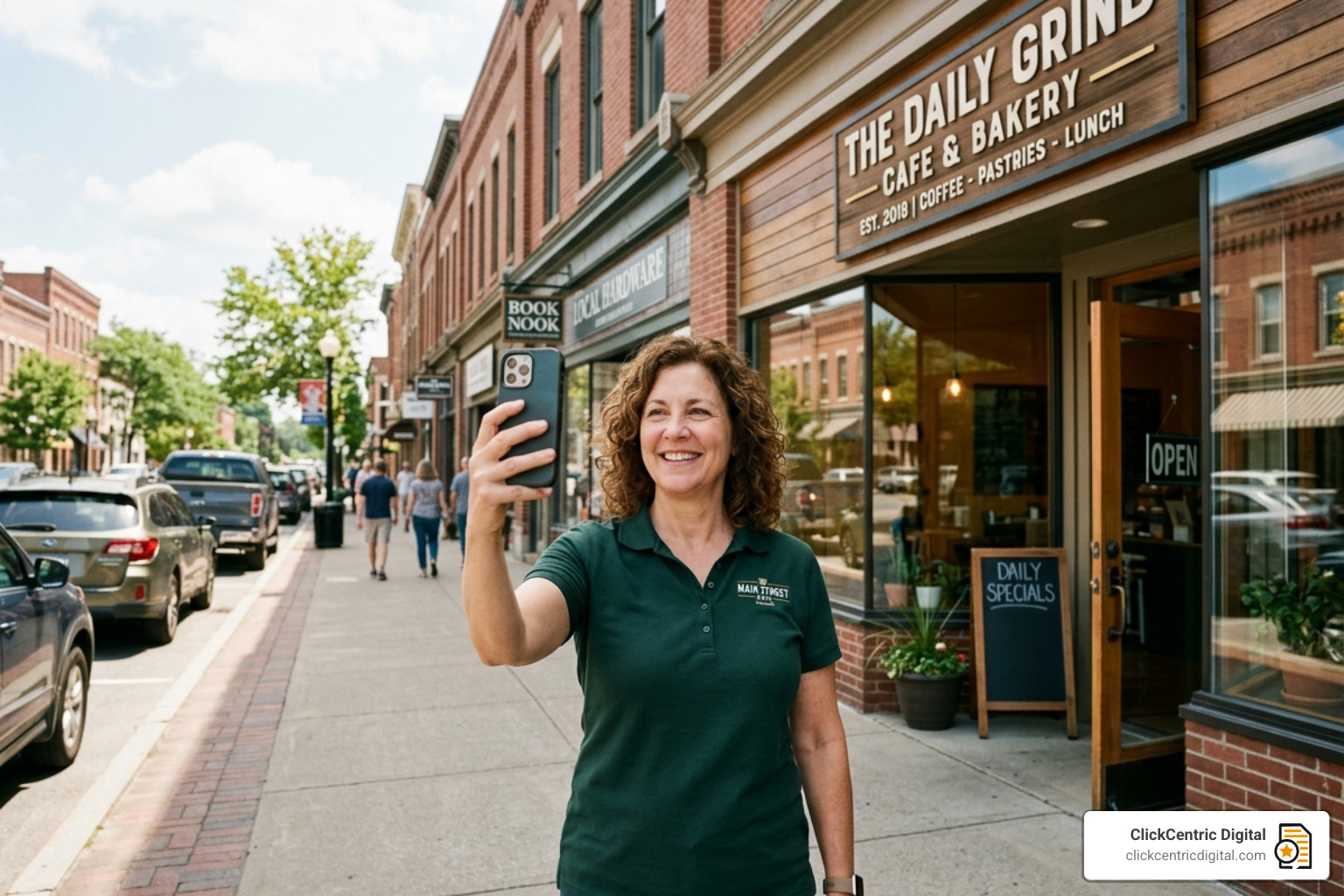
In Facebook local business ads, “lo-fi” is often high-impact. A polished, corporate-looking video often gets scrolled past because it looks like a generic ad. A video shot on an iPhone by a business owner standing in front of their shop feels like a recommendation from a neighbor.
High-Converting CTAs and Mobile Optimization
Your offer needs to be a “loss-leader” or an irresistible “BOGO” deal to stop the scroll. If your ad just says “We are open,” people will keep moving. If it says “Free appetizer for our Grand Haven neighbors this weekend,” you’ve given them a reason to act.
Local intent is dominated by mobile users. Your ad must look perfect on a phone screen. Use Carousel ads to show off different products or a “Map Card” that shows exactly how far the user is from your front door. A “Call Now” button on a mobile ad is a one-tap connection to your business.
Scaling Your Facebook Local Business Ads for Maximum Reach
Once you hit a 3:1 Return on Ad Spend (ROAS), it’s time to scale. But scaling locally is different than scaling nationally. You can’t just throw more money at the same 5-mile radius without hitting “ad fatigue.”
To scale effectively:
- Refresh Creative: Change your images or videos every 2–4 weeks.
- Monitor Frequency: If your “frequency” metric (how many times the average person has seen your ad) gets above 4 or 5 in a single week, it’s time to change the ad.
- Modular Creative: Swap headlines while keeping the same video to see what resonates.
Engaging with local community groups like Grand Haven Friends and Neighbors Information Social | Facebook can help you stay current on local events you can reference in your ad copy to keep it feeling fresh.
Budgeting, Scaling, and Tracking Offline ROI
You don’t need a massive budget to start. Most small businesses in West Michigan can start with $10–$20 per day. This provides enough data for the algorithm to optimize without breaking the bank.
As you see results, you can scale gradually. If you are running a seasonal promotion, a “Lifetime Budget” might be better than a daily one, as it allows Facebook to spend more on days when engagement is high (like weekends in South Haven). Monitoring groups like South Haven Happenings | Facebook can help you time these promotions with local festivals or events.
Tracking Offline Conversions and Store Visits
The “holy grail” of local marketing is knowing that an ad click led to a real-world sale. We use several tools to bridge this gap:
- Offline Events: You can upload your point-of-sale (POS) data or CRM lists back into Facebook to see which customers saw an ad before buying.
- The Facebook Pixel: Essential for tracking what people do on your website after clicking the ad.
- Unique Promo Codes: “Mention this Facebook ad for 10% off” is a low-tech but highly effective way to track ROI.
- Conversions API (CAPI): This helps bypass some of the tracking issues caused by privacy updates, ensuring your data remains accurate in 2026.
Avoiding Common Pitfalls and Exploring Alternatives
The biggest pitfall? Boosting posts. While it’s easy, boosting usually optimizes for “Engagement” (likes and comments), not “Sales” or “Leads.” You might get 100 likes but zero new customers. Always use Ads Manager for your Facebook local business ads.
Another mistake is “over-targeting.” If your audience is too narrow, your ads won’t deliver. If you find Facebook isn’t reaching a specific niche, consider supplementing with Google Local Service Ads (for high-intent searches) or Nextdoor (for neighborhood-specific chatter).
For those who want to learn the ropes themselves, Meta Blueprint offers free courses and certifications to help you master these tools.
Frequently Asked Questions about Local Facebook Ads
What is the best radius for local business targeting?
For most retail shops and restaurants, 3–5 miles is the sweet spot. For service-based businesses that travel to the customer, 10–15 miles is more appropriate. In densely populated areas of Grand Rapids, you might even go smaller, while in more rural parts of West Michigan, you may need to expand the radius to capture enough people.
How do I avoid ad fatigue in a small geographic area?
In a small town, people will see your ad often. To avoid annoying them, keep your frequency around 3–4 impressions per week. Rotate your creative frequently—change the photo, the offer, or the “hook” in your video every few weeks to keep the content feeling new.
Is boosting a post the same as a local ad campaign?
No. Boosting is a simplified tool designed for engagement. A full campaign in Ads Manager gives you control over the objective (like Store Traffic), detailed location settings, specific CTA buttons, and advanced tracking that boosting simply doesn’t offer.
Conclusion
Stop being your neighborhood’s best-kept secret. With Facebook local business ads, you have the power to reach your exact customer at the exact moment they need you. Whether you are looking to improve your local search rankings, manage your online reputation, or drive immediate traffic through paid ads, a strategic approach is key.
At ClickCentric Digital, we specialize in helping West Michigan businesses dominate their local markets. Don’t let your competitors own the newsfeed. Improve your local business reputation today and start turning those “likes” into “open for business” reality.
Sorry, the comment form is closed at this time.