


28 Oct 7 Telltale Signs It’s Time to Hire a Charlotte Web Design Company
7 Telltale Signs It’s Time to Hire a Charlotte Web Design Company
When to Hire a Charlotte Web Design Company
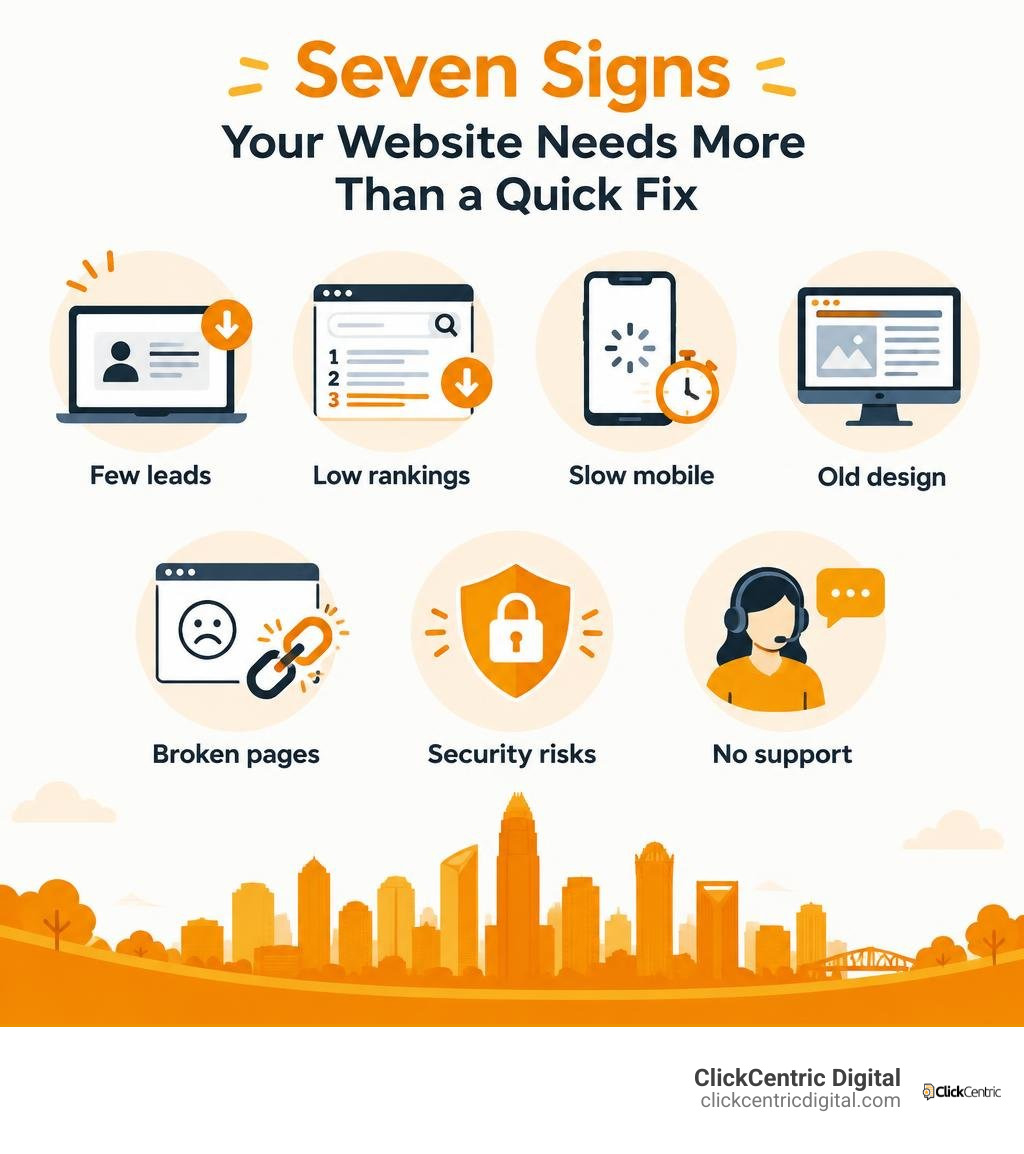
If your website brings in few leads, ranks poorly in local search, or is hard to use on a phone, it may be time to hire a Charlotte web design company. Look for relevant work, a clear process and price, and a plan for support after launch. The right fit should help you reach more local customers, not just give your site a new look.
I’m Fred Dirkse, and I’ll walk you through seven signs that your website needs more than a quick fix.
Charlotte web design company terms simplified:
- australian web design company
- website development services
- digital marketing and web development company
1. Your Website Fails to Turn Local Visitors into Paying Customers
A steady flow of web traffic means very little if none of those visitors pick up the phone, fill out a quote form, or book a consultation. When your analytics show decent visitor numbers but an empty inbox, your website suffers from a conversion architecture problem. Modern web design is not merely digital art; it is an active sales funnel engineered to guide prospects toward a distinct action.

Many older websites fail because they lack intuitive user experience (UX) design. Visitors land on a page, encounter cluttered walls of text, get confused by unintuitive navigation menus, and leave within seconds. High bounce rates signal that your potential clients cannot immediately identify what you offer, why your business is credible, or what step they should take next. Partnering with a dedicated digital marketing and web development company bridges the gap between passive browsing and decisive action.
Why Working with a Charlotte Web Design Company Beats Generic Templates
Off-the-shelf templates and generic site builders promise quick results, but they force your brand into a cookie-cutter structure that fails to resonate with local buyers. Pre-made templates come bloated with unnecessary code, confusing layouts, and rigid elements that you cannot tailor to your regional audience’s expectations.
A custom build focuses on targeted brand storytelling and bespoke user interfaces. Instead of shoehorning your unique value proposition into a generic layout, custom design crafts visual hierarchies around how local clients evaluate service providers. Adopting an agile framework like growth-driven web design ensures that your site evolves using continuous, data-backed iterations based on actual visitor behavior rather than guesswork.
Aligning Conversion Architecture with Local B2B and Corporate Buyer Journeys
B2B and corporate buyers do not make impulsive decisions. They seek risk reduction, clear ROI, and demonstrable authority. If your site buries your credentials or makes requesting a proposal cumbersome, corporate decision-makers will turn elsewhere.
A conversion-focused redesign addresses these touchpoints directly:
- Strategic CTA Placement: Primary calls-to-action remain visible without overwhelming the reader, guiding high-intent visitors toward custom quote builders or discovery calls.
- Streamlined Lead Capture: Forms are optimized to ask only for essential information, reducing friction while routing inquiries directly into your CRM.
- Prominent Trust Signals: Case studies, security badges, client logos, and quantifiable project outcomes are placed right where buyers evaluate your capabilities.
2. Your Search Rankings and Google Business Profile Visibility Are Dropping
Search engines continuously update their algorithms to favor fast, structured, and authoritative websites. If your organic visibility has slipped, an outdated web framework is likely hurting your search engine optimization (SEO) efforts.
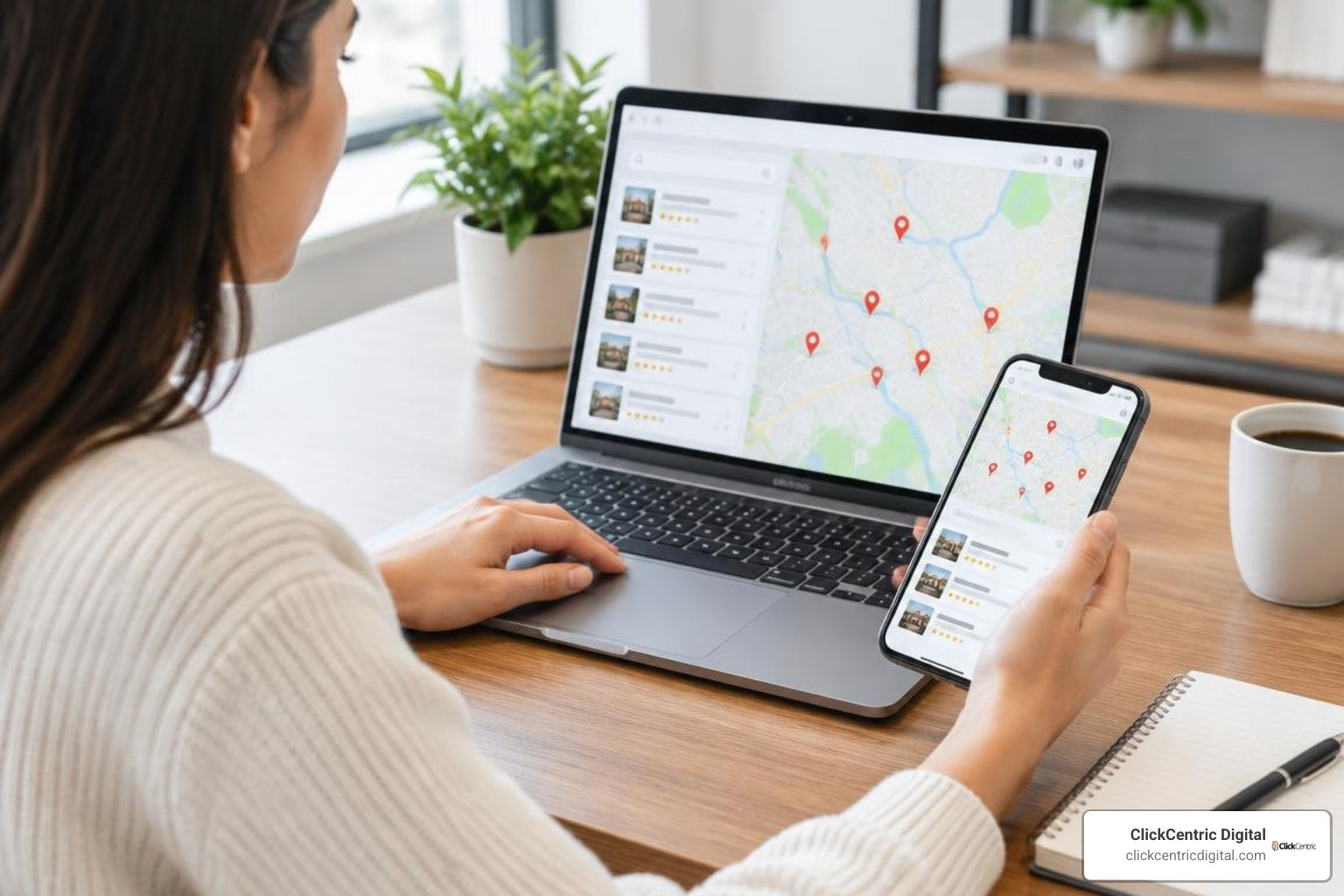
A successful local search presence requires complete harmony between your on-site architecture and off-site signals. If your site suffers from broken links, outdated schema markup, or slow server response times, search engines will hesitate to display your pages in competitive search results. Implementing a comprehensive SEO-friendly website redesign resolves underlying technical debt while ensuring compliance with modern search engine standards.
Bridging On-Site Technical SEO with Local Search Signals
Local SEO requires far more than dropping city names into body copy. Search engines evaluate the relationship between your website’s technical health and your physical service area. To capture high-value local intent, on-site elements must cleanly communicate your location and service offerings to search engine crawlers.
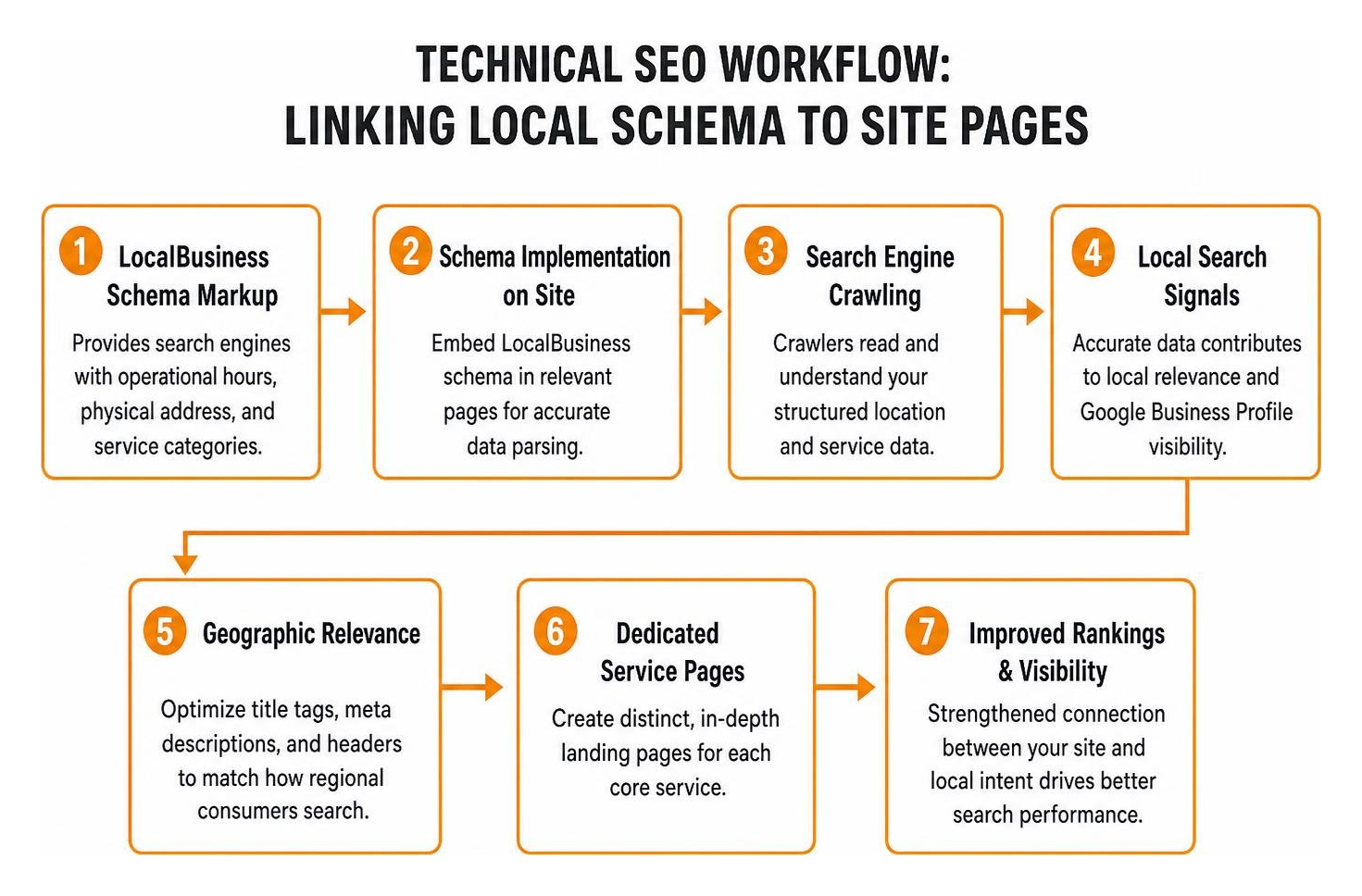
Essential technical implementations include:
- Structured Data: Adding LocalBusiness schema markup helps search engines accurately parse your operational hours, physical address, and specific service categories.
- Geographic Relevance: Optimizing page title tags, meta descriptions, and headers to match how regional consumers search for your specific solutions.
- Dedicated Service Pages: Creating distinct, in-depth landing pages for each core service rather than listing all capabilities on a single generic page.
Managing Business Directories and Local Authority Ecosystems
Local organic search extends beyond standard website results. Business directories account for nearly a third (31%) of local-intent organic search results, rising to 37% for informational local queries. Platforms like Yelp represent 28% of all directory results, while Tripadvisor captures 10% and Expertise accounts for 8%. In fact, directories dominate up to 72% of search results in select consumer-facing sectors.
Consumers rely on major search engines, social channels, and directories as their top sources for discovering local businesses. Maintaining consistent Name, Address, and Phone number (NAP) data across these ecosystems is essential. A professional web team synchronizes your website’s technical markup with third-party directories, eliminating duplicate listings and strengthening your local authority signals.
3. Slow Page Speeds and Outdated Tech Ruin Mobile Engagement
Today’s consumers expect instant responses. If your website takes longer than three seconds to load on a mobile device, a significant portion of your audience will abandon the page before reading a single headline. Slow loading times frustrate users and signal poor technical quality to search engines.
Google prioritizes sites that provide fast, stable experiences through its Core Web Vitals metrics. Outdated websites burdened by uncompressed images, bulky JavaScript libraries, and legacy hosting infrastructures struggle to pass these benchmarks, directly suppressing their search visibility.
Modern Technical Standards and Mobile-First Usability
Mobile devices generate more than half of all web traffic. A truly mobile-friendly website requires responsive design that adapts smoothly across smartphones, tablets, laptops, and ultra-wide desktop monitors.
High-performance web architecture relies on:
- Aggressive Asset Optimization: Compressing images into next-gen formats (such as WebP) and minifying CSS and JavaScript files to reduce payload sizes.
- Server-Level Caching: Setting up modern caching protocols and content delivery networks (CDNs) to deliver pages instantly to local users.
- Clean Codebases: Stripping out deprecated plugins and unused scripts to maintain PageSpeed scores of 80+ across mobile and desktop environments.
For businesses seeking cost-effective growth, implementing affordable web design for local business delivers robust, mobile-optimized foundations without unnecessary overhead.
Tailoring Digital Experiences Across Specialized Charlotte Industries
Every industry serves distinct user behaviors and transactional requirements. A generic web template cannot address the unique operational needs of different business models:
- Healthcare and Clinical Practices: Medical and dental providers require seamless patient intake flows, HIPAA-conscious contact systems, and clear treatment overviews. For detailed insights on evaluating clinical digital platforms, explore dental website design services.
- Home Services and Trade Contractors: HVAC, plumbing, and construction companies depend on immediate click-to-call functionality, emergency service dispatch triggers, and rich visual portfolios. Discover practical layout strategies through website design for construction company frameworks.
- Professional Consultants and Legal Firms: Professional service providers need authoritative visual branding, downloadable whitepapers, clear case studies, and integrated calendar scheduling.
4. You Have Zero Security Infrastructure and Ongoing Website Maintenance
Launching a website is not a one-time project—it is an active digital asset that requires consistent maintenance. Content management systems (CMS), plugins, server environments, and database layers update frequently. When left unattended, unpatched software creates severe security vulnerabilities that malicious bots actively exploit.
Websites operating without dedicated maintenance plans face higher risks of data breaches, server downtime, script conflicts, and search engine blacklisting due to malware infections.
The Pitfalls of Freelancer Disappearances and Unmaintained Code
Many business owners hire solo freelancers to build their sites, only to find themselves stranded months later when technical issues arise. Freelancers often juggle multiple priorities, change careers, or become unreachable, leaving you without access to your hosting environment or core code.
Relying on informal support arrangements exposes your business to:
- Unpatched Software Vulnerabilities: Missing critical core updates leaves entry points open for automated attacks.
- Accumulated Technical Debt: Layering incompatible plugins on top of outdated themes breaks site functionality over time.
- Absence of Service Level Agreements (SLAs): Experiencing prolonged downtime during peak sales hours with no guaranteed response timeline.
Post-Launch Care: Backups, Security Audits, and Dedicated Support
A full-service agency protects your digital investment through structured post-launch care. Rather than dealing with unpredictable hourly repairs or impersonal helpdesk queues, proactive maintenance guarantees ongoing stability.
Standard agency care infrastructure includes:
- Automated Cloud Backups: Daily off-site backups ensure your site can be restored within minutes if an error occurs.
- Real-Time Security Monitoring: Automated firewall protection, malware scans, and uptime monitoring identify threats before they affect visitors.
- Staging Environments: Testing plugin updates and custom code on private development servers before deploying them live prevents unexpected errors.
5. How to Choose the Right Charlotte Web Design Company for Your Business
Selecting a digital partner shapes your company’s online presence for years to come. You need a team that balances creative strategy with measurable performance metrics, transparent communication, and dependable technical execution.
| Feature / Criteria | Local Boutique Agency | National Volume Agency | DIY Website Builders |
|---|---|---|---|
| Market Understanding | High regional focus & local SEO expertise | Generic national approach | Zero localized strategy |
| Project Communication | Direct access to dedicated designers & builders | Layered ticket systems & call centers | Self-service knowledge bases |
| Customization & Code Quality | Tailored conversion architecture & clean code | Reusable template factories | Rigid proprietary templates |
| Ongoing Maintenance | Proactive SLAs, security, & local support | Expensive add-ons or offshore queues | Self-managed maintenance |
| Ownership of Assets | Full 100% client code & data ownership | Varying licensing agreements | Platform lock-in (cannot export) |
What to Expect from a Full-Service Charlotte Web Design Company
A structured agency uses a proven development lifecycle that eliminates surprises and keeps projects aligned with your business goals:
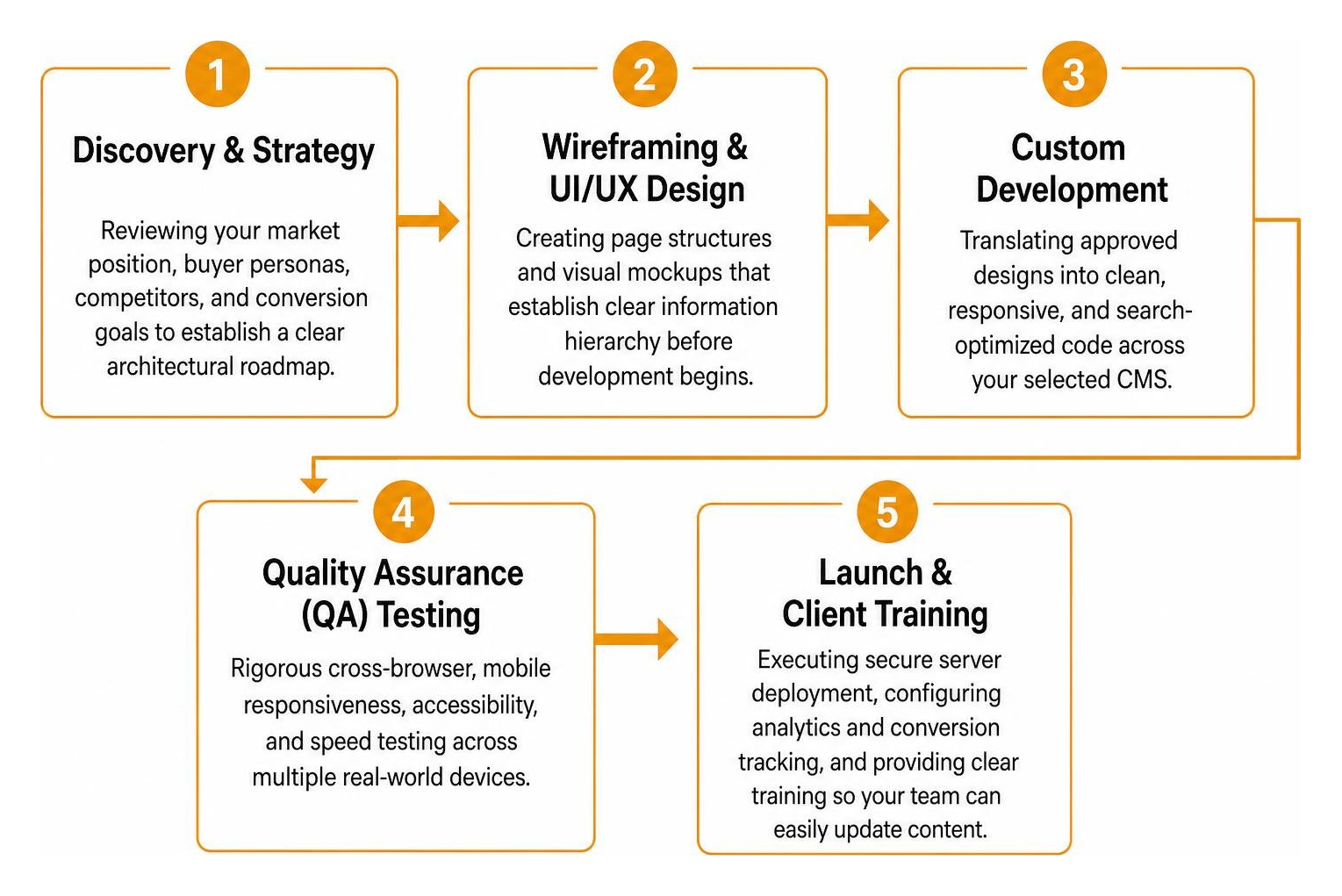
- Discovery & Strategy: Reviewing your market position, buyer personas, competitors, and conversion goals to establish a clear architectural roadmap.
- Wireframing & UI/UX Design: Creating page structures and visual mockups that establish clear information hierarchy before development begins.
- Custom Development: Translating approved designs into clean, responsive, and search-optimized code across your selected CMS.
- Quality Assurance (QA) Testing: Rigorous cross-browser, mobile responsiveness, accessibility, and speed testing across multiple real-world devices.
- Launch & Client Training: Executing secure server deployment, configuring analytics and conversion tracking, and providing clear training so your team can easily update content.
Understanding Project Timelines, Deliverables, and Transparent Pricing
Professional custom website projects typically require 3 to 8 weeks from kickoff to public launch. This timeframe provides sufficient room for strategic research, custom design mockups, responsive development, and thorough QA testing without cutting corners.
Transparent agencies provide clear, fixed-scope proposals detailing deliverables upfront—including total page counts, custom integrations, SEO foundations, and post-launch maintenance terms—ensuring you never encounter unexpected licensing fees or hidden launch costs.
Frequently Asked Questions About Hiring a Web Agency in Charlotte
What is the typical cost range for a custom Charlotte business website?
Professional small-to-midsize business websites typically range from $2,000 to $7,500+, depending on functional complexity, total page count, custom copywriting needs, and specific database integrations. Advanced enterprise or e-commerce builds with custom CRM integrations may scale higher. Ongoing monthly website care plans generally range from $150 to $500/month, covering hosting, daily backups, automated security monitoring, and regular technical maintenance.
How long does the website design and development process take from start to finish?
Most custom business websites launch within 3 to 8 weeks. Highly streamlined brochure sites can launch in roughly 3 to 4 weeks, whereas complex builds featuring custom portals, e-commerce checkouts, or extensive content migrations require 6 to 8 weeks to complete thorough quality assurance and testing phases.
Why should I choose a local Charlotte web design agency over a national freelance platform?
Working with a local team provides direct accountability, clear communication without time-zone friction, and deep familiarity with your regional market. Rather than hoping an anonymous freelancer stays available for future updates, partnering with an established agency gives you long-term stability, guaranteed response times, and an ongoing technical partner dedicated to your growth.
Conclusion
Your website is the foundation of your company’s digital marketing and customer acquisition strategy. If your current site suffers from sluggish mobile speeds, declining search visibility, confusing user navigation, or unmaintained plugins, it actively costs you qualified leads every single day.
Investing in a modern, conversion-engineered digital platform transforms your website from a static online brochure into a dependable lead-generation engine. Reach out to explore our specialized website design & development services and build a website designed to accelerate your business growth.
Sorry, the comment form is closed at this time.