

15 Sep The Ultimate Guide to Using a Google Ads Analyzer for Better ROI
The Ultimate Guide to Using a Google Ads Analyzer for Better ROI
Is Your Google Ad Budget Actually Working for You?
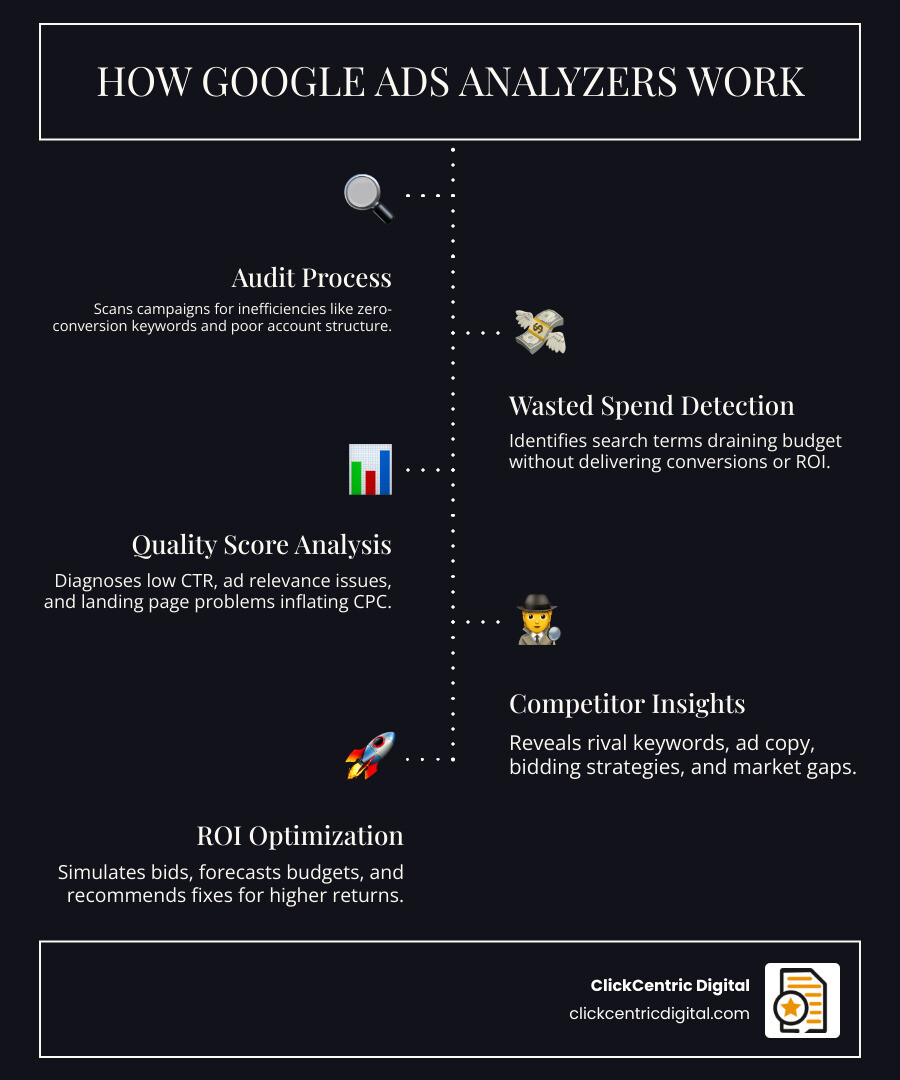
A google ads analyzer is a tool that audits your campaigns to find wasted spend, diagnose underperformance, and uncover what your competitors are doing — so you can get more results from every dollar you spend.
Here’s what a Google Ads analyzer helps you do:
- Find wasted spend — identify keywords and search terms eating your budget with zero conversions
- Diagnose poor performance — pinpoint low Quality Scores, weak ad copy, and bad landing page experiences
- Spy on competitors — see what ads rivals are running, which keywords they’re buying, and how their messaging evolves
- Forecast and optimize budgets — simulate bid changes and shift spend toward campaigns that actually convert
- Benchmark your results — compare your CTR, CPC, and conversion rate against industry standards
If you’re running Google Ads for a local business, you’ve probably felt this at some point: the budget disappears, the phone doesn’t ring, and you have no idea why.
You’re not alone. Tools like WordStream’s Performance Grader have analyzed over $36 billion in Google Ads spend and surfaced more than 312 million account improvements — which tells you one thing clearly: most accounts have real, fixable problems hiding in plain sight.
The challenge isn’t just running ads. It’s reading them correctly. Knowing which search terms are burning cash. Knowing if a competitor is outbidding you on your own brand name. Knowing whether your Quality Score is quietly inflating your cost-per-click by hundreds of percent.
That’s exactly what a Google Ads analyzer is built to tell you.
Why You Need a Google Ads Analyzer in 2026
In the current digital landscape of May 2026, the complexity of Google Ads has reached an all-time high. Automation and AI-driven campaigns like Performance Max have made it easier to launch ads, but harder to see where your money is actually going. Without a dedicated google ads analyzer, you are essentially flying blind.
An analyzer acts as a health check for your account. It doesn’t just look at whether you’re getting clicks; it looks at the quality of those clicks. We often see accounts that look “busy” but aren’t profitable because their account structure is messy or their performance benchmarks are lagging behind industry standards in West Michigan.
Using an analyzer allows us to establish a baseline. By comparing your account against billions of dollars in analyzed spend, these tools can tell you if your 2% conversion rate is a victory or a sign of a deep-seated problem. If you want to stop the bleeding, you need to understand Why You Need a Certified PPC Expert to interpret these analyzer findings and turn them into a strategy.
Identifying and Eliminating Wasted Spend with a Google Ads Analyzer
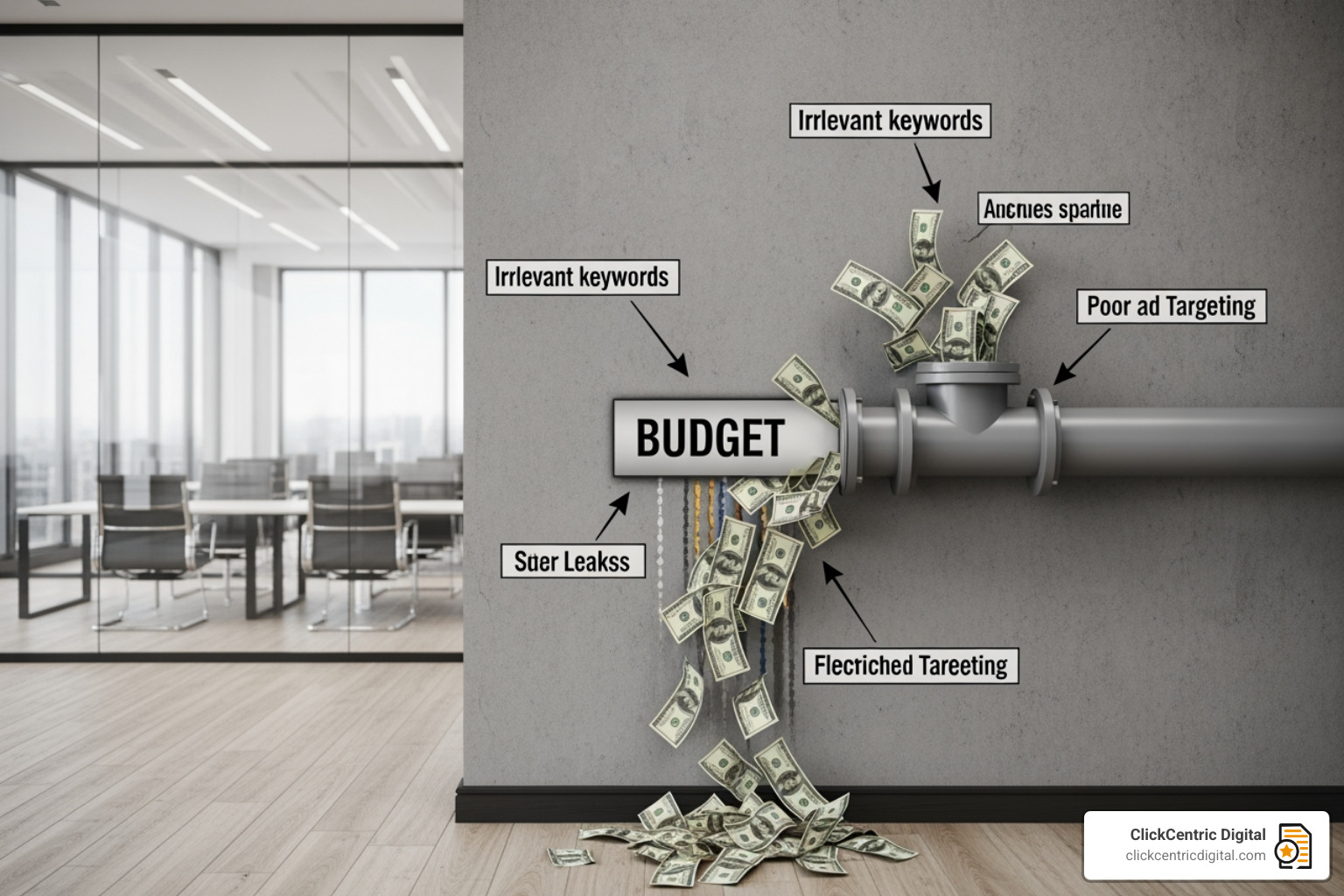
The most painful part of any audit is finding the “wasted spend.” This is money you paid to Google for clicks that had zero chance of ever becoming a customer. A high-quality google ads analyzer will scan your search terms report to find these culprits.
Common sources of waste include:
- Zero-conversion terms: These are keywords that have spent hundreds of dollars over several months without a single lead.
- Budget Capping: Research shows some campaigns lose up to 34% of their eligible impressions simply because the budget runs out by mid-afternoon. If your ads turn off at 2 PM, you’re missing the evening rush.
- Broad Match Risks: While Google loves broad match, it often surfaces irrelevant queries. Analyzers can flag when your “plumber” keyword is accidentally triggering ads for “video games about pipes.”
- Impression Share Loss: This tells you how often your ad didn’t show up because your bid was too low or your budget was too small.
For businesses in Grand Rapids or Kalamazoo, local competition is fierce. Utilizing professional Google Ads Management Services can help you set up robust negative keyword lists—essentially a “Do Not Call” list for your ads—to ensure you only pay for high-intent traffic.
Diagnosing Underperformance and Account Health
Sometimes an account isn’t “wasting” money, it’s just underperforming. This is usually a symptom of poor account health. A google ads analyzer looks at the “Big Three” of account health: Click-Through Rate (CTR), Ad Relevance, and Landing Page Experience.
If your CTR is low, your ads are boring or irrelevant. If your landing page experience is poor, people are clicking but leaving immediately because your site is slow or doesn’t match the ad’s promise. Analyzers help you Master Google PPC Management Without Losing Your Mind by categorizing these issues into “Critical,” “Warning,” and “Opportunity” levels. This allows us to fix the house fire before we worry about the color of the curtains.
Mastering Competitor Intelligence and Market Benchmarking
One of the most powerful features of a modern google ads analyzer is its ability to peek behind the curtain of your competitors’ strategies. In the local markets of Holland and Grand Haven, knowing exactly what the guy down the street is bidding on is a massive advantage.
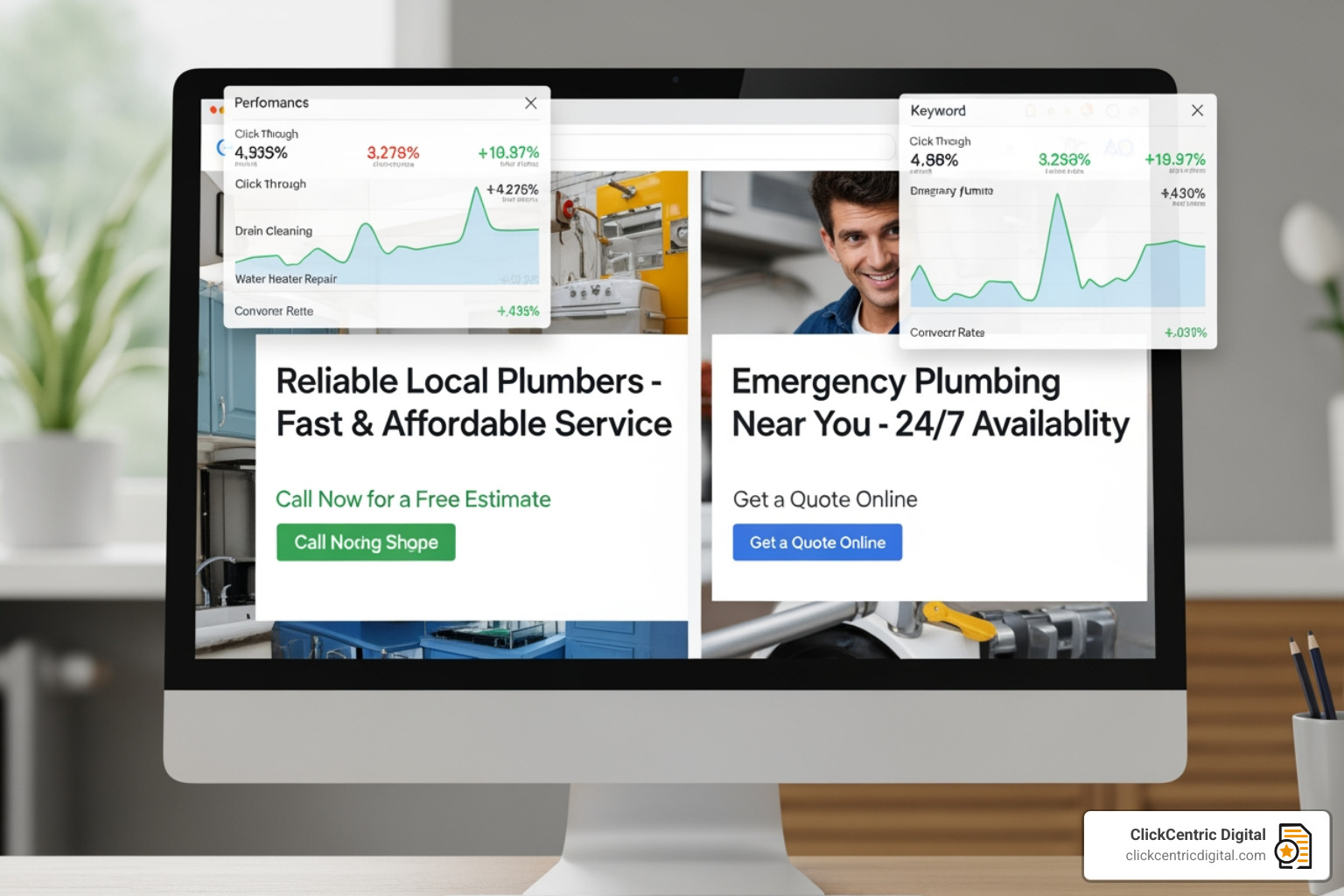
Competitor analysis isn’t just about being nosy; it’s about identifying “messaging patterns.” Are they focusing on price? On 24/7 service? On a specific local neighborhood? By tracking their creative frequency and ad longevity, we can see which of their ads are actually working. If a competitor has been running the exact same ad for six months, you can bet it’s making them money.
Using a Google Ads Analyzer to Spy on Competitor Keywords
Tools like SpyFu have indexed trillions of search results, allowing us to see every keyword a competitor has bought over the last decade. A google ads analyzer helps us find “Keyword Gaps”—the terms your competitors are profiting from that you haven’t even thought of yet.
We can also look at:
- Historical Ad Tests: See the “winning” copy your competitors arrived at after years of trial and error.
- Cost-Per-Click Estimates: Understand if a keyword is even worth bidding on based on the local market volume.
- SERP Updates: Monitor how often the search results page changes for your top terms.
This level of intelligence is especially vital for specialized sectors, such as those navigating the Non-Profit Guide to Mastering Google Grant PPC Management, where every dollar of the grant must be used with maximum efficiency.
Analyzing Ad Transparency and Creative Trends
Google’s Ads Transparency Center is a goldmine for creative analysis. By using an analyzer extension or tool, we can aggregate this data to see a competitor’s entire creative library. This reveals their multi-region messaging—how they talk to customers in Kalamazoo versus how they talk to them in South Haven.
Analyzing ad longevity helps us identify “evergreen” creative trends. If you see a rival brand consistently using a specific video format or a specific discount code, that is a signal of a high-converting offer. For any business serious about Paid Traffic Management, this competitor benchmarking is a weekly requirement, not a one-time task. It ensures your Local PPC Campaigns stay fresh and relevant to the local audience.
Key Metrics and AI-Powered Optimization Tools
To truly optimize, you need to move beyond basic clicks. Modern analyzers leverage AI to provide predictive logic and deep-dive data. For instance, Google’s Performance Planner allows us to forecast how changes in spend will impact conversions and ROI.
| Feature | Keyword Planner | Performance Planner |
|---|---|---|
| Primary Goal | Finding new keywords | Budget and spend forecasting |
| Data Source | Historical search volume | Your account’s actual performance |
| Best For | Campaign setup | Scaling existing campaigns |
| Prediction | Search trends | Clicks, Conversions, and Spend |
Understanding the ROI formula—(Revenue – Cost of Goods Sold) / Cost of Goods Sold—is the ultimate goal. An AI-powered google ads analyzer can automate this calculation by pulling in conversion values and attribution models to show you exactly which ad led to the final sale.
Improving Quality Score Through Deep Analysis
The Quality Score is the “secret sauce” of Google Ads. It’s a score from 1 to 10 that determines how much you pay per click. A score of 4 or lower can actually inflate your CPC by 400%. Conversely, a high score (8-10) gives you a “discount” on every click.
A google ads analyzer breaks down your Quality Score into its components:
- Expected CTR: Do people actually want to click your ad?
- Ad Relevance: Does the ad match the search term?
- Landing Page Experience: Is the page fast, mobile-friendly, and useful?
Improving these metrics is the best way to lower your Google Maps Ad Costs and ensure you aren’t overpaying for local visibility.
Budget Forecasting and AI-Driven Audits
The future of analysis is AI-driven “health checks.” Instead of spending hours in spreadsheets, we can now export a CSV of your campaign data and have an AI audit it in under 60 seconds. These audits use “expert PPC logic” to find opportunities that Google’s own recommendations might ignore (since Google’s recommendations often favor Google’s bottom line).
These tools provide:
- Bid Simulation: What happens if we increase bids by 20%?
- Automated Health Scoring: A letter grade for your account structure.
- Real-Time Spying: Alerts when a new competitor enters the auction.
For small businesses, this is the Small Business Guide to Affordable Google Ads Management Services in action—using technology to do the heavy lifting so you can focus on running your business in West Michigan.
Frequently Asked Questions about Google Ads Analysis
How often should I run a Google Ads audit?
For most local businesses, a deep-dive audit using a google ads analyzer should be performed monthly. However, you should monitor “wasted spend” and budget capping weekly to ensure you aren’t losing money on a daily basis.
Can a free analyzer tool really improve my ROI?
Yes! Tools like the WordStream Grader or AdPredictor provide immediate, actionable insights. While they don’t replace the strategic eye of a human expert, they are excellent at catching “low-hanging fruit” like missing negative keywords or broken conversion tracking.
What is the most important metric to track in an analyzer?
While CTR and CPC are important, Return on Investment (ROI) or Return on Ad Spend (ROAS) is the ultimate metric. All other analysis should serve the goal of making your ad spend profitable.
Conclusion
At ClickCentric Digital, we know that winning at Google Ads isn’t about having the biggest budget; it’s about having the smartest strategy. Whether you are in Grand Rapids, Holland, or Kalamazoo, using a google ads analyzer is the first step toward taking control of your local customer acquisition.
By identifying wasted spend, spying on competitor secrets, and obsessing over your Quality Score, you can turn Google Ads from a “money pit” into a predictable “revenue engine.” If you’re ready to stop guessing and start growing, explore our Paid Traffic Management services to see how we can apply these expert analysis tools to your business today.
Sorry, the comment form is closed at this time.