


18 Jun Constructing Your Digital Home: Website Design for Construction Company Inspiration
Constructing Your Digital Home: Website Design for Construction Company Inspiration
Why Your Construction Company’s Website Is Your Most Powerful Sales Tool
Website design for a construction company is one of the most impactful investments you can make to grow your business online. Before a potential client ever calls you, they’ve already judged your company by what they saw on your website.
Here’s a quick snapshot of what makes a construction company website effective:
- Professional project portfolio – Showcase completed work with high-quality photos
- Clear calls-to-action – Make it easy to request a quote or call your team
- Mobile-friendly design – Over 59% of internet users browse on mobile devices
- Trust signals – Certifications, testimonials, and years of experience front and center
- Local SEO optimization – Show up when nearby clients search for contractors
- Fast load times – Slow sites lose leads, especially on job sites with poor signal
- Dedicated service pages – One page per service for better rankings and clarity
The stakes are high. Construction projects are big-ticket decisions. Clients don’t hire a contractor after a single glance — they research, compare, and evaluate. Your website is doing that job for you 24 hours a day, 7 days a week.
Yet many construction companies are still running outdated sites with blurry photos, no portfolio, and a phone number buried in a footer. That’s leaving real money on the table — especially with nearly 800,000 construction businesses competing across the United States.
This guide walks you through everything you need to know: from design elements and must-have pages, to local SEO, speed optimization, and real-world examples that set the bar in 2026.
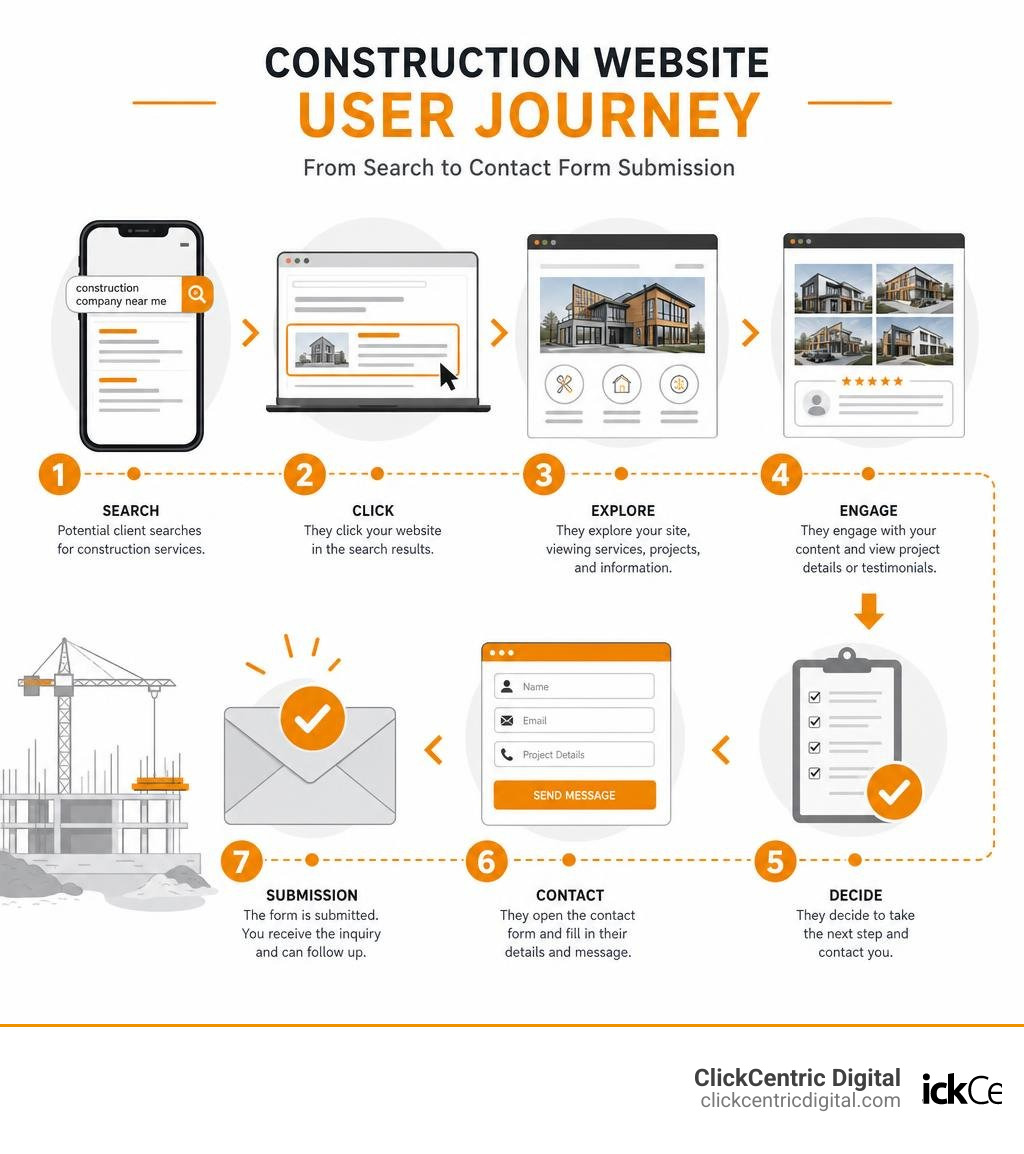
Handy website design for construction company terms:
Essential Elements of Website Design for Construction Company Success
When a developer, property owner, or local homeowner lands on your site, you have roughly eight seconds to make a stellar first impression. A successful website design must convey the same level of structural integrity, safety, and precision online that your crews demonstrate daily on the job site.
Achieving this requires a thoughtful approach to visual hierarchy, color palettes, and user experience (UX). In the construction sector, bold and earthy tones — such as deep charcoal, warm browns, slate grays, forest greens, or safety orange accents — work beautifully to establish a sense of strength, reliability, and grounded professionalism.
A clean, modern visual hierarchy ensures that visitors aren’t overwhelmed. If your homepage has 15 different navigation links and a cluttered wall of text, potential clients will bounce faster than a rubber mallet. Instead, prioritize a structured layout that guides the user’s eyes from a powerful headline to your best project imagery, and ultimately, to an easy-to-spot call-to-action (CTA).
To ensure your brand identity remains consistent and professionally executed across West Michigan, partnering with a specialized agency is key. Our team at ClickCentric Digital delivers customized, high-performing Website Design & Development services tailored to local service providers to elevate your brand.
Why Custom Website Design for Construction Company Brands Beats Templates
It is incredibly tempting to buy a cheap $40 WordPress template, slap your logo on it, and call it a day. However, generic templates are notoriously bloated with unnecessary code, which acts like wet cement on your website’s loading speeds.
Custom code and bespoke web design offer three massive advantages:
- Speed & Performance: Custom sites are built lean. They load instantly, even on remote job sites with spotty 4G coverage.
- Unique Brand Identity: Your business isn’t cookie-cutter, so your website shouldn’t be either. Custom design ensures you don’t look identical to three other local competitors down the road.
- Scalability: As your business grows, a custom site can easily integrate with CRM systems, advanced quote calculators, or recruitment portals without breaking.
To understand how a tailored approach saves you money and headache in the long run, check out our article on Bespoke vs Broke: How Custom Web Application Development Saves Your Business.
Balancing Visual Appeal with Clear Communication
A beautiful website is useless if visitors can’t figure out what you build or how to hire you. Modern construction web design balances stunning visual showcases with razor-sharp communication of your core value proposition.
- Professional Photography: Ditch the grainy smartphone pictures taken through a dusty windshield. Hire a professional photographer to capture high-resolution images of your active job sites, your skilled workers, and your completed masterpieces.
- Clear Typography: Use strong, highly legible sans-serif fonts that look clean on both massive desktop monitors and compact smartphone screens.
- Accessible Design: Ensure your website is usable for everyone, including older clients or those using assistive technologies. Read up on our best practices for Inclusive Web Design: Best Practices for a Website Everyone Can Use to ensure compliance and a great user experience across the board.
Must-Have Pages and Features to Build Trust and Generate Leads
A construction website is ultimately a lead generation machine. To turn casual browsers into signed contracts, your site needs to be structured around high-converting layouts and robust trust signals.
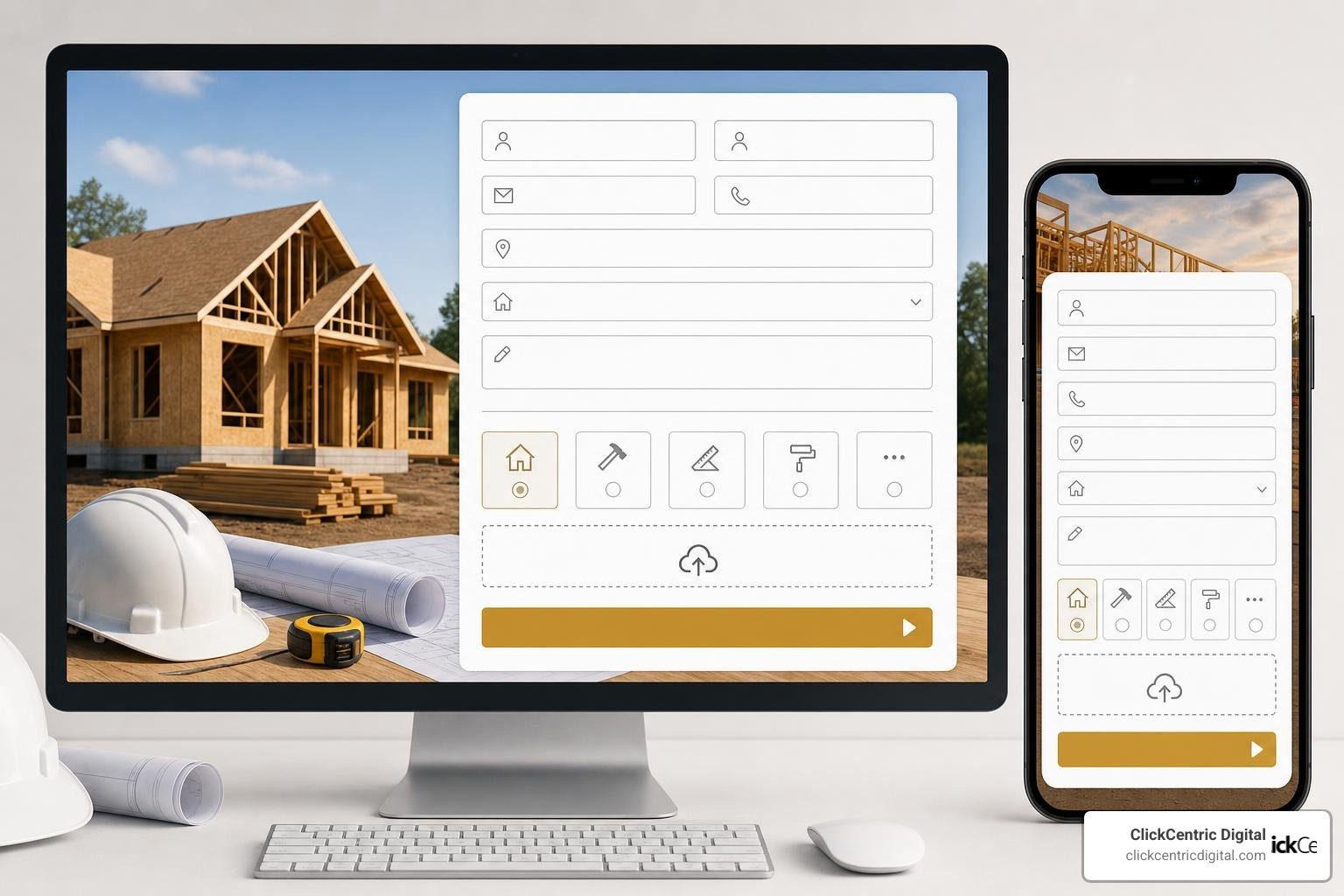
Key Pages for an Effective Website Design for Construction Company Lead Generation
To win bids and attract both clients and talented trade professionals, your website must include these essential pages:
- Homepage: Your digital lobby. It should clearly state what you do, where you do it, and feature a prominent “Request a Quote” button.
- Dedicated Service Pages: Instead of listing all your services on a single page, create individual pages for each service (e.g., “Commercial Roofing,” “Kitchen Remodeling,” “Excavation”). This is crucial for search engine optimization (SEO) and user clarity.
- Prequalification / Bid Hub (for Commercial Contractors): Make it easy for project owners and general contractors to view your bonding capacity, safety records (EMR ratings), and insurance certificates.
- Careers and Culture Page: Finding skilled labor is one of the biggest challenges in construction today. A dedicated careers page with simple online application forms is essential for recruiting top-tier talent.
- Contact Page: Include your physical address, phone number, email, service area map, and a secure contact form.
If you are unsure whether your current site is pulling its weight, read our guide on 5 Ways to Know if You Need Website Development Services to audit your digital presence.
Showcasing Portfolios, Testimonials, and Interactive Tools
Because construction contracts are high-value, clients need concrete proof of your capabilities before they sign on the dotted line.
- Project Galleries with Context: Don’t just upload a wall of images. Organize your portfolio by project type. For each project, include details such as the project scope, location, challenges overcome, and the completed timeline.
- Before-and-After Sliders: For remodeling and renovation contractors, interactive before-and-after sliders are highly engaging and instantly demonstrate the quality of your work.
- The Power of Social Proof: According to industry research, 46% of customers trust online testimonials as much as personal recommendations from family and friends. Feature glowing reviews directly on your homepage and portfolio pages.
- Interactive Visualization Tools: Modern websites often include design visualizers where prospective clients can select different materials, paint colors, or roofing styles to preview how they would look on a home.
Technical Foundations: Mobile Responsiveness, Speed, and Security
Your website’s technical foundation is just as important as its visual design. If your site is slow, unsecure, or broken on mobile, you will lose valuable leads before they even see your work.

Optimizing Performance for Remote Job Sites
Mobile optimization is non-negotiable for contractors. Property owners, developers, and project managers are constantly on the move, frequently researching builders on their phones directly from active job sites. In fact, back in Q4 2022, 59.16% of internet users accessed websites via mobile devices, and that number has only grown.
Furthermore, these site visits often occur in areas with poor cellular reception. To prevent your site from stalling:
- Implement Next-Gen Image Compression: Convert heavy portfolio images to modern formats like WebP or AVIF.
- Minimize Code Bloat: Keep CSS and JavaScript clean and lightweight.
- Secure with SSL: Ensure your site uses HTTPS to protect user data (like uploaded blueprints) and boost your rankings on Google.
Local SEO and Search Visibility for Modern Contractors
What good is a beautiful website if nobody in your service area can find it? Local SEO is the process of optimizing your digital presence so you show up when local clients search for services like “general contractor Grand Rapids” or “home builder Kalamazoo.”
To dominate local search results in West Michigan, you must focus on:
- Google Business Profile (GBP): Claim, verify, and fully optimize your free profile. Keep your business hours updated, upload project photos weekly, and actively request reviews from satisfied clients.
- NAP Consistency: Ensure your Name, Address, and Phone number (NAP) are identical across your website, social media, and local business directories.
- Local Citations: Build profiles on highly trusted industry directories. For contractors, getting listed on platforms like Houzz, Yelp, and local business directories is a great starting point. If you are serving the South Haven area, for instance, visibility on local directories and platforms like THE BEST 10 GENERAL CONTRACTORS NEAR SOUTH HAVEN … can drive immediate local traffic.
- Targeted Regional Landing Pages: If you serve multiple areas across West Michigan, build dedicated landing pages for each city, such as Grand Rapids, Kalamazoo, Grand Haven, and South Haven. This ensures local builders optimize their sites specifically for regional searches and capture high-intent local traffic.
On-Page SEO and Structured Data Markup
To help search engines understand exactly what services you offer and where you operate, you need to implement structured data (Schema markup). Adding specific schemas like LocalBusiness, Contractor, or HomeAndConstructionBusiness to your website’s code helps search engines index your business accurately.
When planning a site update or redesign, it is critical to keep SEO top of mind. A careless migration can wipe out your hard-earned organic rankings overnight. Protect your search traffic by reading our guide: Don’t Let Your Site Redesign Become a Search Engine Horror Story.
Real-World Inspiration and Common Pitfalls to Avoid
Let’s look at how high-performing construction websites compare to those that fall short:
| Feature | High-Performing Construction Website | Low-Performing Construction Website |
|---|---|---|
| Mobile Experience | Fast, responsive, easy-to-tap buttons | Broken layouts, tiny text, slow loading |
| Project Portfolio | High-res images, organized by category, with project details | Grainy photos, no context, or missing entirely |
| Lead Generation | Clear online quote forms and prominent phone numbers | Phone-only contact, hidden email addresses |
| SEO Foundations | Dedicated service pages, schema markup, local keywords | Single-page layout, missing headers, no local targeting |
| Trust Signals | Real testimonials, safety ratings, certifications | No reviews, outdated copyright date, generic templates |
To see these principles in action, check out the clean layout and clear messaging of Home | Holland Construction Services – St. Louis, Missouri or look at how a local West Michigan builder showcases craftsmanship on the Remodeling Contractor in Grand Haven, MI Vander Lee Construction website.
Common Mistakes in Construction Web Design
If you are planning a redesign, make sure you avoid these common traps:
- The “Invisible Portfolio” Mistake: Not showing your work. If prospects can’t see what you’ve built, they will hire someone who does show their work.
- Phone-Only Quote Requests: Modern buyers often research at night and prefer filling out an online form rather than making a phone call. Give them both options!
- Using Bloated Templates: Heavy templates kill load speeds and hurt your Google rankings.
To ensure your next web project is a massive success, read our guide on 10 Tips and Tricks to Website Redesign Services.
Growth-Driven Design for Long-Term Success
Your website shouldn’t be a “set it and forget it” project. Instead, successful builders use a growth-driven design strategy. This means launching a high-performing core website quickly, and then using real visitor data, heatmaps, and conversion analytics to continuously improve and add features over time.
Learn how this modern approach keeps your site fresh and highly effective by reading How Growth-Driven Web Design Saves You from Redesign Hell.
Frequently Asked Questions about Construction Web Design
How much does a professional construction website cost in 2026?
The investment for a professional, high-performance construction website typically ranges from $5,000 to over $20,000, depending on the complexity of your portfolio, the number of custom service pages, and integrations with backend software.
Can my construction website integrate with project management software?
Yes! Modern custom websites can seamlessly integrate with industry-standard project management platforms like Procore, Autodesk, or Sage. This allows you to sync bid documents, automate RFP submissions, and post real-time project updates directly to your site.
How long does it take to design and launch a construction website?
A standard, high-quality custom build usually takes between 6 to 10 weeks. This timeline includes the initial strategy and discovery phase, custom design, copywriting, search engine optimization, and rigorous mobile testing before launch.
Conclusion
Building a powerful online presence is just like building a physical structure: it requires a solid foundation, skilled craftsmanship, and a clear blueprint. Your website is the digital home of your business. It is where trust is established, capabilities are proven, and high-value leads are captured.
At ClickCentric Digital, we specialize in helping local construction and home service companies build high-converting websites, dominate local search rankings, manage online reviews, and run targeted Google and Facebook ad campaigns. We focus on practical, data-driven digital marketing strategies that keep your crews busy and your pipeline full.
Ready to build a digital presence that matches the scale of your real-world craftsmanship? Schedule a consultation for our custom Website Design & Development services today, and let’s construct a website that works as hard as you do.
Sorry, the comment form is closed at this time.