

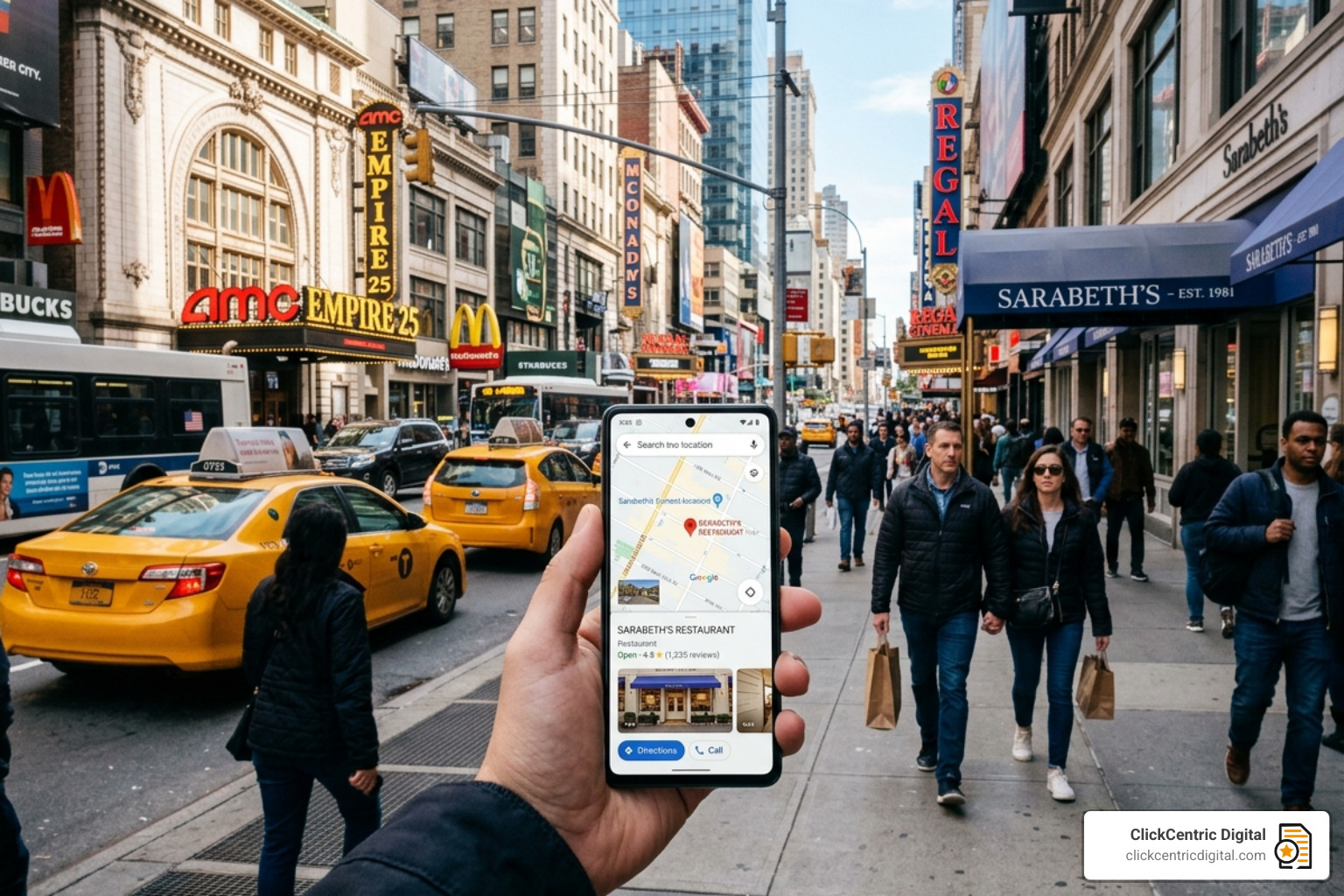
16 May The Ultimate Guide to Google Maps Marketing
The Ultimate Guide to Google Maps Marketing
One Billion Reasons Your Business Needs Google Maps Marketing
Google Maps marketing is the practice of optimizing your business’s presence on Google Maps to rank higher in local search results, attract nearby customers, and drive more foot traffic, calls, and sales.
Here’s what it covers at a glance:
- Claim and optimize your Google Business Profile (GBP) with accurate details, photos, and descriptions
- Earn reviews to build credibility and improve your ranking in the Local 3-Pack
- Build local citations with consistent Name, Address, and Phone (NAP) across directories
- Run Google Maps ads (promoted pins, local search ads) to boost immediate visibility
- Track your rankings using local SEO tools to measure and improve over time
One billion people use Google Maps every single month. That’s not a typo.
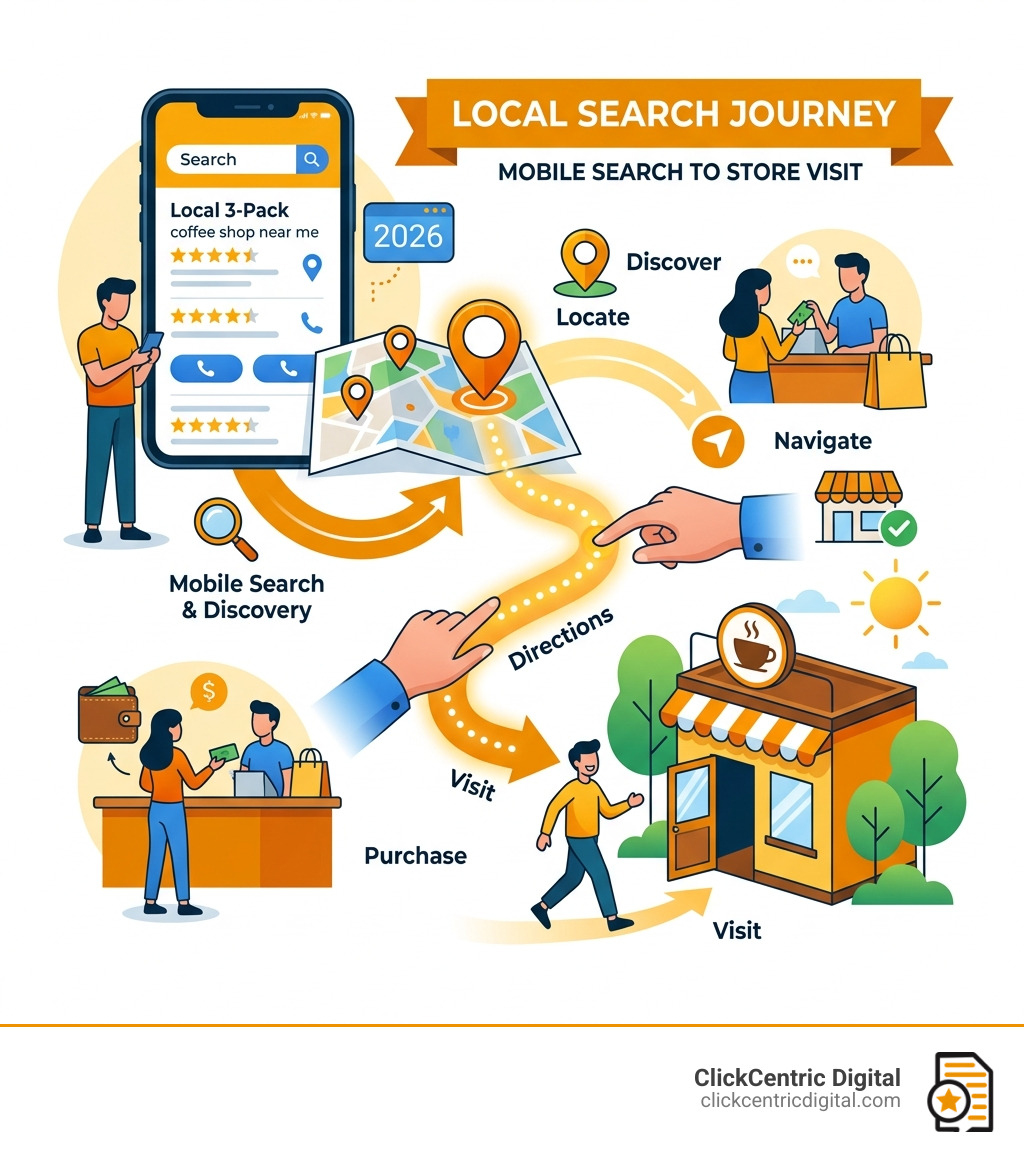
And the majority of them are looking for exactly what local businesses like yours offer — a nearby coffee shop, a trusted plumber, a great restaurant. Three out of four people who search for something nearby on their smartphone visit a store within 24 hours. Nearly a third of those searches end in a purchase.
Yet most local businesses are invisible in those results.
The difference between showing up in the Local 3-Pack (the top three map results Google displays) and being buried on page two is not luck. It’s strategy. Businesses in the top spots get the majority of clicks — the local pack alone drives between 28.8% and 32.3% of all clickthroughs on the results page.
If your business isn’t showing up there, you’re losing customers to competitors every single day.
This guide covers everything you need to fix that — from the basics of how Google ranks local businesses, to reviews, citations, paid ads, and tracking tools.
The Fundamentals of Google Maps Marketing
In April 2026, the local search landscape is more competitive than ever. We’ve seen a massive shift in how people in West Michigan—from Grand Rapids to Kalamazoo—interact with their devices. Google Maps marketing isn’t just a “nice-to-have” anymore; it’s the digital storefront of your physical location.
At its core, this strategy focuses on winning the Local 3-Pack. This is the coveted “Snack Pack” that appears at the top of Google’s search results, showcasing three local businesses alongside a map. Because “near me” searches have skyrocketed by over 500% in recent years, being in this top trio is the difference between a ringing phone and silence.
We often talk about the ROPO effect: Research Online, Purchase Offline. Statistics show that 82% of consumers research online before ever stepping foot in a store. By the time they arrive at your shop in Holland or Grand Haven, they’ve already vetted your location, your hours, and your reputation.
The most beautiful part of google maps marketing? It levels the playing field. Unlike traditional organic SEO where massive global corporations often dominate, Google Maps prioritizes proximity. This means a small, family-owned hardware store in South Haven can actually outrank a national chain if they are closer to the searcher and have a better-optimized profile. To learn more about how to dominate this space, check out our guide on How to Win the Local Pack in 2026 and Beyond.
For a deeper dive into the mechanics of local growth, you can also explore this Google Maps Marketing Guide for Ranking in Local Search.
Core Ranking Factors and Profile Optimization
Google doesn’t just throw darts at a map to decide who ranks first. There is a specific algorithm at play, built on three pillars: Relevance, Distance, and Prominence. Understanding these is the first step toward Search Engine Optimization Google Maps Ranking success.
Breaking Down the Pillars
| Factor | What It Means | How to Influence It |
|---|---|---|
| Relevance | How well your profile matches the searcher’s intent. | Use accurate categories and detailed service descriptions. |
| Distance | How far your business is from the searcher or the specified location. | You can’t move your building, but you can define your service areas. |
| Prominence | How well-known or “important” your business is online. | Accumulate reviews, build backlinks, and maintain consistent citations. |
While you can’t control where a customer is standing when they search (Distance), you have total control over Relevance and Prominence. By ensuring your profile is 100% complete, you provide Google with the data it needs to trust your business. For a look at how these factors have evolved, see our analysis of Google Maps Ranking Factors for 2025.
Leveraging Google Maps Marketing for Review Management
Reviews are the lifeblood of google maps marketing. They are the modern version of word-of-mouth, and they carry immense weight. In fact, 91% of consumers are more likely to choose a business after reading positive reviews.
But it’s not just about having a high star rating. Google looks at:
- Review Volume: Having 50 reviews is significantly better than having five.
- Review Velocity: How often are you getting new reviews? A steady stream is better than a burst from three years ago.
- Review Sentiment: Google’s AI can read the “vibe” of your reviews to see if people actually like your service.
We always tell our clients in Grand Rapids and Kalamazoo: don’t fear a negative review. It’s an opportunity to show off your customer service. Responding professionally within 24-48 hours can actually build more trust than a perfect record. If you’re wondering about the technicalities of managing feedback, read our Review Removal Reality Check: Can You Really Delete Google Feedback?.
To truly excel, you need a system for Mastering Local Reviews to Win More Customers. This involves making it easy for customers to leave feedback via QR codes, follow-up emails, or text messages.
Optimizing Google Business Profile Elements
Your Google Business Profile (formerly Google My Business) is the anchor of your local presence. If it’s half-baked, your rankings will be too.
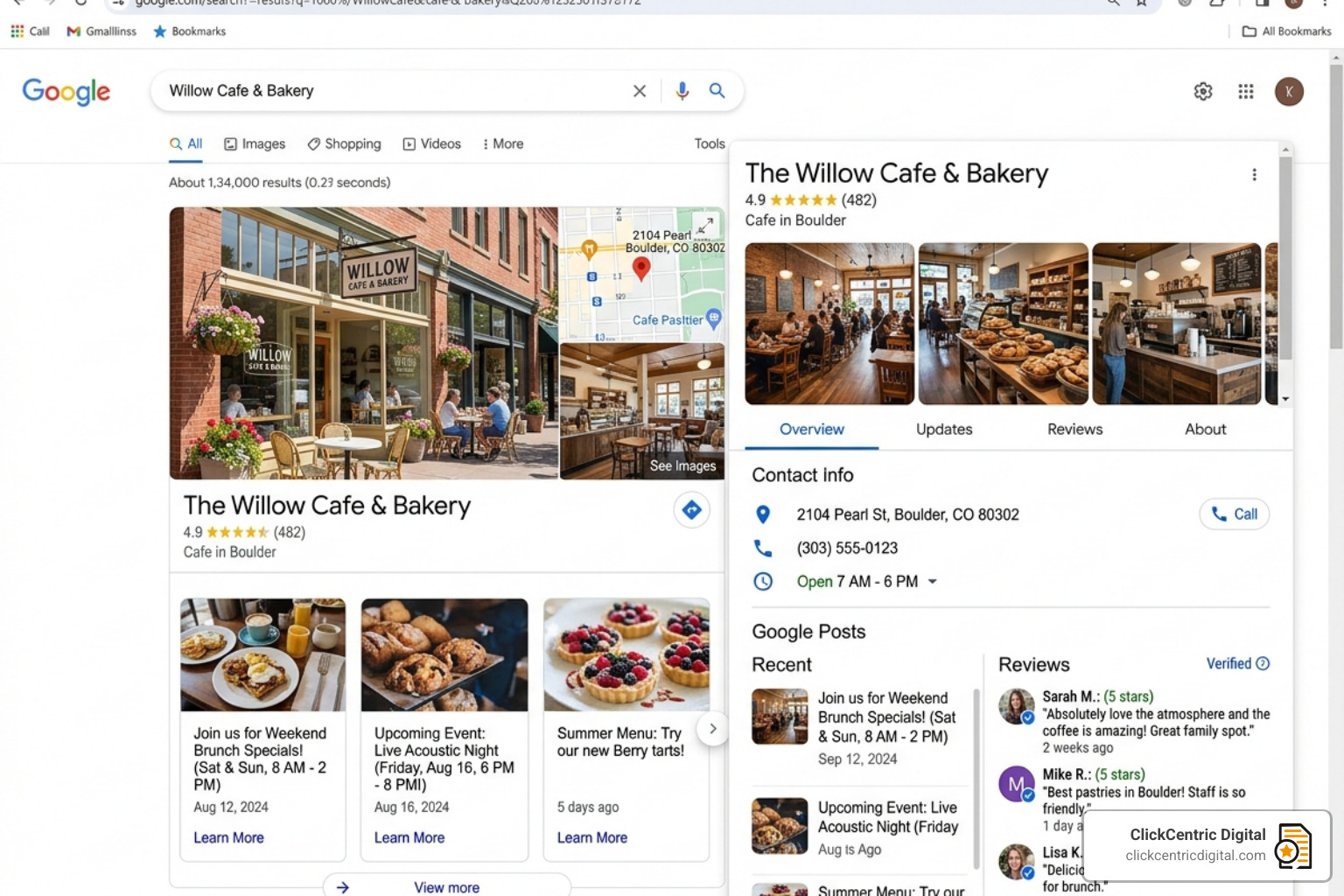
Key elements to optimize today:
- NAP Consistency: Your Name, Address, and Phone number must be identical across the web. If you use “St.” on Google and “Street” on Yelp, it can confuse the algorithm.
- Categories: Choose your primary category carefully. If you’re a “Pizza Restaurant,” don’t just settle for “Restaurant.”
- Photos: Google confirms that businesses with photos get more clicks. Aim for a mix of exterior shots (so people can find you), interior shots (to show the vibe), and your team in action.
- Google Posts: Think of these as “mini-ads” or social media updates that live on your profile. Use them to announce sales, new products, or events. For tips on keeping these engaging, check out The Ultimate Guide to GMB Posting Without Being Boring.
Mastering these basics is essential for How to Master Local Map Optimization for More Customers.
Advanced Strategies: Citations, Backlinks, and Paid Ads
Once your profile is polished, it’s time to look outside of Google. Google Maps marketing is heavily influenced by the “signals” your business sends from across the rest of the internet.
Local Citations are mentions of your business on other websites, like Yelp, Yellow Pages, or the Grand Rapids Chamber of Commerce. These citations act as “votes of confidence” for Google. If your NAP information is consistent across 50 different directories, Google feels much more confident that your business is legitimate and located exactly where you say it is.
Local Backlinks are even more powerful. A link from a local West Michigan news site, a neighborhood blog, or a local charity you sponsored tells Google that you are a prominent member of the local community. This boosts your “Prominence” score significantly.
For businesses looking to Optimize for Local Search and Dominate Your Neighborhood, focusing on these off-page signals is the next logical step.
Driving Immediate Traffic with Google Maps Marketing Ads
Sometimes you don’t want to wait months for organic rankings to climb. That’s where google maps marketing ads come in. These allow you to “jump the line” and appear at the very top of the map results with a “Sponsored” label.
Google offers several formats for this:
- Promoted Pins: Your business icon stands out on the map with a different color or your logo, even when a user isn’t specifically searching for you.
- Local Search Ads: These appear at the top of the search results list on the side of the map.
- Location Extensions: These link your Google Ads account to your Business Profile, showing your address, phone number, and distance to the user within your standard search ads.
By using these, you can Get Your Business on the Map and Stay There while your organic strategy builds momentum. For technical setup help, refer to the official Show local search ads on Google Maps – Google Ads Help page.
Measuring Success and Avoiding Common Pitfalls
You can’t manage what you don’t measure. In 2026, we use sophisticated tools to track how our clients are performing across their entire service area.
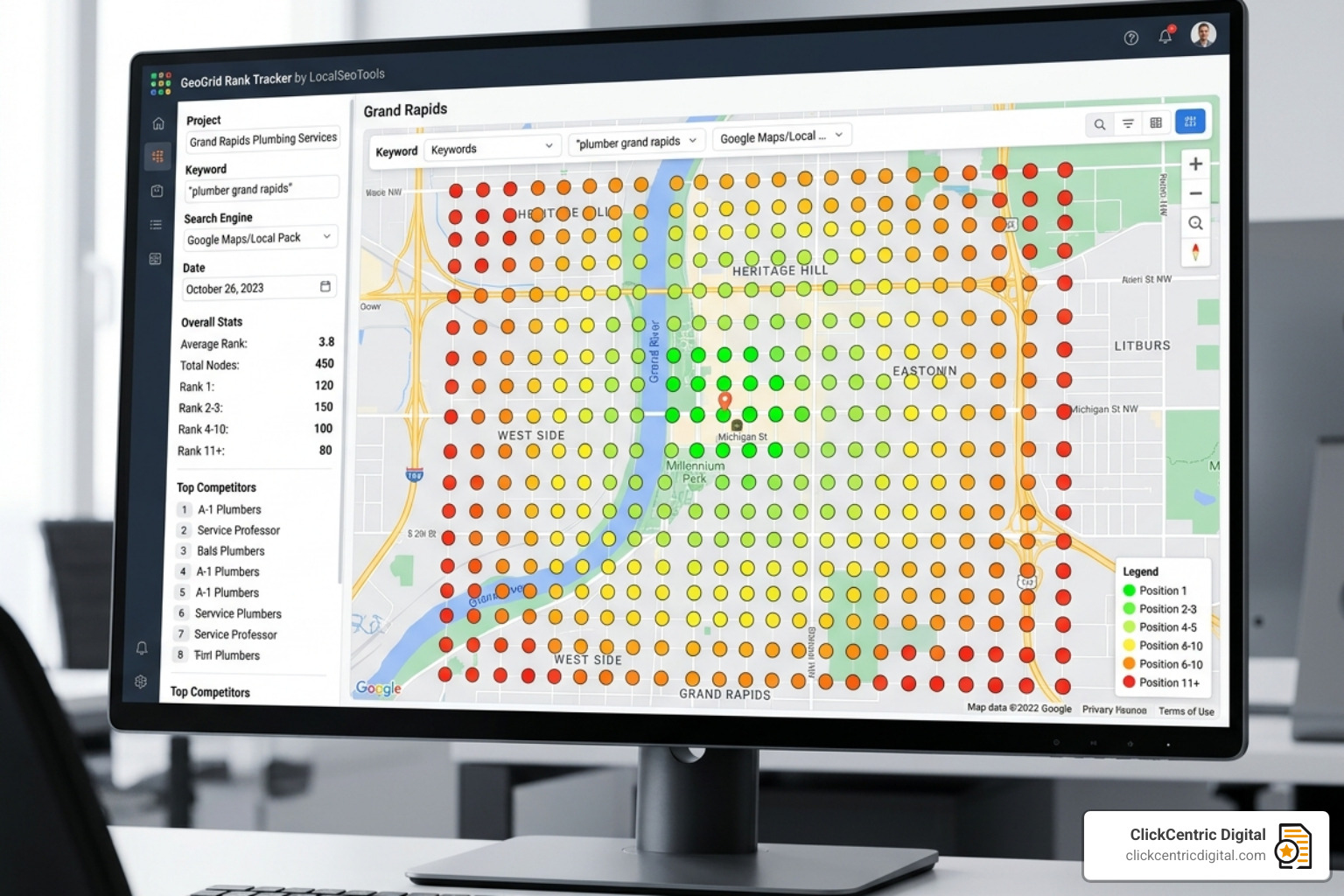
One of the most important tools in our arsenal is GeoGrid tracking. Instead of just seeing a single “average” rank, a GeoGrid shows you exactly where you rank on a block-by-block basis. You might rank #1 when someone is standing in your parking lot in Grand Rapids, but drop to #10 just three blocks away. This data allows us to see where we need to strengthen our “authority radius.”
Common Pitfalls to Avoid:
- Keyword Stuffing: Don’t add “Best Plumber Grand Rapids” to your business name if it’s just “Smith Plumbing.” Google will eventually suspend your listing.
- Ignoring Reviews: Letting negative feedback sit without a response is a signal to both Google and customers that you don’t care.
- Inconsistent NAP: Moving offices or changing phone numbers without updating every single directory online will tank your rankings.
- Using Stock Photos: People want to see the real you. Stock photos feel cold and untrustworthy.
Understanding The Math Behind a Better Local Search Strategy is about balancing these metrics to ensure long-term growth.
Frequently Asked Questions about Google Maps Marketing
How long does it take to rank on Google Maps?
While some basic profile optimizations can show results in as little as a few weeks, building true “Prominence” through reviews and citations typically takes 3 to 6 months of consistent effort.
Can I rank on Google Maps without a physical office?
Yes! Service-area businesses (like plumbers or mobile detailers) can set up a profile, hide their home address, and define the specific areas they serve. You can still win the Local 3-Pack by proving your relevance to those specific zip codes.
Do Google Maps ads help organic rankings?
Directly? No. Running ads won’t automatically boost your organic position. However, the increased traffic, calls, and brand awareness generated by ads can lead to more organic reviews and searches for your brand name, which do help your organic rankings over time.
Conclusion
At ClickCentric Digital, we’ve seen how a dedicated google maps marketing strategy can transform a local business. Whether you are a veterinarian in Kalamazoo or a boutique in Grand Haven, your customers are using their phones right now to find someone like you.
The “Local 3-Pack” is the most valuable real estate on the internet for a local business owner. By focusing on profile optimization, aggressive review management, and smart local advertising, you can ensure that when your neighbors search, they find you first.
Ready to stop being invisible? We specialize in helping West Michigan businesses dominate their local markets. From managing your online reputation to scaling your reach with targeted ads, we have the tools to put you on the map—and keep you there.
Sorry, the comment form is closed at this time.