

29 Aug Why Is My Sump Pump Running Every 30 Seconds? A West Michigan Guide
Why Is My Sump Pump Running Every 30 Seconds? A West Michigan Guide
Why Your West Michigan Sump Pump Is Running Every 30 Seconds

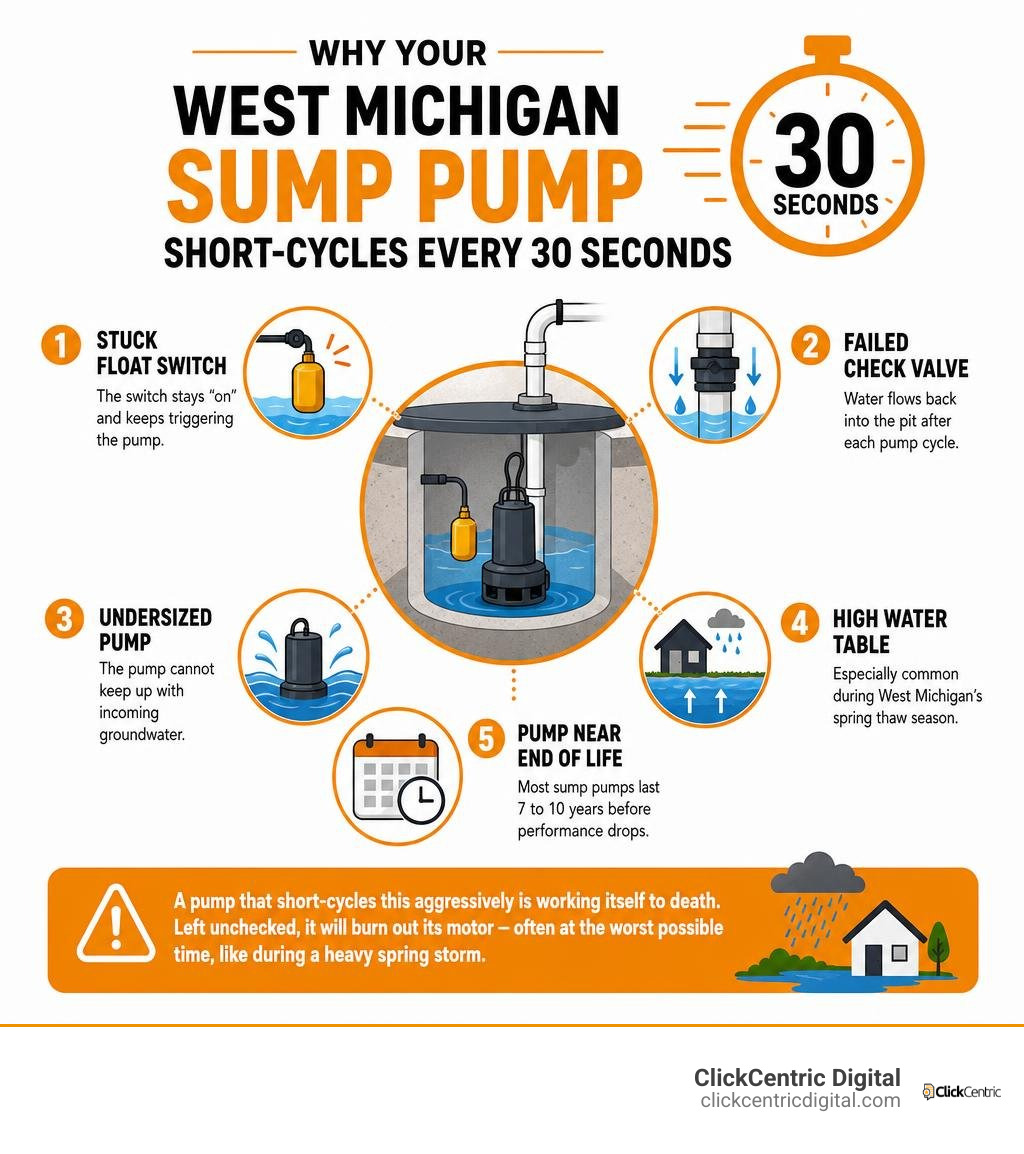
If your West Michigan sump pump is cycling every 30 seconds, here is what is most likely happening:
- Stuck float switch — the switch stays “on” and keeps triggering the pump
- Failed check valve — water flows back into the pit after each pump cycle
- Undersized pump — the pump cannot keep up with incoming groundwater
- High water table — especially common during West Michigan’s spring thaw season
- Pump near end of life — most sump pumps last 7 to 10 years before performance drops
A pump that short-cycles this aggressively is working itself to death. Left unchecked, it will burn out its motor — often at the worst possible time, like during a heavy spring storm.
This is a very common problem for homeowners across the Grand Rapids area right now in July 2026, after a wet spring season pushed local water tables higher than usual. West Michigan’s clay-rich soil holds moisture for a long time, which means your sump pit can refill almost as fast as your pump empties it.
I’m Fred Dirkse, and in this guide I’ll walk you through exactly why this happens, how to diagnose it, and what to do next.
Understanding the West Michigan Sump Pump: Why Our Homes Need Them
To understand why your pump is working overtime, we first have to look at the ground beneath our feet. West Michigan is a beautiful place to live, with our close proximity to Lake Michigan, gorgeous river valleys, and rolling hills. However, those same geographical features make our basements highly vulnerable to water intrusion.
For many homeowners in Grand Rapids, Holland, Grand Haven, South Haven, and Kalamazoo, a high-quality West Michigan sump pump is not a luxury—it is the single most important line of defense protecting their home’s foundation. If you are planning a basement remodel or trying to keep your lower level livable, coordinating with The Best West Michigan Redesign Pros for a Stress-Free Home starts with ensuring your basement is completely dry and structurally sound.
Clay Soil and the Grand River Watershed
Much of West Michigan, particularly around the Grand River watershed, is characterized by clay-rich soil. Unlike sandy soil, which allows rainwater to drain away quickly, clay acts like a massive sponge. It absorbs water very slowly and retains it for incredibly long periods.
When heavy rain falls, this slow-draining clay soil becomes saturated. The water has nowhere to go, creating immense hydrostatic pressure against your basement walls and floor. This pressure forces groundwater through the microscopic pores and tiny cracks in your concrete foundation. A sump pump relieves this hydrostatic pressure by giving the rising groundwater a path of least resistance: into a basin (or pit) where it can be safely pumped away.
Lake Effect Snowmelt and Spring Flooding
We cannot talk about West Michigan weather without mentioning lake effect snow. During the winter, we often pile up feet of heavy, wet snow. When spring arrives—especially during the transition months of March and April—that snow melts rapidly.
Combine a fast snowmelt with heavy spring thunderstorms, and you get a recipe for a rapidly rising water table. During these peak seasons, standard drainage systems are easily overwhelmed. This is when your West Michigan sump pump goes from cycling a few times a day to running almost continuously.
Why Is Your Sump Pump Running Every 30 Seconds?
If you hear your pump kicking on, humming for 10 seconds, shutting off, and then repeating the entire process 30 seconds later, your system is “short-cycling.” This rapid on-and-off sequence places extreme mechanical wear on the pump’s motor and switch, drastically shortening its service life.
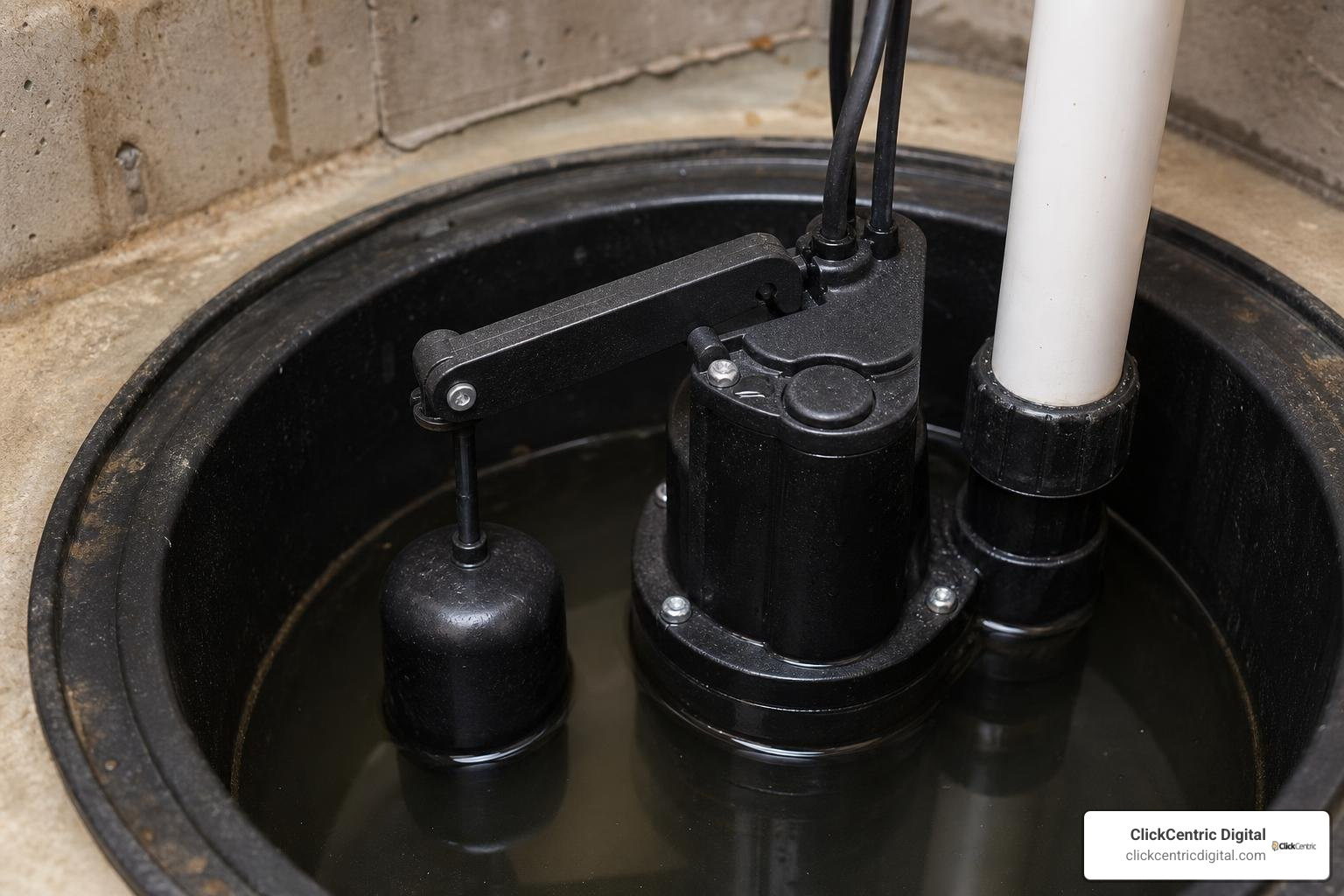
To get to the bottom of this, we need to look at the mechanical components inside the pit. If you suspect your system is failing, exploring Professional sump pump repair options early can save you from a catastrophic basement flood.
Stuck Float Switches and Failed Check Valves
The two most common mechanical culprits behind a short-cycling pump are the float switch and the check valve.
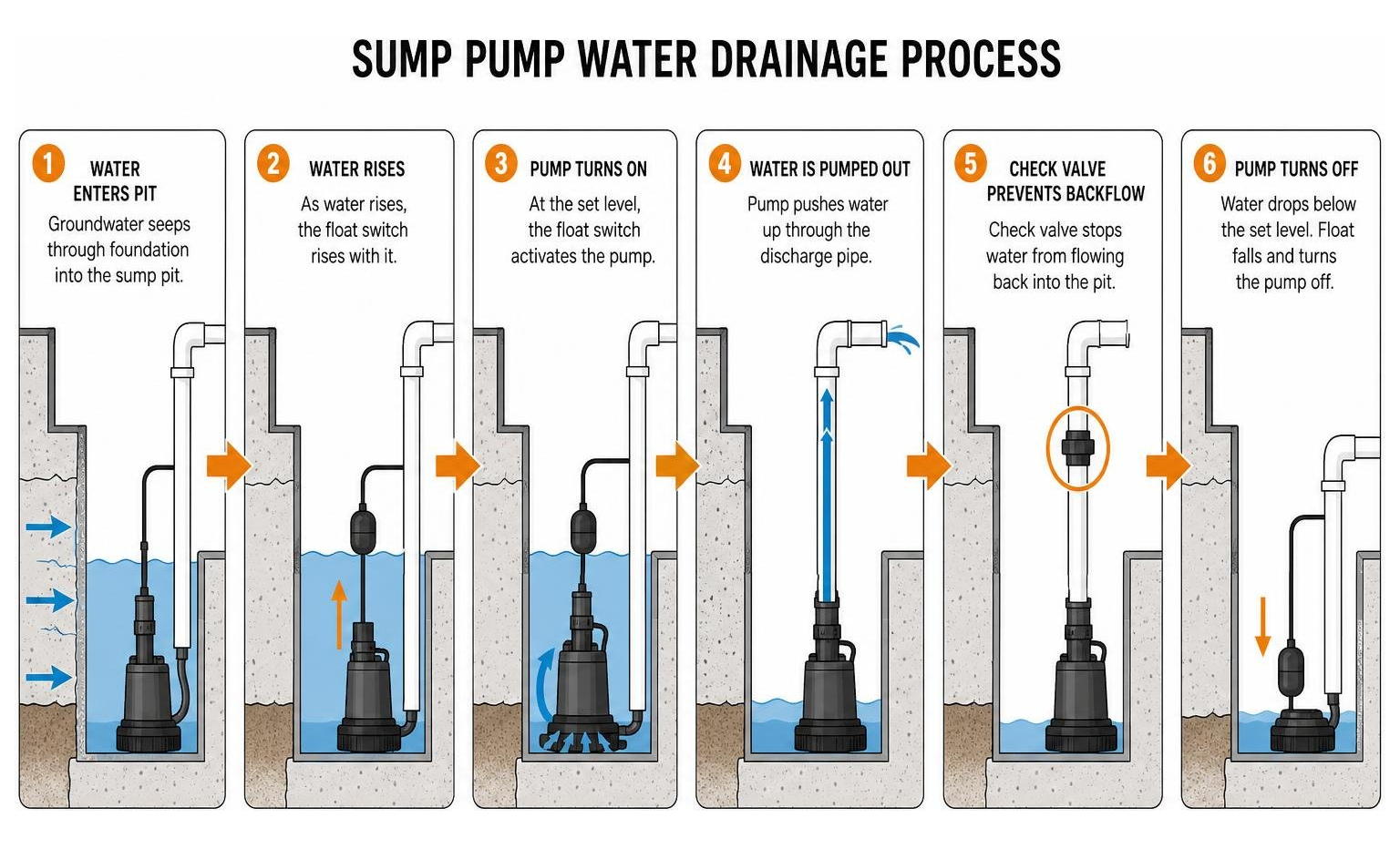
- The Float Switch: This is the device that tells your pump when to turn on and off. It operates similarly to the float mechanism inside a toilet tank. As water rises in the sump pit, the float rises. Once it reaches a certain height, it triggers the switch to turn the pump on. As the water level drops, the float falls, turning the pump off. Over time, debris, dirt, or shifting pipes can cause the float to get stuck in the “on” position, or the switch itself can fail mechanically.
- The Check Valve: This is a one-way valve installed on the discharge pipe just above your sump pump. Its job is to prevent water that has already been pumped up into the discharge line from flowing back down into the pit once the pump shuts off. If the check valve fails or is installed incorrectly, multiple gallons of water will rush back down into the pit the moment the pump stops. This raises the water level, triggers the float switch, and starts the cycle all over again—every 30 seconds.
Undersized Pumps and High Water Tables
Sometimes, the problem isn’t a broken part, but an issue of capacity.
- Undersized Pumps: If your home has a high water table and you have a low-horsepower pump (such as a cheap 1/4 HP model), the pump may simply lack the power to move water out faster than it is pouring in. It will struggle, run continuously, or cycle rapidly trying to keep up.
- Extremely High Water Tables: In low-lying areas of Grand Rapids or Holland, the natural water table can rise above the level of your basement floor during wet seasons. When this happens, water pours into your sump pit at an alarming rate. If your basin is small, it will fill up almost instantly, causing even a properly sized pump to cycle constantly.
Sump Pump Types, Sizing, and Installation in Finished Basements
Choosing the right equipment is essential for long-term reliability. Let’s break down the main types of pumps, how to size them, and what it takes to install one in a basement that is already finished. If you are starting from scratch or upgrading an old system, utilizing professional Sump pump installation services ensures your pit is excavated and sealed correctly.
Submersible vs. Pedestal West Michigan Sump Pump Options
When shopping for a West Michigan sump pump, you will primarily choose between two designs: submersible and pedestal.
| Feature | Submersible Sump Pump | Pedestal Sump Pump |
|---|---|---|
| Motor Placement | Underwater inside the sump pit | Mounted on a shaft above the pit |
| Noise Level | Very quiet (muffled by water and lid) | Louder (motor is completely exposed) |
| Lifespan | 7 to 10 years | Up to 15 years (motor stays dry) |
| Aesthetics | Out of sight, fits under a sealed lid | Highly visible, takes up floor space |
| Clog Resistance | High (handles small solids easily) | Moderate |
For most West Michigan homeowners, submersible pumps are the preferred choice. They are quieter, safer for homes with children or pets because the pit can be sealed with a locking safety lid, and they handle the high water volumes common to our region much more efficiently.
Sizing Your Pump: 1/3 HP vs. 1/2 HP
Sump pumps are rated by horsepower (HP), which dictates how many gallons of water they can pump per hour (GPH) and how high they can lift that water (known as “head height”).
- 1/3 HP Pumps: These are suitable for homes with average water tables and low-to-moderate water intrusion. They are generally sufficient for standard municipal lots with decent soil drainage.
- 1/2 HP Pumps: This is the gold standard for West Michigan. A heavy-duty ½ HP cast iron submersible pump commonly used in our region has a massive capacity of 3,840 gallons per hour at a 10-foot lift. This extra power is crucial for handling sudden lake-effect snowmelts and severe spring storms without short-cycling or burning out.
Retrofitting a Sump Pit in a Finished Basement
Can you install a sump pump if your basement is already finished? Absolutely. While it is easier to install a system during construction, retrofitting is a very common procedure.
The process involves:
- Identifying the lowest point in your basement where water naturally pools.
- Carefully cutting and removing a section of the concrete floor.
- Excavating a pit deep enough to house a standard 26-gallon polyethylene basin (usually about 25 inches deep and 18 inches wide).
- Installing the basin, placing the pump inside, and connecting a PVC discharge line.
- Routing the discharge line through the exterior wall and patching the concrete floor back to its original state.
When retrofitting, we always ensure the discharge line extends at least 10 feet away from the foundation (ideally ending in a pop-up emitter) to prevent the discharged water from immediately soaking back through the soil and returning to your sump pit.
The Critical Role of Battery Backups and Emergency Preparedness
If there is one thing we know about West Michigan storms, it’s that they like to knock out the power. Standard sump pumps run on 110v AC household electricity. If a severe thunderstorm knocks out your power grid, your primary sump pump will stop working exactly when you need it most.
Why a Backup System is Essential During Michigan Storms
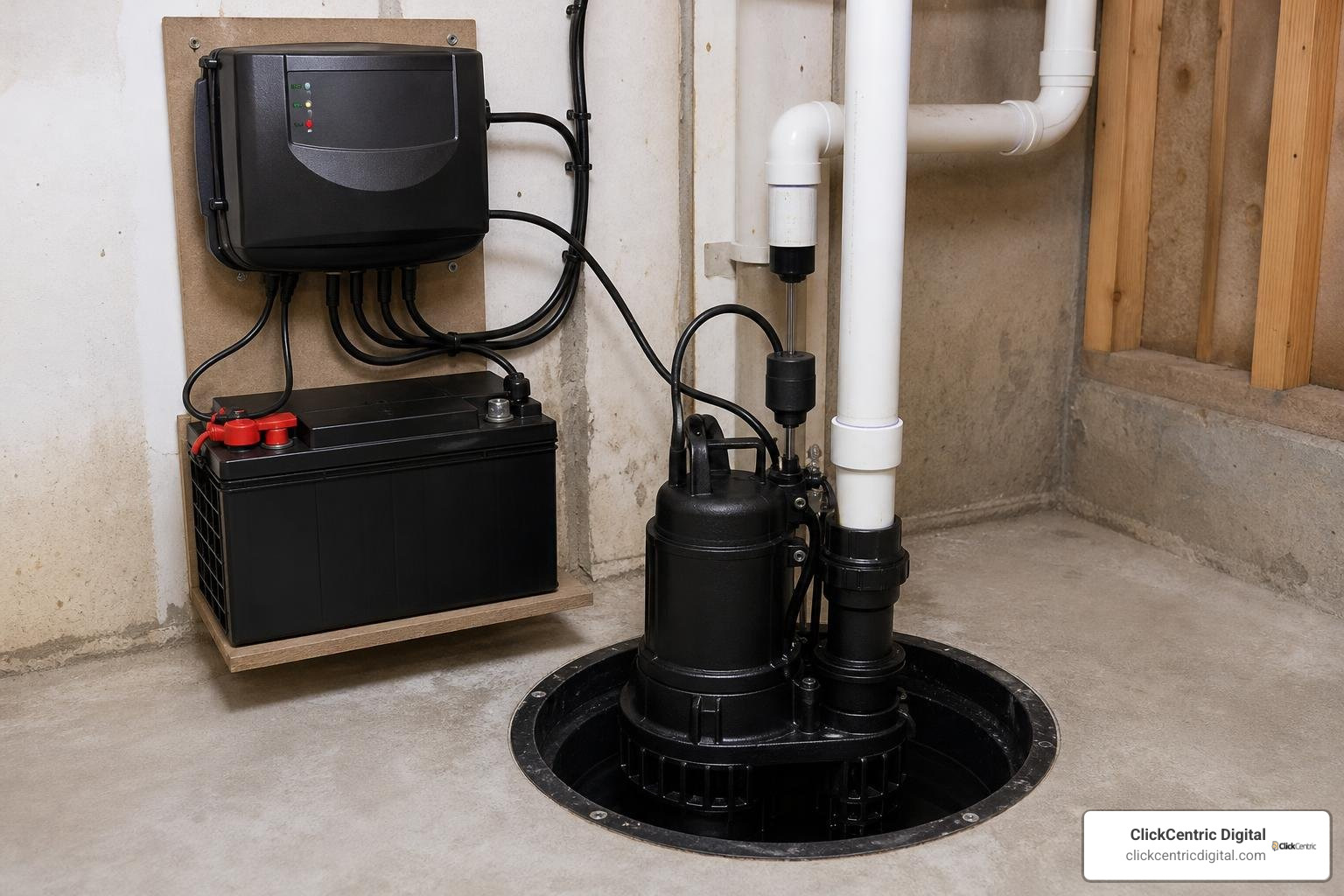
A battery backup sump pump is one of the smartest investments you can make for your home. These systems feature a secondary, DC-powered pump that sits slightly higher in the sump pit than your primary pump.
If the power goes out, or if your primary pump mechanically fails or becomes overwhelmed, the backup system automatically kicks in. Modern high-end battery backup systems can even be integrated with smart technology to send real-time text notifications directly to your phone, alerting you that your primary system has lost power or failed. That while the backup pump itself can last many years, the heavy-duty batteries typically need to be replaced every 3 to 5 years to ensure they hold a reliable charge.
What to Do During a Sudden Sump Pump Failure
If your pump fails during a major storm and you do not have a battery backup, you must act quickly:
- Safety First: Never step into a flooded basement if the water has reached electrical outlets, cords, or appliances. Turn off the power to your basement at the main breaker panel first.
- Move Valuables: Quickly move electronics, furniture, and family keepsakes to higher ground.
- Check the Breaker: Verify if the pump simply tripped a GFCI outlet or a circuit breaker.
- Clear the Line: Check the outdoor discharge pipe to ensure it isn’t blocked by debris, leaves, or winter ice.
- Call for Help: Contact a professional plumber immediately for emergency service.
Sump Pump Lifespan, Maintenance, and Costs in West Michigan
Like any hard-working mechanical appliance, your sump pump requires regular care to perform reliably. If you own a local business or want to optimize your digital reach in coastal communities, checking out Grand Rapids local marketing insights can help you connect with homeowners looking for these exact preventative maintenance services.
Testing and Maintenance Schedule
To keep your basement dry, we recommend following this seasonal maintenance checklist:
- Quarterly Testing: Pour a bucket of water slowly into the sump pit until the float rises and the pump activates. It should start automatically, drain the water rapidly, and shut off smoothly.
- Early March Inspection: Before the spring snowmelt begins, perform a thorough check. Clean out any gravel, sand, or debris from the bottom of the basin to prevent clogs.
- October Checkup: Before late-autumn storms arrive, inspect the outdoor discharge line. Ensure it is clear of fallen leaves and properly sloped so water doesn’t pool and freeze inside the pipe during winter.
- Battery Testing: Unplug your primary pump and run the “bucket test” to ensure your battery backup system takes over seamlessly.
Sump Pump Replacement and Repair Costs
Maintaining a dry basement is highly cost-effective compared to the thousands of dollars required for water damage restoration. Here is a breakdown of typical costs in the West Michigan region:
- Sump Pump Repair: Typically runs $150 – $400 for minor issues like switch replacements or clearing clogs.
- Primary Pump Replacement (Installed): Typically runs $400 – $900, depending on the horsepower and material (cast iron vs. plastic).
- Battery Backup System (Installed): Typically runs $600 – $1,500.
- New Sump Pit and Pump Installation: For basements without an existing system, excavating a new pit and installing a complete system starts at $2,500+ in the Grand Rapids area.
When to Call a Professional West Michigan Sump Pump Expert
While a handy homeowner can manage basic testing, you should call a licensed plumber if your pump is making loud grinding noises, vibrating excessively, running constantly without lowering the water level, or tripping your electrical breakers.
For comprehensive foundation evaluations and long-term moisture management, partnering with a certified specialist for Professional waterproofing solutions is the best way to secure your property’s value.
Frequently Asked Questions
How long do sump pumps typically last?
On average, a residential sump pump lasts between 7 and 10 years. However, in West Michigan homes where the pump cycles frequently during heavy spring seasons, the lifespan may be shorter. We highly recommend replacing your primary pump proactively once it reaches its 8th year to avoid unexpected failure.
Can I install a sump pump myself?
While highly skilled DIYers can technically install a replacement pump, excavating a new pit and routing discharge lines through concrete and exterior walls is best left to professionals. Proper sloping, sealing, and compliance with local municipal building codes are critical. For homeowners in the northern part of our service area, securing professional Sump pump installation in Muskegon ensures the job is done safely and is backed by a reliable warranty.
How does basement moisture affect indoor air quality?
Basement health directly impacts your entire home. Thanks to a natural phenomenon known as the “stack effect,” warm air rises and escapes through your roof, pulling air from the lowest levels of your house upward. Because approximately 40% of the air you breathe upstairs is circulated directly from your basement or crawlspace, controlling moisture downstairs is vital. Proper Sump pump inspection and repair prevents mold, mildew, and musty odors from compromising your family’s respiratory health.
Conclusion
A dry, healthy basement provides invaluable peace of mind, especially when those heavy West Michigan storms roll in off the lake. By understanding why your West Michigan sump pump cycles, keeping up with basic seasonal maintenance, and investing in a reliable battery backup system, you can keep your home safe from water damage for years to come.
While we love helping our West Michigan neighbors keep their homes in tip-top shape, our true passion at ClickCentric Digital is helping local service businesses grow. If you run a local plumbing, waterproofing, or home renovation business in Grand Rapids, Holland, or Grand Haven, we can help you dominate your local market. Learn how to scale your customer acquisition by reading our comprehensive guide on How to run Facebook ads for local businesses, and let’s get your business on the map today!
Sorry, the comment form is closed at this time.