


07 Aug The Ultimate Guide to Local Business Facebook Campaigns and Lead Gen
The Ultimate Guide to Local Business Facebook Campaigns and Lead Gen
Local Ads Lead Generation: LSAs vs Traditional Paid Search
When launching a local customer acquisition campaign, understanding the structural differences between Google Local Services Ads (LSAs) and traditional Google Search Ads (Pay-Per-Click or PPC) is crucial. While both appear on the Google Search Engine Results Page (SERP), they operate on fundamentally different mechanics, charging structures, and user intent patterns.
Standard PPC ads display near the top of the search results with an “Ad” or “Sponsored” tag. They require keyword bidding, ad copy creation, custom landing page building, and continuous keyword optimization. When a user clicks your link, you pay for that click whether or not the visitor calls your office, fills out a contact form, or immediately bounces off the page.
Google Local Services Ads sit at the absolute top of the SERP, appearing above standard Google Search Ads, local map packs, and organic rankings. Instead of links to a landing page, LSAs display key business information: your company name, star rating, total review count, operating hours, active trust badges, and direct call or messaging buttons.
Key Differences Between Pay-Per-Lead and Pay-Per-Click Models
The main financial difference between these formats comes down to Pay-Per-Click (PPC) versus Pay-Per-Lead (PPL).
In traditional PPC, you pay for user attention. A competitor clicking your link, an accidental mobile tap, or a user looking for DIY repair instructions costs you money. In a Pay-Per-Lead model, you only pay when a prospective customer takes direct action to initiate contact with your business. For LSAs, a billable lead is recorded when a potential customer places a phone call through the ad that lasts at least two minutes, sends a direct text message, or submits an in-app booking request.
Because of this direct alignment with business outcomes, local ads lead generation using LSAs typically costs 10% to 40% less per conversion compared to standard paid search channels. Instead of guessing how many website clicks turn into phone calls, every dollar spent connects directly to a real consumer inquiry.
Conversion tracking is simplified within the LSA dashboard. Instead of setting up Google Tag Manager events or tracking complex URL parameters, you receive recorded call logs and message threads directly within your account. You can review call recordings to confirm lead quality and request financial credits for fraudulent or off-topic calls.
Business Eligibility Across Primary Local Verticals
Local Services Ads are not available to every business model. Google restricts LSA eligibility to specific service industries where physical location, consumer trust, and immediate local service delivery matter most. As of 2026, LSAs operate in 11 countries (including the United States, Canada, the United Kingdom, Germany, and France) across several primary service verticals:
- Home Services: Plumbers, electricians, HVAC technicians, roofers, junk removal specialists, house cleaners, pest control operators, and general contractors.
- Professional & Legal Services: Personal injury attorneys, estate planning lawyers, tax specialists, real estate agents, and financial planners.
- Healthcare Services: Dentists, audiologists, optometrists, physical therapists, and podiatrists.
- Automotive Repair: Auto mechanics, mobile detailers, auto glass repair, and towing services.
- Care, Wellness & Beauty: Childcare centers, elder care providers, massage therapists, and barbershops.
- Learning & Educational Services: Private tutors, driving instructors, and music teachers.
| Feature / Metric | Pay-Per-Click (PPC) Standard Search Ads | Pay-Per-Lead (PPL) Local Services Ads |
|---|---|---|
| Payment Trigger | Paid upon ad click | Paid upon recorded call/message lead |
| SERP Placement | Below LSAs, above organic listings | Top position on search results page |
| Destination | Custom website landing page | Direct call, text message, or booking |
| Trust Signal | Google Ads extension text | Google Guaranteed / Screened badge |
| Setup Asset | Target keyword list & ad creative | Verified Business Profile & License checks |
| Average Cost Difference | Baseline competitive click cost | Typically 10-40% lower cost per lead |
Trust Signals and Multi-Channel Targeting for Higher Conversions
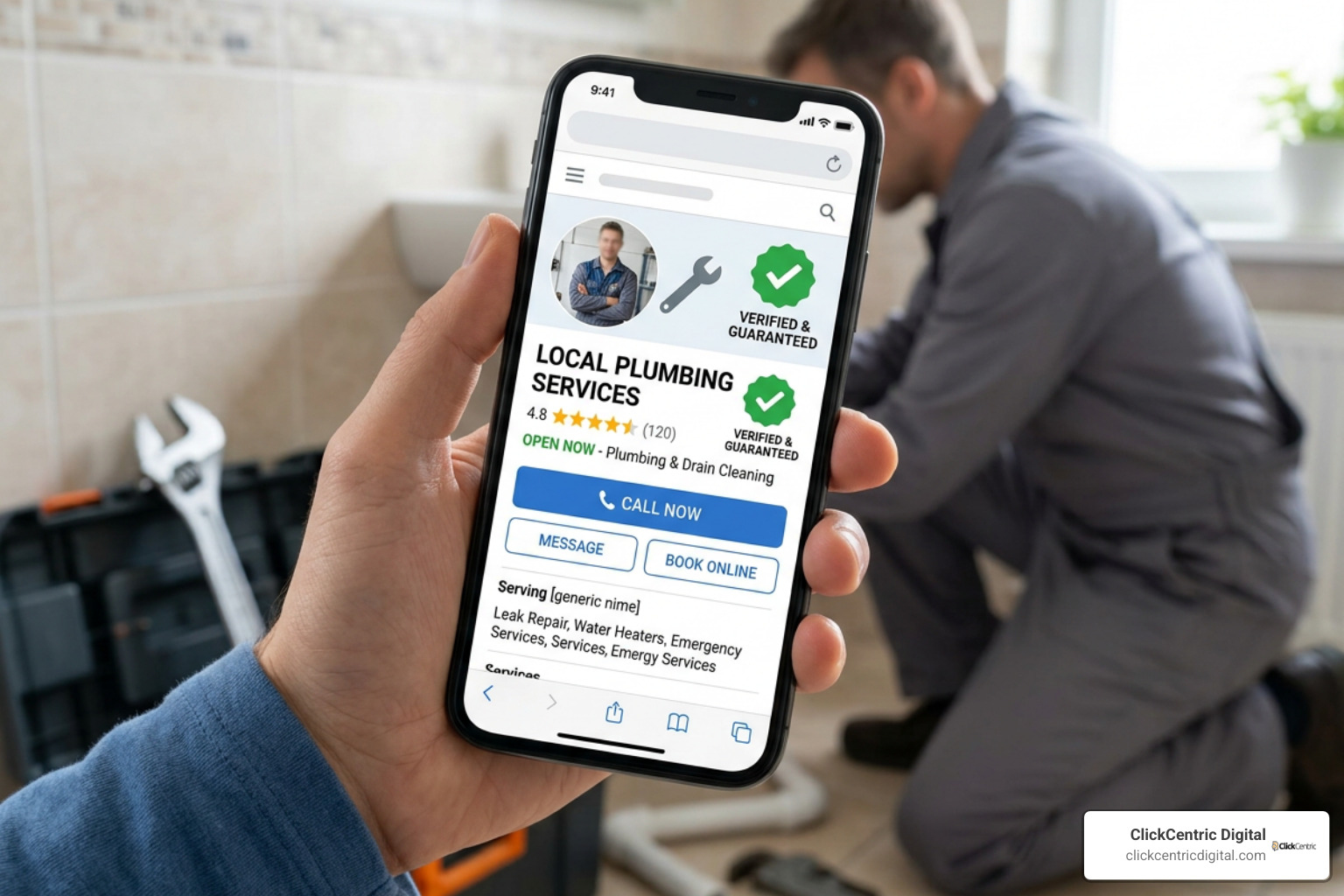
Earning consumer trust before an initial call is the primary driver of high conversion rates in local advertising. Prospective clients searching for home repairs or legal advice are wary of scams, poor workmanship, or uninsured contractors entering their homes. Google solves this friction by placing explicit trust verification badges directly on your LSA units.
The Google Guaranteed badge is designed primarily for home service contractors. To earn it, businesses must pass Google’s verification process, which includes verification of business licenses, proof of active liability insurance, and third-party background checks for field employees. Displaying this green checkmark badge signals immediate credibility. For consumers in the United States, the Google Guaranteed program offers a money-back guarantee backed by Google up to $2,000 for work booked directly through an LSA if the customer is dissatisfied with the job quality.
The Google Screened badge applies to professional verticals like law firms, financial planners, and medical practitioners. While it does not include a monetary refund policy, it verifies that professional license credentials and company management pass background checks. Displaying these verified badges helps build immediate consumer trust, helping local service businesses improve conversion rates from cold search traffic.
Launching High-Performing Local Ads Lead Generation Workflows
Launching a successful campaign requires systematic account setup, profile completeness, and strategic budget management. Simply setting up an ad account isn’t enough to capture consistent top-tier visibility in competitive markets.
- Complete Account Setup & Licensing Verification: Gather all required state/local trade licenses, business registration documents, and commercial liability insurance certificates prior to submission.
- Set Profile Completeness to 100%: Fill out every field in your LSA profile. Select specific service sub-categories, upload high-resolution business photos, highlight key differentiators (e.g., “Family-Owned”, “24/7 Service”), and list your specific service ZIP codes.
- Execute a 60-Day Aggressive Budget Ramp: During the initial launch, Google’s algorithm tests your business against competitors to measure engagement and response reliability. Google recommends setting aggressive monthly budgets (e.g., setting a budget of $30,000–$50,000 per month even if your target actual spend is $10,000) during your first 60 days. This gives the system auction headroom to ramp up your campaign and establish baseline performance.
- Select Automated Bidding First: Use the automated “Maximize Leads” bidding strategy initially. Manual bidding caps can artificially suppress lead impression volume while Google is learning your account metrics.
- Maintain Rapid Response Metrics: Google explicitly ranks LSAs higher for businesses that maintain fast response times. Answer incoming phone calls within two rings and reply to submitted text inquiries immediately.
To learn more about structural setup options, consult Reach Local Customers with Local Service Ads – Google Ads.
Integrating Local Facebook Campaigns with Search Lead Generation
While Google LSAs capture high-intent searchers actively looking to solve an immediate problem, combining search with social media advertising creates a comprehensive local ads lead generation engine.
Meta (Facebook & Instagram) allows local businesses to target prospects based on demographic boundaries, zip code radiuses, life events (like purchasing a new home), and interest profiles. Using Facebook Lead Ads with native lead forms allows users to submit contact details without leaving the Facebook app.
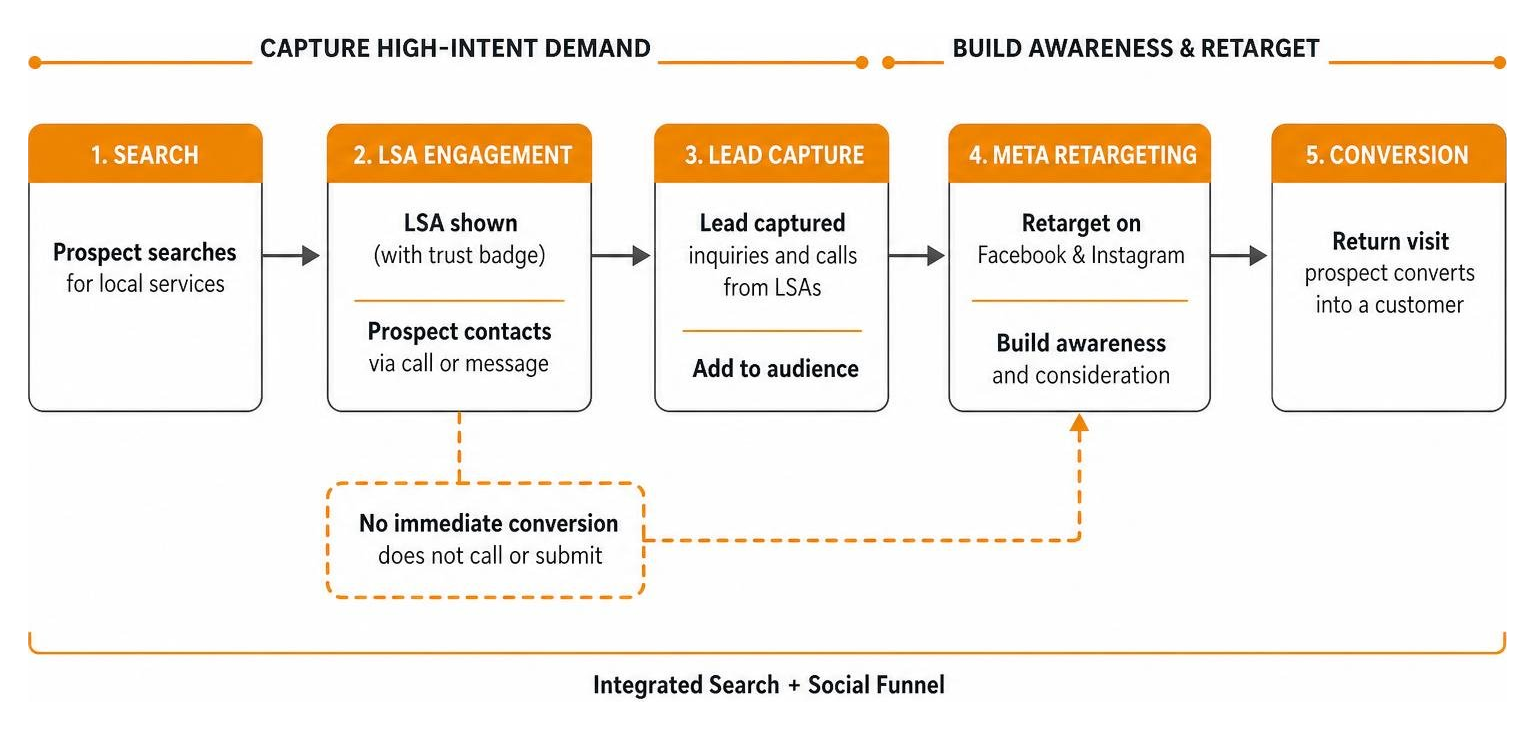
A high-converting local strategy combines both channels:
- Search (Google LSAs & Search Ads) captures high-intent demand from users needing immediate solutions (e.g., an emergency pipe leak or urgent brake repair).
- Social (Facebook & Instagram Campaigns) builds local brand awareness, captures prospective leads who are planning non-emergency projects (e.g., kitchen remodeling or estate planning), and retargets website visitors who didn’t call on their first visit.
When prospective clients see your verified search ads on Google and repeatedly spot your customer testimonial videos on Facebook, brand familiarity increases. This multi-channel footprint directly lifts local conversion rates. Discover additional search targeting strategies in our guide to Little Known Ways To Target Local Customers With Google Ads.
Advanced Strategies for Local Ads Lead Generation Scaling

Once your initial campaigns are live and verified, expanding lead generation requires ongoing account optimization. Scaling local advertising isn’t just about throwing more money at your ad spend—it requires strategic management of target areas, bidding algorithms, and reputation assets.
To consistently scale lead volume:
- Expand Service Radiuses Methodically: Avoid targeting entire metropolitan regions if your team cannot service outlying areas quickly. Expand targeting by adding adjacent ZIP codes incrementally, evaluating lead quality and response times as you grow.
- Implement Photo Guidelines: Profiles with authentic, high-quality media capture higher click-through rates. Upload photos of branded fleet trucks, clean uniform technicians, and completed local work. Pro tip: Ensure team headshots show full arms down to the elbow—Google’s automated review system frequently flags and rejects tightly cropped or floating headshots.
- Leverage Google Business Profile Review Integration: LSAs directly pull customer reviews and aggregate star ratings from your primary Google Business Profile. Consistently requesting reviews from satisfied customers builds your total review count, which directly influences your auction rank in the LSA unit.
- Analyze Time-of-Day Conversion Patterns: Review your call answer logs inside the dashboard. If you notice phone leads going to voicemail on weekends or after 5 PM, use ad scheduling to pause campaigns during off-hours. Unanswered calls negatively impact your internal responsiveness score and hurt your rank.
Budget Optimization and Cost Factors
Cost per lead in local advertising varies based on several core market variables:
- Industry Vertical: High-ticket legal or specialized water damage restoration leads carry higher acquisition costs than routine carpet cleaning or house maintenance calls.
- Geographic Population Density: Highly populated metropolitan markets face stiffer bidding competition, raising average lead prices compared to suburban areas.
- Seasonal Market Demand: HVAC leads surge during initial summer heatwaves and winter freezes, influencing competitive bid density.
To maintain budget efficiency, monitor your cost per lead weekly. While automated “Maximize Leads” bidding is recommended during campaign setup, mature accounts experiencing high lead costs can experiment with manual bid caps to stabilize margins.
Crucially, protect your budget by actively disputing invalid leads through the LSA dashboard. Businesses only pay for valid customer inquiries. You can request cost credits for:
- Calls for services you do not list on your active profile.
- Calls targeted outside your designated service ZIP codes.
- Robocalls, wrong numbers, or automated sales solicitations.
- Inquiries where the caller immediately hangs up (under two minutes without engagement).
For additional detailed insights on budgeting structures, refer to Google’s official Guide to lead generation for local businesses – Google Ads.
Nurturing Non-Converting Leads to Maximize Campaign ROI
A common mistake local service businesses make is ignoring leads that don’t convert on the initial phone call. Remember: when an LSA phone call lasts longer than two minutes, you have paid for that lead. If the caller hung up without booking an appointment, abandoning that prospective client burns ad budget.
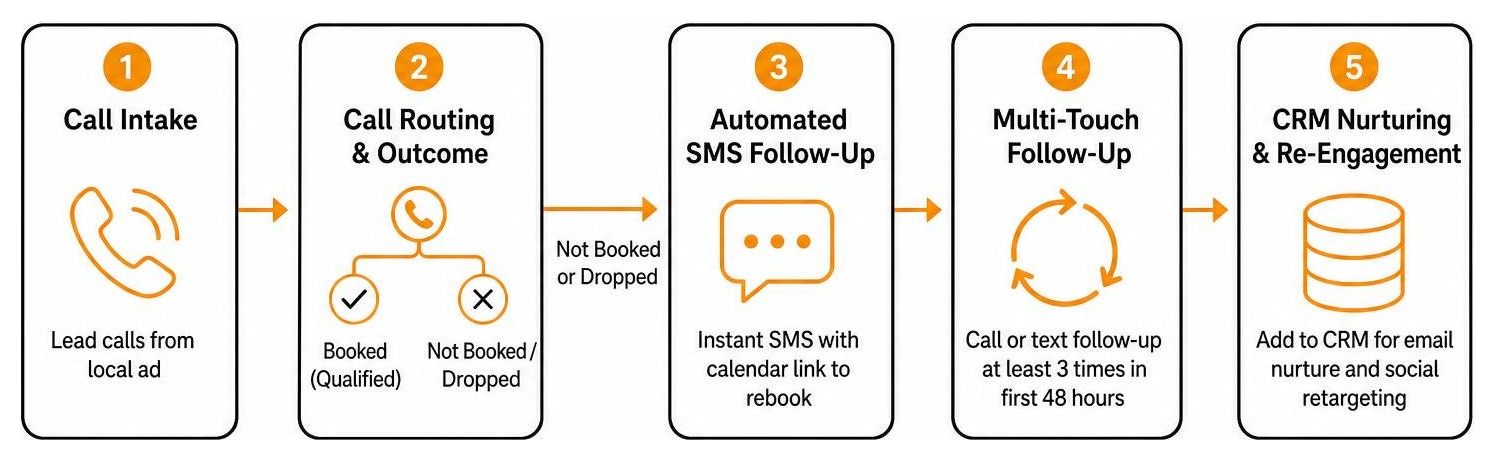
Implement a structured lead nurturing process to protect campaign return on investment:
- Immediate Automated SMS Follow-Up: Connect your ad channels or call handling platform to a Centralized Customer Relationship Management (CRM) system. If a incoming call drops or ends without a booked job, trigger an automated SMS text message: “Thanks for calling [Business Name]! We missed finalizing your estimate booking. Click here to choose a time slot on our calendar: [Link]”.
- Multi-Touch Follow-Up Schedules: Train front-desk or intake staff to follow up with unbooked inquiries via phone or text at least three times over the first 48 hours. Prospective clients are often busy or calling multiple options; persistent follow-ups secure jobs that competitors miss.
- Re-Engagement Email & Social Campaigns: Export non-converting lead contacts into retargeting custom audiences on Facebook or structured email nurture lists. Broadening touchpoints keeps your brand top of mind when prospective clients are ready to make a buying decision.
Explore strategies for transforming local traffic into real appointments in our guide on Local Ppc Campaigns That Actually Bring People Through The Door.
Common Local Ad Campaign Mistakes and How to Avoid Them
Even well-funded advertising campaigns can underperform if basic operational missteps occur. Avoiding common management mistakes keeps your campaign efficient and protects your search ranking.
- Delayed Response Times and Unanswered Calls: Letting calls go to voicemail or ignoring text inquiries directly degrades your LSA quality score. Google tracks responsiveness metrics. If your team consistently misses incoming inquiries, your ad unit will drop down the SERP hierarchy, reducing lead flow.
- Overly Broad Geographic Targeting: Setting your service area across too large a radius dilutes your budget on travel-heavy jobs and leads to declined service calls, which lowers your profile conversion score. Focus ad spend strictly on core, high-margin service ZIP codes.
- Neglecting Google Business Profile Review Generation: Failing to collect fresh customer reviews causes your listing to drop behind local competitors who maintain higher star ratings and active review activity.
- Running Unverified or Incomplete Profiles: Attempting to launch campaigns with expiring insurance documents or unverified trade licenses leads to account suspensions. Keep business documents updated inside your portal.
- Setting Manual Bid Caps Too Early: Setting arbitrary low bid caps during account setup restricts your listing from entering competitive auctions, severely hurting initial lead generation.
Combining optimized local ad campaigns with strong organic optimization ensures long-term market dominance. Learn how to secure local map visibility with our guides on How To Win The Local Pack In 2026 And Beyond and Stop Being Invisible With These Local Seo Strategies.
Frequently Asked Questions about Local Advertising
How much cheaper are Local Services Ads compared to standard PPC?
Local Services Ads are generally 10% to 40% cheaper per conversion than traditional pay-per-click Google Ads. This price advantage stems from the pay-per-lead payment model. With standard PPC, you pay for every website click regardless of whether the user contacts your company. With LSAs, you only pay when a phone call lasts longer than two minutes or a direct inquiry message is submitted, eliminating wasted ad spend on accidental clicks or bounced landing page traffic.
What counts as a billable lead in local pay-per-lead ad networks?
In Google Local Services Ads, a billable lead occurs when:
- You receive a phone call directly through the ad unit that lasts at least two minutes.
- A customer submits a direct text message or chat request through the listing.
- A customer submits an direct booking request through an integrated Google booking partner.
Calls lasting under two minutes, wrong numbers, automated spam robocalls, and inquiries for service categories not listed on your profile can be disputed through the management platform dashboard for financial credit.
How do local social media campaigns complement search-based ad strategies?
Search-based ads like Google LSAs capture high-intent users looking for immediate local solutions. Social media campaigns on platforms like Facebook and Instagram capture prospective clients earlier in their decision process through visual project show-cases, customer reviews, and demographic radius targeting. Combining channels creates a complete marketing funnel: search ads secure immediate service calls, while social media ads build regional brand recognition and retarget website visitors who didn’t book during their initial search.
Conclusion
Scaling a business across competitive local markets requires predictable, repeatable lead generation. relying entirely on word-of-mouth or static print advertising is no longer enough to maintain consistent service schedules.
By leveraging local ads lead generation strategies—combining top-of-SERP Google Local Services Ads, built-in trust badges like Google Guaranteed, and hyper-targeted Meta social media campaigns—your business can capture high-intent prospective clients right when they need your help. Focus on quick intake response times, profile completeness, active review collection, and persistent lead follow-up to convert ad spend into revenue.
At ClickCentric Digital, we specialize in building custom, high-converting customer acquisition funnels for service businesses. Explore our comprehensive services for Paid Traffic Management to transform your local digital reach today.
Sorry, the comment form is closed at this time.