


30 May How Growth Driven Web Design Saves You From Redesign Hell
How Growth Driven Web Design Saves You From Redesign Hell
Why Redesign Hell Is Real (And How to Escape It)
Growth-driven web design is an iterative, data-first approach to building websites — and it’s the antidote to the costly, stressful redesign cycles that drain most businesses dry.
Quick answer — here’s what you need to know:
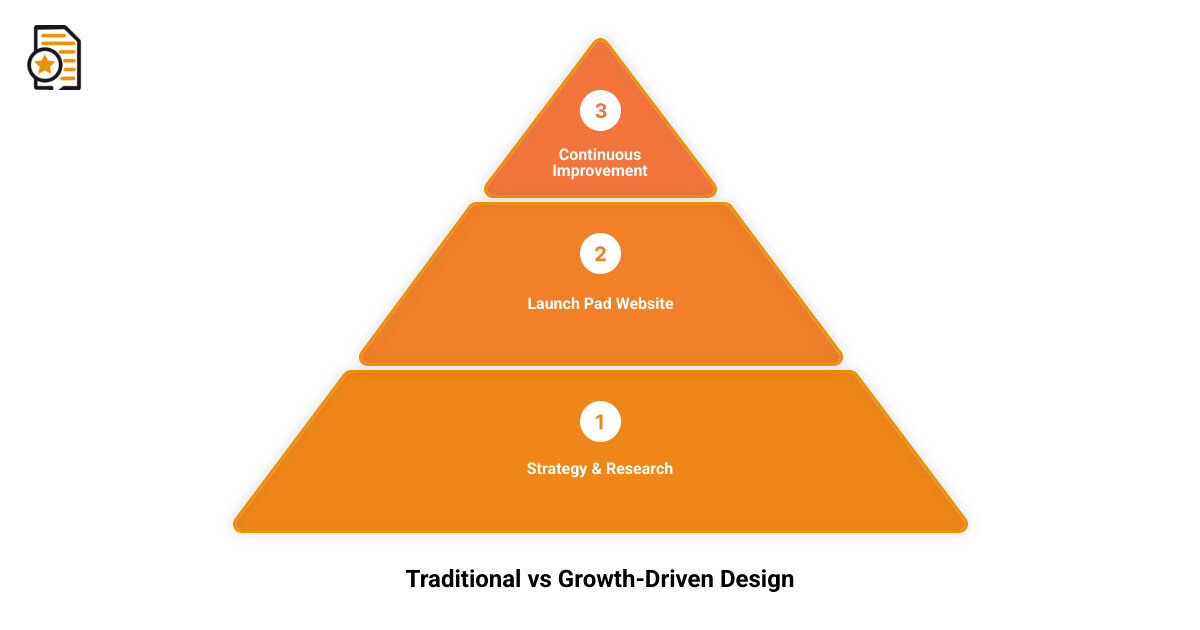
- What it is: A three-stage methodology (Strategy, Launch Pad, Continuous Improvement) built on agile principles
- How it works: Launch a functional site fast, then improve it continuously using real user data
- Key benefit: Replaces a $15k–$100k upfront gamble with a manageable, retainer-based model
- The result: Companies using this approach report a 14.34% increase in leads within six months
Think about the last time your business went through a website redesign. Months of back-and-forth. Costs that crept past the original quote. A launch that felt underwhelming. And then — nothing. The site just sat there, frozen in time, while your competitors kept moving.
That’s redesign hell. And it’s incredibly common.
The traditional web design model asks you to make a massive upfront investment based largely on guesswork — what you think your customers want, what your team assumes looks good, and what your agency hopes will convert. It’s a high-stakes bet with unpredictable results.
Growth-driven web design flips that model on its head. Instead of chasing perfection before launch, you launch fast, learn from real visitors, and improve continuously. Your website becomes a living asset — not a one-time project.
Why Traditional Web Design is Broken in 2026
In May 2026, the digital landscape moves faster than ever. Yet, many businesses in Grand Rapids and Holland are still stuck using a “dinosaur” approach to web development. Traditional web design is a high-risk bet. You spend three to six months (or more) in a dark room, building what you hope is a masterpiece, only to release it and realize your customers’ needs have already shifted.
The pitfalls of the traditional model are numerous:
- High Upfront Costs: You’re often asked to cut a check for $15,000 to $100,000 before seeing a single lead.
- Scope Creep: Projects rarely stay within the original lines. Features get added, timelines get pushed, and budgets explode.
- Unpredictable Results: Because the design is based on the opinions of stakeholders rather than the behavior of users, there is no guarantee it will actually work.
- Static Performance: Most traditional sites sit untouched for 1.5 to 2 years after launch. In that time, they become obsolete “digital brochures.”
We’ve seen too many businesses fall into this trap. It’s why we advocate for a smarter path. To avoid these headaches, you need to Stop Hiring Bad Web Design Agencies that prioritize their portfolio over your performance.
Traditional vs. GDD: The Cost and Risk Breakdown
| Feature | Traditional Web Design | Growth-Driven Design (GDD) |
|---|---|---|
| Upfront Cost | $15k – $100k+ | Low initial investment |
| Time to Launch | 3 – 6 Months | 30 – 40 Days |
| Decision Basis | Opinions & Assumptions | Real User Data |
| Risk Level | High (All-in bet) | Low (Iterative & Agile) |
| Updates | Every 2 – 3 Years | Monthly/Continuous |
The 3-Stage Process of growth driven web design
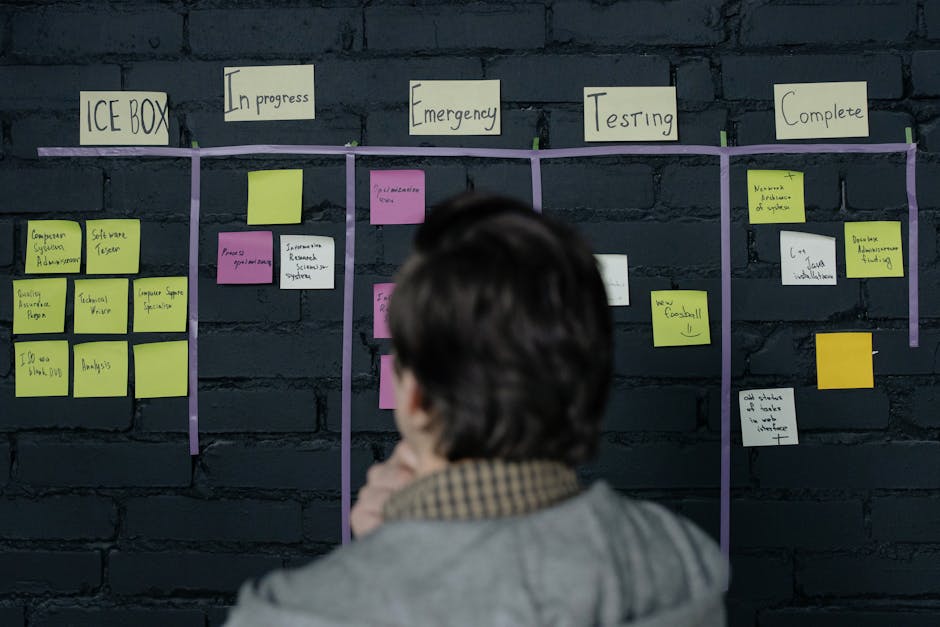
The magic of growth driven web design lies in its structure. Built on the foundation of the SCRUM agile process, it moves away from the “waterfall” method (where everything happens in a linear, slow line) and toward a cycle of constant evolution.
According to the official Growth-Driven Design | A Smarter Website Redesign Process. methodology, the journey is broken into three distinct phases that ensure your site is always working for you, not against you.
Stage 1: Strategy and Wishlist
Before a single line of code is written, we have to understand the “Why.” This phase isn’t just about picking colors; it’s about developing an empathetic understanding of your audience’s world.
We start by setting SMART goals (Specific, Measurable, Achievable, Relevant, and Time-bound). Are we looking for more phone calls in Grand Haven? More form submissions in Kalamazoo? We then create detailed buyer personas to map out the journey your customers take.
One of the most critical steps here is the 80/20 analysis. We brainstorm a “wishlist” of 50 to 150 ideas for the site. Then, we identify the 20% of those items that will produce 80% of the impact. This allows us to focus on what actually moves the needle. If you aren’t sure where to start, check out these 5 Ways to Know if You Need Website Development Services to see if your current strategy is holding you back.
Stage 2: The Launch Pad Website
The Launch Pad is the “Minimum Viable Product” of your website. The goal is to build a functional site that looks and performs better than what you have today—and to do it fast.
While traditional builds take months, a GDD Launch Pad aims to be live within 30 to 40 days. It isn’t “perfect,” and it isn’t “finished”—because in GDD, a website is never truly finished. It is a solid foundation that allows us to start collecting real user data immediately. As noted in Growth-Driven Design for Websites: A Definitive Guide for Businesses , launching early allows the website to start working for your sales team sooner rather than later.
Stage 3: Continuous Improvement in growth driven web design
Once the Launch Pad is live, the real work begins. We enter “sprint cycles” where we identify high-impact actions based on how people are actually using your site.
We use tools like heatmaps and A/B testing to see where people click and where they drop off. For every change we propose, we create a hypothesis statement. For example: “We believe that moving the ‘Request a Quote’ button to the top right will increase conversions by 10% because it improves visibility for mobile users.”
This data-driven approach ensures you Don’t Let Your Site Redesign Become a Search Engine Horror Story by making changes that search engines and users both love.
Maximizing ROI with Iterative Development
The ultimate goal of any marketing investment is Return on Investment (ROI). Traditional web design is a sunk cost; growth driven web design is a performance asset.
Because we are constantly optimizing based on user experience, the results are measurable and compounding. Statistics show that companies using GDD report a 14.34% increase in leads after just six months. By focusing on conversion optimization and agile changes, we ensure your site evolves alongside your business in West Michigan.
Why growth driven web design Outperforms Traditional Methods
- Risk Reduction: You aren’t betting your entire annual budget on a single launch day. Investment is spread out, and pivots are easy to make.
- Budget Control: The retainer-based model makes costs predictable and manageable for businesses in Holland and South Haven.
- SEO Freshness: Search engines favor sites that are updated regularly. Continuous improvement keeps your content fresh and your site speed optimized.
- Mobile-First: With over 60% of local searches happening on mobile, GDD allows us to constantly tweak the mobile UX based on real-world behavior.
Frequently Asked Questions about GDD
How does GDD improve SEO?
SEO is no longer a “set it and forget it” task. Google rewards websites that offer a great user experience, load quickly, and provide fresh, relevant content. Because GDD involves regular updates and technical tweaks—like improving site speed and on-page SEO—your site remains highly competitive in search rankings. Regular updates signal to search engines that your business is active and authoritative.
What is the typical cost of GDD?
While traditional sites require a massive upfront payment ($15k-$80k), GDD is typically retainer-based. You pay a smaller initial fee to get the Launch Pad live, followed by a monthly retainer that covers continuous improvements. This provides better budget flexibility and ensures you are paying for ongoing value rather than a one-time product that starts depreciating the day it launches.
How long does a launch pad site take?
A typical Launch Pad site takes between 30 and 90 days, depending on the complexity of your 80/20 wishlist. In most cases, we aim for the 40-day mark to get you out of “redesign hell” and into the “learning phase” as quickly as possible. This accelerated launch provides a functional foundation that we expand iteratively.
Conclusion
At ClickCentric Digital, we know that your website is your hardest-working salesperson. Whether you are in Grand Rapids, Holland, or Grand Haven, your digital presence should be a lead-generation machine, not a source of frustration.
By leveraging growth driven web design, we help you acquire local customers through targeted strategies, manage your online reputation, and maximize the impact of your paid traffic on Google and Facebook. Don’t let your business get stuck in the past. It’s time to embrace a website that grows with you.
Ready to start your journey toward a peak-performing website? Explore our Website Design & Development services today and let’s build something that actually drives results.
Sorry, the comment form is closed at this time.