

29 May Accurate Roof Bid Checklist: How to Avoid Costly Estimating Blunders
Accurate Roof Bid Checklist: How to Avoid Costly Estimating Blunders
Why Getting an Accurate Roof Bid Right Is Make-or-Break for Your Business
An accurate roof bid is the difference between a profitable roofing job and one that quietly drains your business dry.
Here’s a fast answer if you need it now:
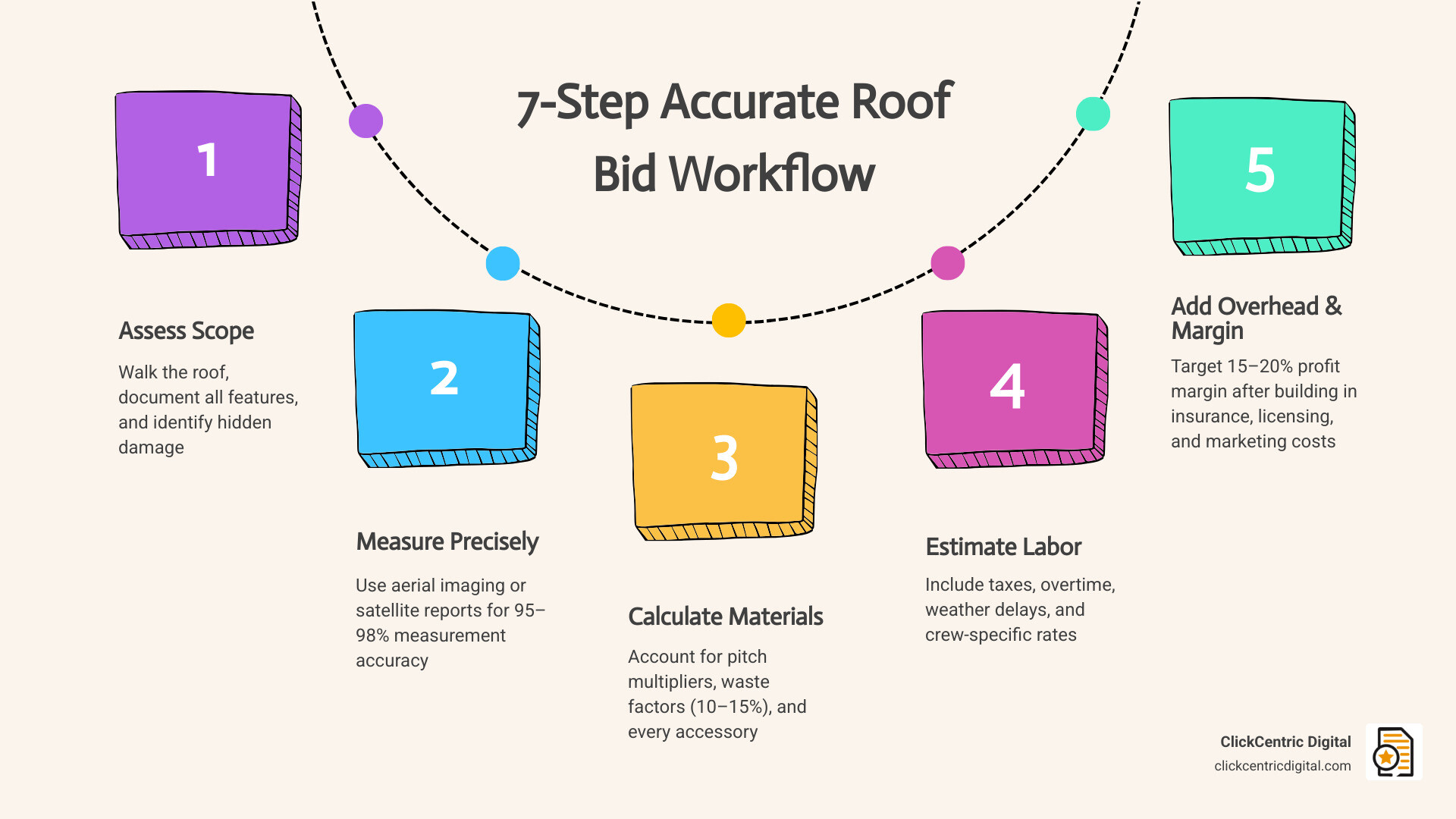
How to create an accurate roof bid:
- Assess the scope — walk the roof, document all features, and identify hidden damage
- Measure precisely — use aerial imaging or satellite reports for 95–98% measurement accuracy
- Calculate materials — account for pitch multipliers, waste factors (10–15%), and every accessory
- Estimate labor — include taxes, overtime, weather delays, and crew-specific rates
- Add overhead — build in insurance, licensing, marketing, and equipment costs
- Set your margin — target 15–20% profit; divide total costs by (1 − desired margin) to get your price
- Submit a professional proposal — include warranties, payment terms, lien releases, and licensing info
Most contractors skip or rush at least one of these steps. And that mistake is costly.
The numbers tell the story: 90% of roofers underbid their jobs. More than 9 out of 10 roofing professionals never hit their revenue goals — not because they lack skills, but because they do the math wrong. The average profit margin in roofing hovers around just 6%, when the realistic target should be 15–20%.
That gap isn’t a small problem. On a $50,000 job, the difference between a 6% and a 15% margin is $4,500 in your pocket — or out of it.
This guide walks you through every step of building a bid that’s both accurate and profitable, from the first site visit to the signed proposal.
The Essential Steps for an Accurate Roof Bid
We have all been there—standing in a driveway in Grand Rapids or Kalamazoo, squinting at a steep gable and thinking, “Yeah, that looks like about 28 squares.” We call this “vibes-based pricing,” and it is the fastest way to go out of business. To generate an accurate roof bid, you need a repeatable system that removes the guesswork.
The process starts long before you open a spreadsheet. It begins with a deep dive into what the project actually requires. According to How to Bid Roofing Jobs Accurately | Roofr, understanding the full scope of work is the foundation of a profitable estimate. If you miss a single detail—like an extra layer of shingles buried underneath or a rotting deck—your profit margin will evaporate before the first bundle is even unrolled.
Conducting a Comprehensive On-Site Evaluation
While digital tools are incredible (and we’ll get to those in a second), a physical site visit remains a critical component of an accurate roof bid. You cannot see the “soft spots” in the decking from a satellite image.
During your evaluation, we recommend looking for:
- Hidden Damage: Check for signs of moisture intrusion using moisture meters or infrared scanning. These tools can reveal leaks that aren’t visible to the naked eye, allowing you to bid for repairs rather than eating the cost later.
- Core Cuts: For commercial projects in West Michigan, taking a core cut is essential to determine the existing roof assembly and insulation thickness.
- Flashing and Ventilation: Don’t just count the vents; check their condition. Are the chimney flashings rusted? Is the ridge vent clogged?
- Building Codes: Ensure your bid accounts for current local codes in Holland or Grand Haven, which may require specific underlayment or ice and water shield configurations.
Having a CCPIA (Certified Commercial Property Inspectors Association) or NRCIA (National Roof Certification and Inspection Association) certification can give you a massive edge here. It tells the client you aren’t just guessing; you’re performing a forensic analysis of their property’s needs.
Defining the Project Scope to Prevent Underbidding
One of the biggest blunders we see is the “missing scope” item. This happens when a contractor bids for the shingles but forgets the “boring” stuff that adds up. To keep your accurate roof bid truly accurate, your scope must include:
- Material Grades: Are you using standard 3-tab or high-end architectural shingles?
- Accessory Costs: Drip edge, starter shingles, ridge caps, and specialized fasteners.
- Disposal Fees: Hauling away old materials isn’t free. Factor in dumpster rentals and landfill tipping fees.
- Permits: Every municipality from South Haven to Grand Rapids has different permit costs.
- Project Timelines: If a job is expected to take four days but stretches to six due to complexity, your labor costs will skyrocket.

Digital Tools for High-Precision Measurements
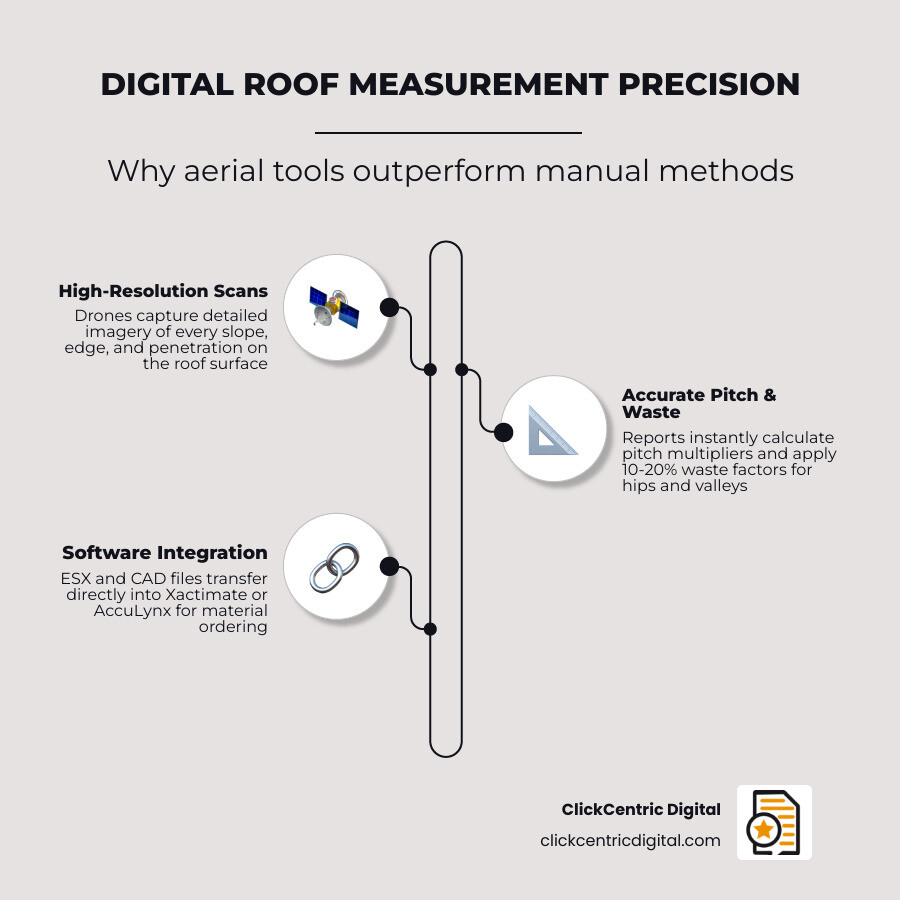
In May 2026, there is no excuse for “eyeballing” a roof. Digital measurement tools have revolutionized the industry, offering a level of precision that manual tape measures simply can’t match. In fact, aerial measurements typically achieve 95% to 98% precision.
Using Drones and Aerial Reports for an Accurate Roof Bid
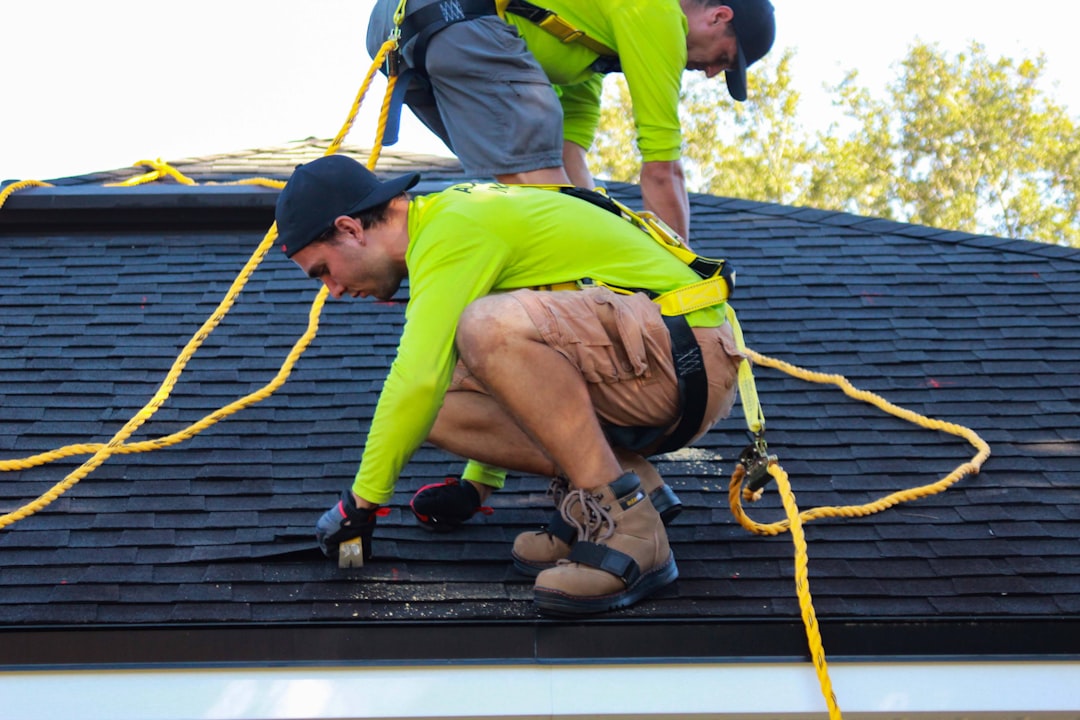
Drones aren’t just cool toys; they are safety and accuracy powerhouses. By using drone-based inspections, you eliminate the risk of falls during the bidding phase and capture high-resolution imagery that can be converted into 3D models.
When you use aerial reports, you get:
- Exact Pitch Multipliers: A 12:12 roof requires significantly more material than a 4:12 roof. Digital reports calculate these multipliers automatically.
- Waste Factors: Most roofs require a 10% to 15% waste factor. Complex roofs with many hips and valleys might need up to 20%.
- ESX and CAD Files: These files can be imported directly into estimating software like Xactimate or AccuLynx, ensuring that the data used for the bid is the exact same data used for the material order.
Integrating Software for Real-Time Pricing
The market in West Michigan is volatile. Shingle prices in Kalamazoo might change overnight. This is why we advocate for using Roofing Estimate Software | Professional Roofing Proposals & Material Calculations | RoofIQ.
Integrated software allows you to:
- Pull Real-Time Supplier Pricing: Connect directly to your local distributors to ensure your material costs are current.
- Automate Material Formulas: The software knows exactly how many bundles of shingles, rolls of underlayment, and boxes of nails you need based on the measurements.
- Mobile Estimating: Create and adjust bids on your tablet while sitting in your truck at the job site.
- Digital Signatures: Close the deal on the spot with legally binding digital contracts.
Calculating Costs and Protecting Your Profit Margins
This is where the math gets real. Statistic? More than 9 out of 10 roofers fail to reach their revenue goals because they do the math wrong. To get an accurate roof bid, you must understand the difference between markup and margin.
Factoring in Materials and Waste for an Accurate Roof Bid
Materials are usually the largest line item, but they are also the easiest to miscalculate.
- The “Square” Rule: One roofing square equals 100 square feet. Three shingle bundles typically cover one square.
- The Waste Factor: Never bid for the exact square footage. You must add 10% for a standard gable roof and 15%+ for complex designs to account for cuts and overlaps.
- Accessories: Don’t forget the starter shingles. Using 3-tab field shingles as starters is an old-school move that often costs more in labor and looks less professional.
Accounting for Labor, Overhead, and Markup
Labor isn’t just the hourly wage you pay your crew. It includes:
- Burdened Labor: Taxes, workers’ comp, and insurance.
- Crew Performance: If your “A-Team” can do 30 squares a day but your “B-Team” only does 20, your bid needs to reflect who is doing the work.
- Overhead: This is the silent profit-killer. Rent, utilities, marketing, and office staff must be divided across every job you bid. If your annual overhead is $100,000 and you do 50 jobs a year, every bid must include $2,000 just to keep the lights on.
The Golden Formula for Margin: If you want a 20% profit margin, do not just add 20% to your costs.
- Incorrect: $10,000 (Cost) + 20% = $12,000 (This is only a 16.6% margin).
- Correct: $10,000 / (1 – 0.20) = $12,500.
That $500 difference is your “vacation fund,” and you’re leaving it on the table if you use the wrong formula.
Professional Proposals and Winning the Bid
An accurate roof bid is only useful if the customer actually signs it. In a competitive market like Grand Rapids, homeowners are often looking at three or four quotes. To stand out, your proposal needs to look like a professional document, not a scribbled note on the back of a business card.
Using tools like Price Roofing Jobs with Confidence. can help you transition from a “contractor” to a “trusted advisor.”
Building a Professional Roofing Diagram
A high-quality diagram builds immediate trust. It shows the homeowner that you have analyzed every inch of their roof. A professional diagram should include:
- Linear Measurements: Rakes, eaves, hips, and valleys.
- Penetrations: Chimneys, skylights, and plumbing boots.
- Commercial Specifics: For flat roofs, include drainage paths, scupper locations, and parapet wall heights.
- Damage Annotations: Use photos to show exactly where the problems are. “Homeowners don’t buy spreadsheets—they buy clarity.”
Using Detailed Reports to Close More Sales
Transparency wins jobs. We recommend offering a “Good-Better-Best” pricing model. This gives the customer a sense of control and often leads them to choose the “Better” or “Best” option, which carries a higher margin for you.
Your final proposal should always include:
- Warranties: Clearly explain both the manufacturer’s material warranty and your own labor warranty.
- Payment Terms: When is the deposit due? When is the final payment expected?
- Lien Releases: Protect the homeowner and yourself by outlining the legal protections in place.
- Certifications: Proudly display your NRCIA or CCPIA credentials.

Frequently Asked Questions about Roofing Bids
How long does the competitive bidding process typically take?
The duration depends on the project’s complexity. For a standard residential roof in Holland, you can often generate an accurate roof bid within 24 hours using aerial tools. For complex commercial projects, the process—from bid solicitation and site evaluation to contractor selection—can take anywhere from two weeks to a month.
What are the most common mistakes in roofing estimates?
The “Big Three” are:
- Missing Scope: Forgetting the drip edge, flashing, or disposal fees.
- Inaccurate Pitch: Underestimating the slope, which leads to shorting the material order and underestimating labor difficulty.
- Vibes-Based Pricing: Guessing based on “experience” rather than running the actual numbers for overhead and margin.
Why is per-square pricing risky for contractors?
Per-square pricing assumes every roof is the same. It doesn’t account for the length of the hip and ridge caps, the number of penetrations, or the difficulty of the terrain. Two 25-square roofs can have vastly different costs if one is a simple “up and over” and the other has ten dormers and a 12:12 pitch. Always bid based on the specific variables of the job, not a flat rate.
If you find yourself struggling to compare different bids or keep track of your own, software like Compare Roofing Estimates in Seconds | EstimateHawk can help normalize different formats and catch missing line items.
Conclusion
Creating an accurate roof bid is a science, not an art. By following a structured checklist—from forensic on-site inspections to high-precision aerial measurements—you protect your business from the “slow bleed” of underbidding.
At ClickCentric Digital, we understand that winning the bid is only half the battle. You also need a steady stream of high-quality leads to keep your pipeline full. We specialize in helping West Michigan roofing contractors improve their local search rankings, manage their online reputations, and dominate the market through targeted Google and Facebook ads.
Whether you are in Grand Rapids, Kalamazoo, or along the lakeshore in Grand Haven, we can help you acquire the local customers you need to grow your business.
Ready to stop chasing leads and start closing more profitable jobs? Get started with professional traffic management and let us help you build a brand that homeowners trust.
Sorry, the comment form is closed at this time.