
08 May The Complete Guide to Small Business Advertising
The Complete Guide to Small Business Advertising
Why Small Business Advertising Is Harder — and More Important — Than Ever in 2026
Small business advertising is the process of promoting your products or services to attract more customers, build brand awareness, and grow revenue — using paid, free, or hybrid channels tailored to your budget and audience.
If you want the quick answer on where to start, here it is:
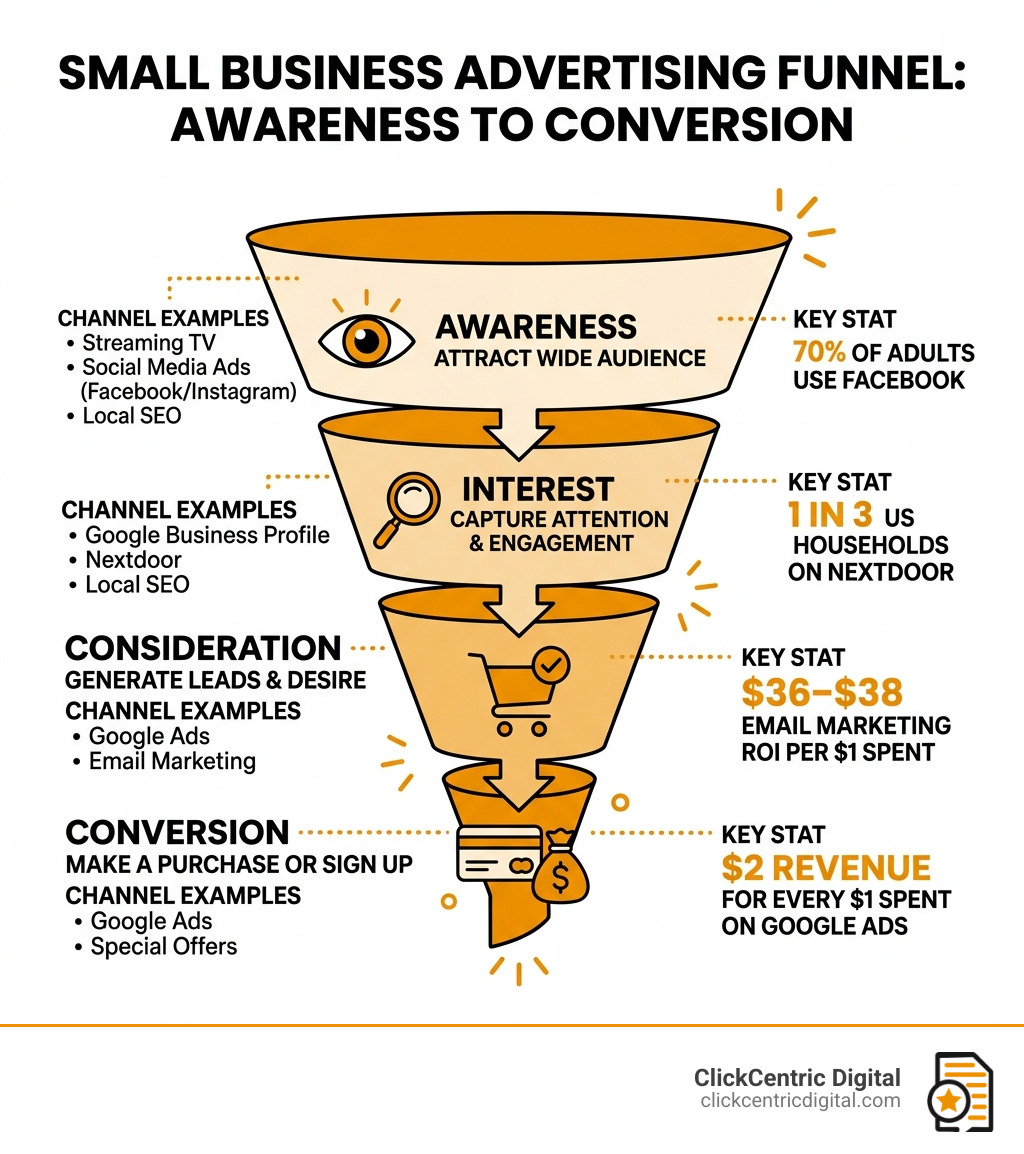
The most effective advertising channels for small businesses in 2026:
- Google Ads — captures high-intent buyers searching right now
- Google Business Profile — free local visibility on Maps and Search
- Social media ads (Facebook/Instagram) — precise demographic targeting
- Email marketing — up to $36–$38 ROI for every $1 spent
- Streaming TV — now accessible from $50 with AI-generated ads
- Nextdoor — hyper-local neighbor recommendations and community trust
- Local SEO — long-term organic visibility without ongoing ad spend
Running a local business in 2026 means competing for attention on more channels than ever. Customers search on Google, scroll social media, check neighborhood apps, and stream TV — often all before making a buying decision.
The challenge? Time, budget, and expertise are almost always in short supply.
Almost 70% of American adults use Facebook. One in three US households are on Nextdoor. And businesses earn an average of $2 in revenue for every $1 spent on Google Ads. The opportunity is real — but only if you know where to focus.
This guide cuts through the noise. Whether you have $0 or $1,000 a month to spend, you’ll find a clear path to reaching more local customers, building a stronger reputation, and getting a measurable return on every dollar you put into advertising.
The 7 Most Effective Types of Small Business Advertising
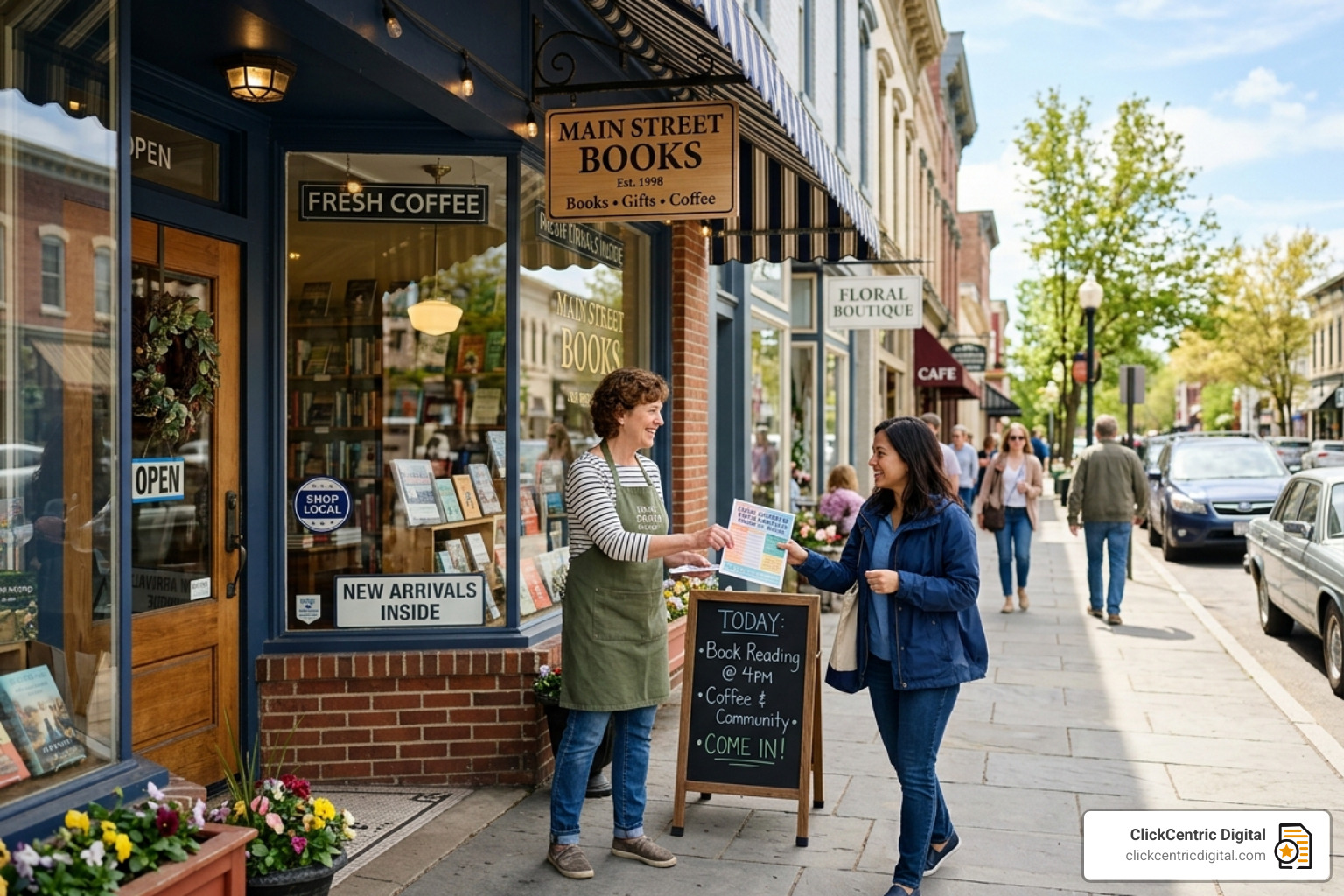
In 2026, the lines between “digital” and “traditional” have blurred, but the goal remains the same: being where your customers are. For a business in Grand Rapids or Holland, MI, that means a mix of high-tech targeting and old-school community trust.
1. Social Media Advertising
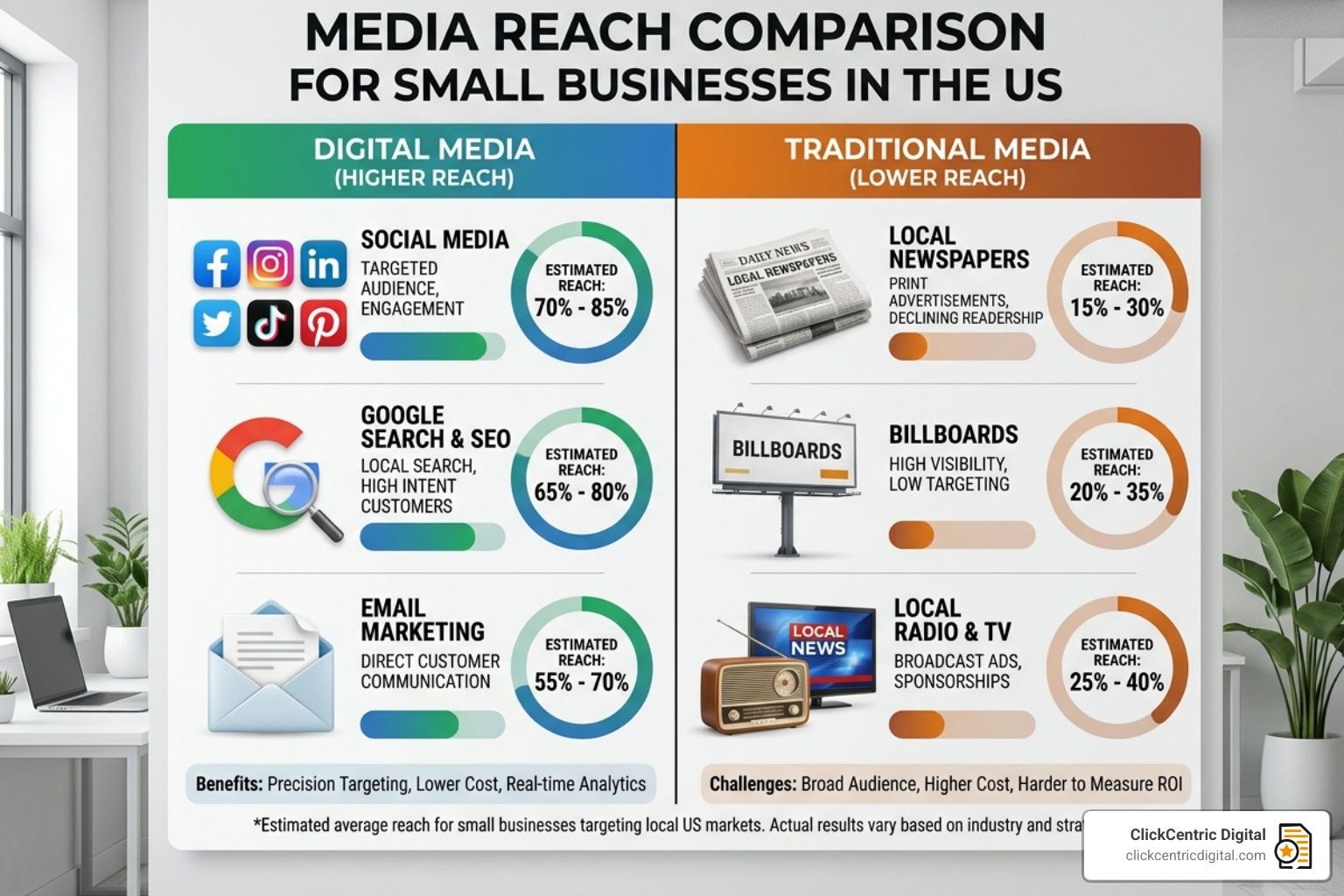
Social media remains a powerhouse because of its affordability and precision. While organic reach has declined, paid social allows us to target by very specific demographics.
- Facebook: With nearly 70% of American adults on the platform, it’s the king of reach.
- Instagram: Since 60% of its billion users are under 30, it’s perfect for visual brands.
- LinkedIn: For B2B companies in West Michigan, LinkedIn offers access to over 560 million professional users.
2. Pay-Per-Click (PPC)
PPC is the ultimate “intent” machine. When someone in Kalamazoo searches for “emergency plumber,” they aren’t browsing; they are buying. This channel offers some of the best Tips for Small Business Advertising because you only pay when someone actually clicks.
3. Mobile Advertising
Mobile is no longer a sub-category; it is the category. 84% of adult customers under 30 shop online using a mobile device. Your ads must be thumb-friendly and fast-loading.
4. Print
Don’t count out the “tangible.” Direct mail or local newspapers in South Haven or Grand Haven still work for older demographics or high-end services where a physical postcard can sit on a kitchen counter for weeks.
5. Broadcast (TV and Radio)
Thanks to programmatic technology, TV is now a “small business” tool. We can now run ads on premium channels for as little as $50, targeting specific zip codes rather than entire states.
6. Outdoor (OOH)
Think billboards or transit ads. These are excellent for brand “anchoring” in your local community, ensuring people recognize your name when they eventually see your digital ad.
7. Direct Mail
Targeting specific neighborhoods with postcards is highly effective. Using the USPS bulk mail options (200+ pieces) allows for localized “saturation” at a lower cost per house.
| Advertising Type | Average Cost | Reach | Best For |
|---|---|---|---|
| Google Ads | $2–$5 per click | High Intent | Immediate Sales |
| Facebook Ads | $5–$15 per 1k views | High Demographic | Brand Awareness |
| Streaming TV | From $50/mo | High Trust | Local Credibility |
| Local SEO | $0–$500/mo | Long-term | Sustainable Growth |
Dominating Local Search with Google Ads and Business Profiles
If you aren’t on the “Map Pack,” you’re invisible. Your Google Business Profile (GBP) is your digital storefront. We recommend updating it weekly with photos, offers, and responding to every review.
When you combine a strong profile with Mastering Google PPC Management Without Losing Your Mind, you occupy more “real estate” on the search results page. For service businesses, Google Local Services Ads (LSAs) are a must. They feature the “Google Guarantee” badge, which builds instant trust. If you’re worried about the technical side, check out The Small Business Guide to Affordable Google Ads Management Services to see how to scale without breaking the bank.
Hyper-Local Targeting on Nextdoor and Neighborhood Platforms
Nextdoor is the online version of word-of-mouth. With 1 in 3 US households participating, it is a goldmine for small business advertising.
- Create a Free Business Page: Claim your page at nextdoor.com/create-business.
- Engage Neighbors: 76% of neighbors have been influenced by a recommendation on the platform.
- Neighborhood Sponsorships: You can “own” a neighborhood by sponsoring it, putting your brand at the top of the local newsfeed.
Proven Free and Low-Cost Advertising Ideas
You don’t always need a massive budget to make a massive impact. In fact, some of the most enduring growth comes from “sweat equity” rather than “checkbook equity.”
SEO and Content Marketing
Search Engine Optimization (SEO) is the gift that keeps on giving. By creating helpful blog posts about local issues—like “How to Winterize Your Home in West Michigan”—you attract local traffic without paying for every click.
Email Marketing: The ROI King
Email marketing continues to outperform almost every other channel, boasting an ROI of $36 to $38 for every dollar spent. It’s about building a database you own, rather than renting an audience from Facebook or Google.
Referral Programs
Word of mouth is powerful, but it’s even better with a nudge. Create a simple referral program where current customers get a discount or a small gift for bringing in a friend. 88% of neighbors shop at local businesses, and they are much more likely to do so if a friend recommends you.
Micro-Influencers
You don’t need a celebrity. A local “foodie” in Grand Rapids with 2,000 engaged followers can drive more traffic to a restaurant than a national influencer ever could. Often, these collaborations can be done via “content swaps” or free products.
For a deeper dive into how these compare, see our resource on Best Advertising for Small Business in 2026: 10 Channels Compared.
Maximizing ROI with AI and Automation
AI has democratized small business advertising. In 2026, you no longer need a $10,000 production budget to get on TV. Tools like TV Advertising for Small Business | Create Ads from $50 use AI to generate broadcast-ready video from your existing website content.
Automation also helps with Paid Traffic Management. Google’s “Performance Max” campaigns use AI to automatically find the best-performing ad formats across Search, YouTube, and Gmail. This means your budget is always shifting toward what actually works, 24/7, without you having to lift a finger.
Building a Winning Small Business Marketing Plan
A plan is the difference between “investing” and “gambling.” We always start with a clear framework to ensure every dollar has a job to do.
The SWOT Analysis
Before spending a dime, look at your:
- Strengths: What do you do better than anyone in Holland or Kalamazoo?
- Weaknesses: Where do you struggle (e.g., low review count)?
- Opportunities: Is there a local event like the Tulip Time Festival you can leverage?
- Threats: Are big-box retailers moving into your niche?
SMART Objectives
Don’t just say “I want more business.” Set goals that are Specific, Measurable, Achievable, Relevant, and Time-bound. For example: “Increase lead volume by 20% in the next 90 days via Google Ads.”
The 90-Day Rule
Never judge an advertising channel after one week. Most digital algorithms need time to learn. We recommend a 90-day testing period for any new strategy before deciding to scale it or scrap it.
For those looking for community-level involvement, check out Sponsorship & Advertising Opportunities – Grand Rapids Chamber to see how local networking can anchor your marketing plan.
Targeting the Right Local Audience for Small Business Advertising
The biggest mistake in small business advertising is trying to be “everything to everyone.” If you are a service business in Grand Haven, you probably don’t need to advertise to people 50 miles away.
93% of consumers won’t travel more than 20 minutes from home for everyday purchases. This is why we focus on:
- Geo-fencing: Only showing ads to people within a specific radius of your shop.
- Interest-based targeting: Showing ads for dog grooming only to people who have “pet supplies” in their search history.
- Retargeting: This is crucial. If someone visits your website but doesn’t buy, we “follow” them with ads to keep your brand top-of-mind.
To avoid common pitfalls, read The Local Service Guide to Not Getting Ghosted by Facebook Ads and How to Run Facebook Ads for Local Business Without Losing Your Shirt.
Measuring Success: Key Metrics for Small Business Growth
If you can’t measure it, you can’t improve it. Modern digital marketing provides a dashboard for everything.
- Click-Through Rate (CTR): Are people interested enough to click?
- Return on Ad Spend (ROAS): For every $1 spent, how many dollars did you make? (Google Ads averages $2 for every $1).
- Cost Per Acquisition (CPA): How much does it cost to get one new customer?
- Customer Lifetime Value (CLV): How much is that customer worth over a year? Devoted customers will pay 50% to 200% more to stay with your brand.
We use tracking pixels and call tracking numbers to ensure we know exactly which ad led to which phone call. This data allows us to stop wasting money on “dud” ads and double down on the winners.
Frequently Asked Questions about Small Business Advertising
What is the best advertising channel for a limited budget?
If you have a very tight budget, start with your Google Business Profile (it’s free) and Email Marketing. Once you have a small budget ($50–$200), Streaming TV or Nextdoor Business Posts offer incredible local reach for a very low entry price.
How much should a small business spend on marketing in 2026?
A general rule of thumb is 5-10% of your gross revenue. If you are in a high-growth phase, you might push that to 15%. The key is to start small, prove the ROI, and then reinvest your profits back into the winning channels.
How long does it take to see results from local advertising?
- Google Ads: Days to weeks.
- Social Media Ads: 2–4 weeks.
- Streaming TV: 4–8 weeks for brand recognition.
- Local SEO: 3–6 months for significant organic movement.
Conclusion
At ClickCentric Digital, we know that small business advertising isn’t just about pretty pictures or clever slogans—it’s about results. Whether you’re looking to dominate the local search rankings in Holland, manage your reviews in Grand Rapids, or build a high-converting paid traffic strategy across West Michigan, we are here to help.
The digital landscape of 2026 is complex, but it’s also full of opportunity for those willing to be consistent and data-driven. Don’t let your business get lost in the noise. Start growing your local business today and let us help you turn neighbors into lifelong customers.
Sorry, the comment form is closed at this time.