

02 Apr Optimize for Local Search and Dominate Your Neighborhood
Optimize for Local Search and Dominate Your Neighborhood
Why 46% of All Searches Lead Customers Straight to Your Door
To optimize for local search means to improve your online presence so your business shows up when nearby customers search for what you offer.
Here’s how to do it, fast:
- Claim and complete your Google Business Profile — add your category, hours, photos, and description
- Keep your Name, Address, and Phone (NAP) consistent everywhere online
- Collect reviews consistently — ask after every positive interaction
- Add LocalBusiness schema markup to your website
- Create location-specific pages targeting “service + city” keywords
- Build local backlinks from chambers of commerce, sponsorships, and community sites
- Make your site fast and mobile-friendly — over 60% of local searches happen on mobile
If your business isn’t showing up when people nearby search for what you do, you’re handing customers to your competitors. Every single day.
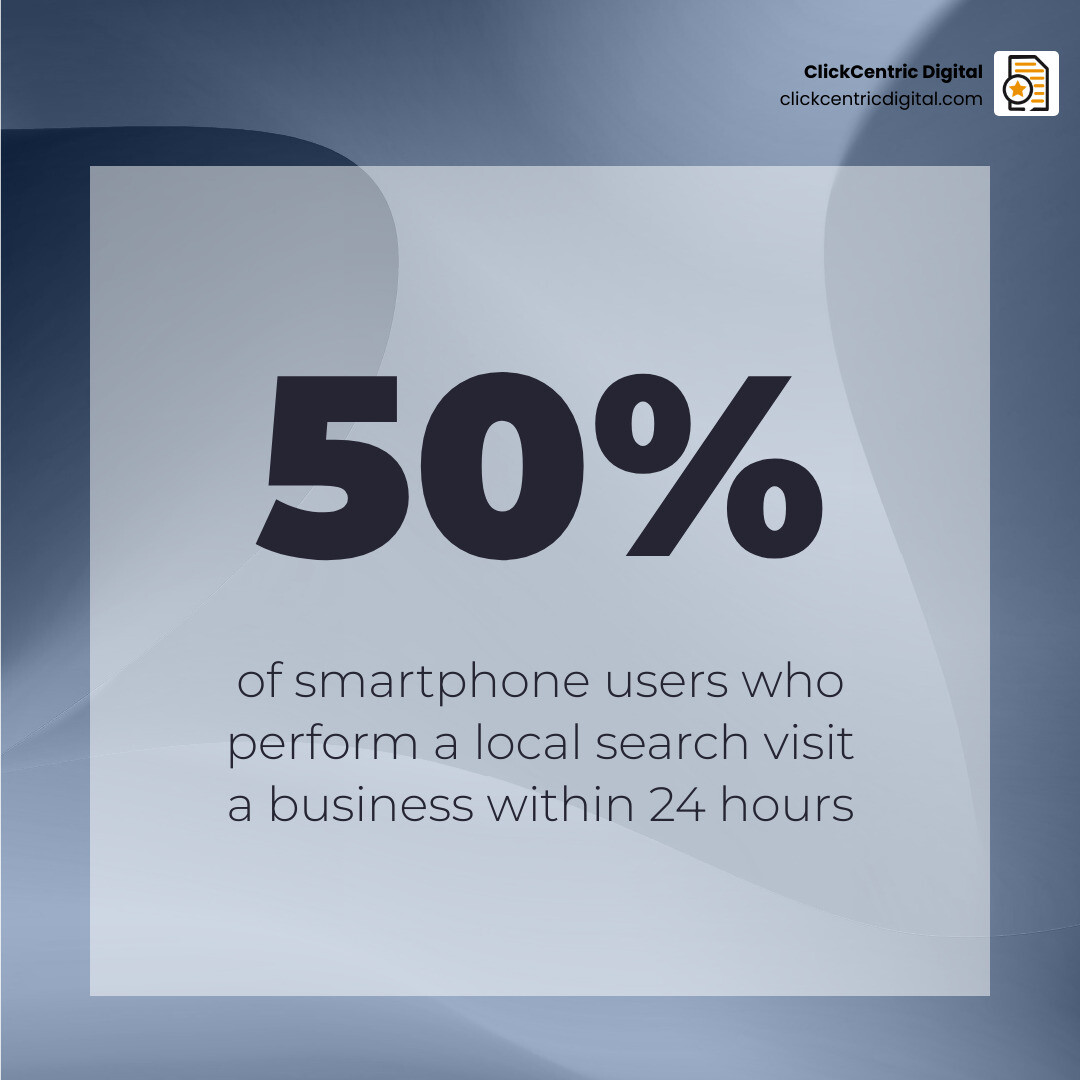
The numbers are hard to ignore. 46% of all internet searches have local intent. And 50% of smartphone users who do a local search visit a business within 24 hours. These aren’t casual browsers — they’re ready to buy.
Local search is different from regular SEO. It’s not about ranking for broad terms across the country. It’s about showing up for the right person, in the right place, at the right moment — whether that’s someone searching “plumber near me” at 9pm or “coffee shop open now” on a Saturday morning.
The good news? You don’t need a massive budget to win locally. A small business with a well-optimized Google Business Profile, consistent listings, and a handful of genuine reviews can outrank national chains. Google rewards trust, relevance, and proximity — not just ad spend.
This guide walks you through exactly what to do, step by step.
Understanding the Local Search Ecosystem
When we talk about how to optimize for local search, we are looking at a specialized branch of search engine optimization. Unlike traditional SEO, which might focus on ranking a blog post globally, local SEO is designed to connect a physical business (or a service provider in a specific area) with nearby users.
The local ecosystem is dominated by three main pillars:
- The Map Pack (Google 3-Pack): This is the holy grail. It’s the box at the top of the search results that shows three local businesses with their map locations, star ratings, and contact info.
- Local Organic Results: These appear below the Map Pack. They look like traditional search results but are heavily influenced by local keywords and location-specific content.
- Google Maps: Many users skip the search engine entirely and search directly within the Maps app.
Google uses three primary factors to decide who ranks in these spots: Relevance (how well your business matches the search), Distance (how close you are to the searcher), and Prominence (how well-known and trusted your business is). To dive deeper into how these elements interact, check out our guide on Search Engine Optimization & Google Maps Ranking.
Differences Between General SEO and Local SEO
Standard SEO focuses on “what” your content is about. Local SEO adds the “where.” While general SEO cares about domain authority and global traffic, local SEO prioritizes geographic intent.
If someone searches for “how to fix a leaky faucet,” they get a DIY video (General SEO). If they search for “faucet repair,” Google assumes they want a professional nearby (Local SEO). Local signals like citations, service area definitions, and your Google Business Profile are far more important here than they are for a national e-commerce site. For those who want to see the technical documentation behind these local signals, Schema.org Local SEO documentation provides a great starting point.
Why Local Search Visibility Matters for Growth
For businesses in Grand Rapids, Holland, or anywhere in West Michigan, local search is your digital storefront. High-intent leads are the lifeblood of growth. When you optimize for local search, you aren’t just getting “clicks”; you’re getting phone calls and foot traffic. Because local searchers are often in the “ready to buy” phase, the conversion rates are significantly higher than broad organic traffic.
Master Your Google Business Profile to Optimize for Local Search
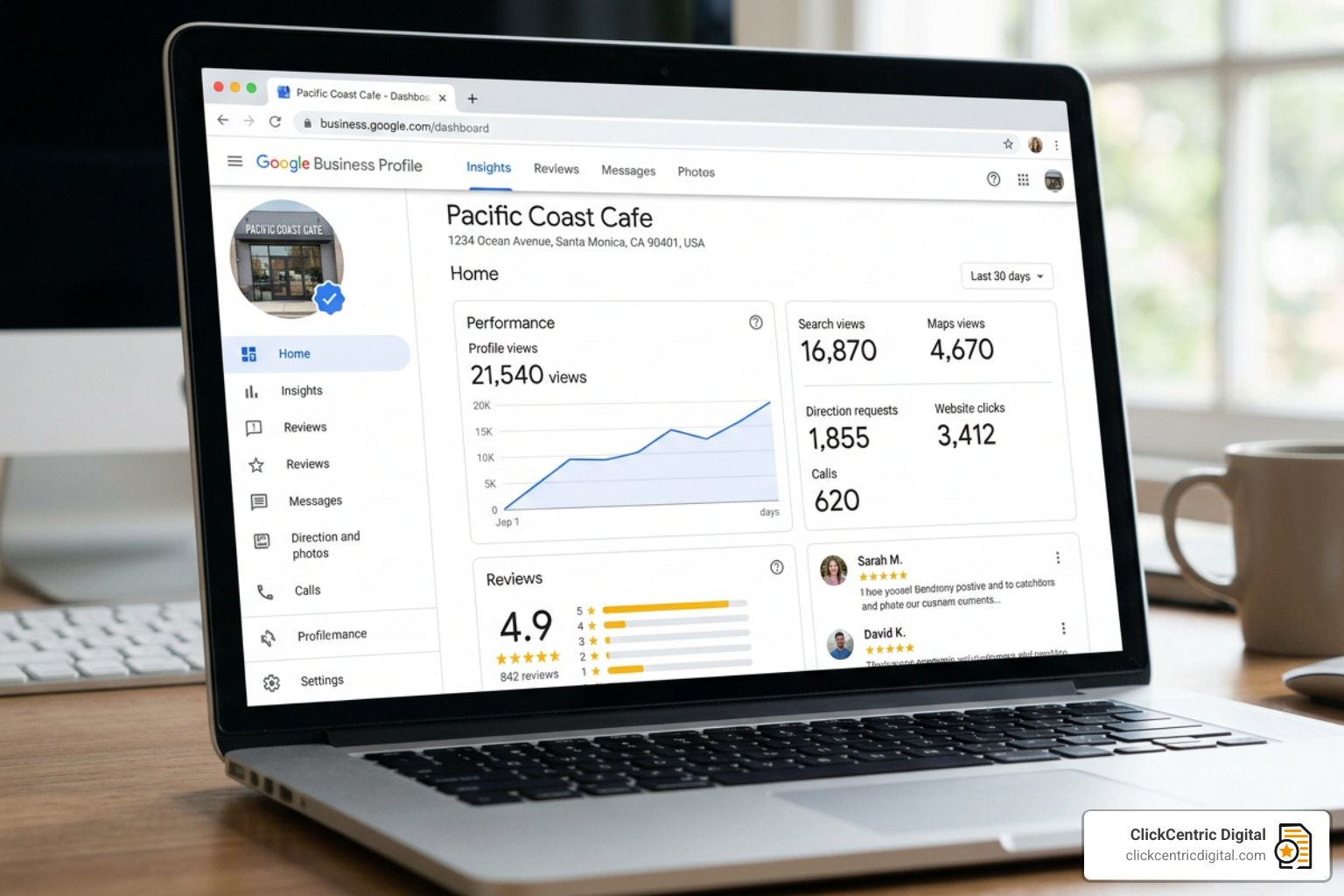
Your Google Business Profile (GBP) is the cornerstone of your local strategy. If you haven’t claimed it, you don’t exist in the eyes of the Map Pack.
Start by claiming your profile at Google Business. Once verified, you must treat this profile like a second website. Choosing your Primary Category is the single most important ranking factor—make sure it is the most accurate description of your core business. You can then add up to nine secondary categories to capture related searches.
| Feature | Unoptimized Profile | Optimized Profile |
|---|---|---|
| Business Name | Keyword-stuffed (Risky) | Real Business Name (Safe) |
| Categories | Only one general category | Primary + relevant secondary categories |
| Photos | Zero or 1-2 grainy shots | 30+ high-quality interior/exterior/team photos |
| Reviews | No responses | Prompt, professional replies to all |
| Updates | Last post was 2 years ago | Weekly posts with offers and news |
Ensuring Consistent NAP Information Across Directories
NAP stands for Name, Address, and Phone number. Google crawls the entire web to see if the information about your business matches. If your website says “123 Main St” but Yelp says “123 Main Street” and the local Chamber of Commerce has an old phone number, Google gets “confused.”
Confused search engines don’t rank businesses highly. We recommend a citation audit to ensure your NAP is identical across major aggregators and niche directories. Consistency builds the “Prominence” factor that Google craves.
Leveraging Visual Media and Regular Updates
Don’t just set it and forget it. Businesses with photos get 42% more direction requests than those without. We suggest uploading new photos at least once a month. Use Google Posts to share weekly updates, special holiday hours, or new product launches. This activity signals to Google that your business is active and reliable.
Building Authority Through Reputation and Community
In the local world, your reputation is your currency. Statistics show that 95% of customers read reviews before buying. But reviews aren’t just for customers; they are a major ranking signal.
Google looks at Review Velocity (how often you get new reviews), Quantity, and Sentiment. A business in Kalamazoo with 50 fresh, positive reviews will almost always outrank a business with 200 reviews that are three years old.
Strategies for Managing and Generating Online Reviews
You can’t just hope for reviews; you need a system.
- QR Codes: Place them at your checkout counter or on service invoices.
- Email/SMS Automation: Send a polite follow-up link immediately after a service is completed.
- Response Strategy: Always respond to reviews. For positive ones, thank the customer and mention the service. For negative ones, stay professional, offer to move the conversation offline, and show potential customers that you care about fixing mistakes.
Earning Local Backlinks and Community Engagement
Local link building is different from traditional link building. You don’t need a link from a massive tech blog; you need a link from the Holland MI Chamber of Commerce or a local Grand Haven charity you sponsored.
Participating in the community provides indirect SEO benefits. When you sponsor a little league team or a neighborhood festival, you often get a link from their website. These “geo-relevant” links tell Google you are a pillar of the West Michigan community, which boosts your local authority.
Technical and On-Page Tactics to Optimize for Local Search
Your website must be the “closer.” While the GBP gets the click, your website secures the lead. Since over 60% of local searches happen on mobile devices, having a fast, responsive design is non-negotiable. If you’re unsure about your current site’s performance, exploring Website Design & Development can help ensure your foundation is solid.
Using Local Keywords to Optimize for Local Search
To optimize for local search, you need to target the right keywords. Avoid just targeting “dentist.” Instead, target “dentist in Grand Rapids” or “emergency tooth repair Holland MI.”
- Implicit Keywords: “Near me” or “open now.”
- Explicit Keywords: “Service + City” or “Service + Neighborhood.”
- Customer Language: Look at your reviews. If customers call your service “affordable leak fixing,” use that exact phrase in your copy.
Creating Location-Specific Landing Pages and Content
If you serve multiple cities like South Haven, Kalamazoo, and Grand Haven, don’t try to rank one page for all of them. Create dedicated location pages. Each page should feature:
- Unique content about your services in that specific city.
- An embedded Google Map of your location (or service area).
- Local testimonials from customers in that town.
- Mentions of local landmarks to prove geographic relevance.
Technical On-Page Elements to Optimize for Local Search
One of the most powerful tools in your arsenal is Schema Markup. This is a bit of code that “talks” directly to search engine crawlers. By using LocalBusiness schema, you can tell Google exactly what your hours, address, and price ranges are in a format it understands perfectly.
Always follow Google’s structured data guidelines to ensure you stay in their good graces. Additionally, ensure your header hierarchy (H1, H2, H3) uses your local keywords naturally and your internal linking connects your service pages back to your main location pages.
Measuring Success and Avoiding Common Pitfalls
You can’t improve what you don’t measure. We recommend tracking more than just “rankings.” Focus on GBP Insights, which tells you how many people called you, requested directions, or visited your website directly from your profile.
Common Local SEO Mistakes to Avoid
We often see businesses make these avoidable errors:
- Keyword Stuffing: Don’t add “Best Grand Rapids Plumber” to your actual business name on your profile if it’s not your legal name. Google will suspend you.
- Fake Reviews: Google’s AI is incredibly good at spotting these. It’s not worth the risk of a permanent ban.
- Duplicate Listings: Having two profiles for the same location splits your “ranking power” and confuses customers.
- Ignoring Negative Feedback: A single ignored 1-star review can do more damage than ten 5-star reviews can fix.
Timelines and Expectations for Local Rankings
Local SEO is a marathon, not a sprint. You might see “quick wins” like GBP info updates or NAP fixes reflected in 2–4 weeks. However, moving the needle on highly competitive terms in West Michigan usually takes 6–12 months of consistent posting, review gathering, and content creation.
The Ultimate Local SEO Implementation Checklist
Phase 1: The Foundation
- [ ] Claim and verify your Google Business Profile.
- [ ] Audit your NAP across the top 50 directories.
- [ ] Embed a Google Map on your contact page.
- [ ] Implement LocalBusiness Schema on your homepage.
- [ ] Ensure your site loads in under 3 seconds on mobile.
Phase 2: Visibility and Authority
- [ ] Set up an automated system to request reviews.
- [ ] Create unique landing pages for every city you serve.
- [ ] Post to your Google Business Profile at least once a week.
- [ ] Reach out to one local organization for a sponsorship or link each month.
- [ ] Monitor your “Map Pack” rankings using a geo-grid tool.
Frequently Asked Questions about Local Search
How long does it take to see results from local SEO?
For basic profile optimizations and fixing incorrect phone numbers, you can see movement in as little as 2 weeks. For competitive rankings in the “3-Pack,” expect a timeline of 3 to 6 months of active management.
Do I need a separate page for every city I serve?
Yes, if those cities are major service areas. However, avoid “cookie-cutter” pages. Each page must have unique text, local photos, and specific local FAQs to avoid being flagged as duplicate content.
Is a Google Business Profile free to use?
Absolutely. It is a free tool provided by Google. While there are paid “Local Services Ads” that appear above the Map Pack, the organic profile management itself costs nothing but your time.
Conclusion
At ClickCentric Digital, we know that the local landscape is more competitive than ever. Between AI-generated summaries and the rise of mobile search, simply “having a website” isn’t enough. You need to actively optimize for local search to ensure your business remains the go-to choice in Grand Rapids, Holland, and across West Michigan.
By focusing on a complete Google Business Profile, building a rock-solid reputation through reviews, and ensuring your technical SEO is up to par, you can dominate your neighborhood and turn searchers into lifelong customers.
Ready to take the next step? Learn more about Search Engine Optimization & Google Maps Ranking and start your journey to the top of the Map Pack today.
Sorry, the comment form is closed at this time.